Experiments·Transcript-backed
Reed Switch Motor Self-Runner Test – One Coil, Big
Watch me test a reed switch motor self-runner using one coil, counter rotating magnets, and a big transistor. See drive coil passes on the 8-coil rotor,…
Long-form · Full audio · Best on YouTube
Watch the complete video: Reed Switch Motor Self-Runner Test – One Coil, Big
Watch the full long-form video on YouTube — that's where the full bench audio, runtime, and experiments live.
Preview embed · full runtime is better on YouTube
Prefer the full player? Better audio, runtime, and next-video queue on YouTube.
▶ Open full on YouTubeJump to the discussion · full video on YouTube
Hear it on the bench
Each link opens “Reed Switch Motor Self-Runner Test – One Coil, Big” on YouTube at the first time that topic comes up in the captions. Stay on YouTube for the complete runtime.
- ▶ Watch at 2:41reed switch motorprimary
“…uh a reed switch.…”
- ▶ Watch at 7:04counter rotating magnetslong-tail
“…look, it's already counter rotating like like bam. You can you can see how it's kind of just one coil. There's only four magnets on the stator…”
- ▶ Watch at 1:16drive coil passeslong-tail
“…when the drive coil passes by a magnet.…”
See it on the bench · full runtime on YouTube
What to watch for
- ▸One coil on the 8-coil rotor can drive all six magnets when wired as a Bedini-style trigger and drive strand combo.
- ▸Counter rotating magnets by spinning the rotor different ways shows the setup trying to self-run from the cap bank.
- ▸Drive coil passes create a very pronounced cog that you can feel and see on camera.
- ▸The big transistor needs more juice than the cheap 7mm reed switches, which is why it doesn’t spin as long.
- ▸Everything feeds into a big cap bank (9400µF + 10F) that also gets the 9V battery and bridge-rectified generator coils.
- ▸The rotor is heavy, lopsided, and wobbles, making stable self-running tough.
Watch the full long-form video on YouTube — that's where the full bench audio, runtime, and experiments live.
Experiment notes (read while you watch)
Notes support the video — for the full-length run with complete bench audio, stay on YouTube.
In this bench session I spin up the 8-coil rotor as a reed switch motor self-runner. Only one drive coil is active. I compare running it with a 9V battery versus cap-bank only, show the strong cog when the drive coil passes the neodymium magnets, and demonstrate counter rotating magnets to get it going both directions. It tries hard but runs slower than the tiny reed switch version.
Key takeaways
- One coil on the 8-coil rotor can drive all six magnets when wired as a Bedini-style trigger and drive strand combo.
- Counter rotating magnets by spinning the rotor different ways shows the setup trying to self-run from the cap bank.
- Drive coil passes create a very pronounced cog that you can feel and see on camera.
- The big transistor needs more juice than the cheap 7mm reed switches, which is why it doesn’t spin as long.
- Everything feeds into a big cap bank (9400µF + 10F) that also gets the 9V battery and bridge-rectified generator coils.
- The rotor is heavy, lopsided, and wobbles, making stable self-running tough.
I fired up the 8-coil rotor again, this time chasing a reed switch motor self-runner feel with a big transistor. The setup uses one coil for drive, three bridge rectifiers, and a fat cap bank. Spinning it by hand and flipping the 9V on and off gave me clear counter rotating magnets behavior plus strong cogging on every drive coil pass. It’s messy, it’s rudimentary, but you can see exactly what’s happening on the bench.
Bench notes: 26ga + 28ga in the drive coil, 28/30/32ga generator strands, one active drive coil interacting with four magnets on the rotor. Reed switch versions spin longer on the same cap bank. The big transistor pulls more current, so runtime drops. Cogging is loud and physical when the drive coil passes the neodymium magnets.
From the spoken experiment
The following notes stay close to what was said in the video about reed switch motor:
> Hello, ladies and gentlemen. What's up? It's Papa Bale and welcome to the channel. So, this is my eight coil rotor. And pretty much every coil is has part of it uh on the generator half. See, I got three bridge rectifiers in here. Uh one for the 26, one for the 30, and one for the 28 and the 32. I put the 28 and the 32 together cuz I thought four bridge rectifiers was a little crazy for just three strands of 28. So, I mixed the two together. 28 isn't a big deal. So, the fact that it's currently limited to 32 is also not a big deal. All right. So, let me show you how well this is going so far. I'm going to uh spin it. And I'm just keeping my hand on this so I can feel um when the drive coil passes by a magnet. And it it's very pronounced. So, what the drive coil is made out of is a 28 gauge and the third and the 26 gauge. So, it's got 26 gauge uh drive strand and the 28 gauge trigger stra…
Builder checklist
- Confirm trigger/sensor timing before chasing higher voltage
- Watch heat on coils and transistors during longer runs
- Record voltage and behavior at each change (one variable at a time)
Related on this site
Related on this site
- Which Transistor for Your Pulse Motor? (2N3055, TIP31, and More) — Directly relevant to the big transistor vs reed switch comparison in the test
- Pulse Motor Rotor Design: Magnets, Materials and Balance — Addresses the heavy, lopsided, wobbling rotor and four-magnet setup used
- I Finally Got My Pulse Motor Running (Reed Switch) — Companion video showing the longer-running reed switch version mentioned
- Counter-Rotating Device: Troubleshooting Resonance & Safety Relay Upgrade — Related counter-rotation experiments and upgrades
---
*Generated from video transcript (hash `a72639e40a38…`).*
Full transcript (5,106 chars · en)
Hello, ladies and gentlemen. What's up? It's Papa Bale and welcome to the channel. So, this is my eight coil rotor. And pretty much every coil is has part of it uh on the generator half. See, I got three bridge rectifiers in here. Uh one for the 26, one for the 30, and one for the 28 and the 32. I put the 28 and the 32 together cuz I thought four bridge rectifiers was a little crazy for just three strands of 28. So, I mixed the two together. 28 isn't a big deal. So, the fact that it's currently limited to 32 is also not a big deal. All right. So, let me show you how well this is going so far. I'm going to uh spin it. And I'm just keeping my hand on this so I can feel um when the drive coil passes by a magnet. And it it's very pronounced. So, what the drive coil is made out of is a 28 gauge and the third and the 26 gauge. So, it's got 26 gauge uh drive strand and the 28 gauge trigger strand. It's a Bedini setup. And uh I wish I could remember exactly where I have the Bedini out connected. So, you can see it spinning around there. There's that diode on the green breadboard. I'm not sure exactly where that's connected to, but where wherever it is, it's beneficial. It Okay, now I'm going to just I'm going to let it go. And you can see when it hits a coil or when they pass when the coil pass your drive coil passes the neodymium magnets. It's really neat. You get a really strong cog. Now, I did a bunch of experiments uh earlier with this and uh a reed switch. And reed switches, they spin for for quite a while. You need a little bit more juice to get a transistor to work. Um You know, I don't know. I'm just starting to use the transistors. Well, there's a 9-V battery, and you can see the counter rotation. So, I just spin it several different ways, you know, spin it outside first, spin the inside first. So, that there's a lot of things attached to this. There's many, many caps. There's uh Let me think here, 50 V and 9400 micro Farad with this little setup that I have here. And that's attached to 11 V 10 Farad via diode. All right, so all of this from the from the bridge rectifiers is going into the cap banks. And but the the battery's going into the cap bank, too, so we're just all spinning from the cap bank. Now, it it doesn't move as long as with the reed switch for some reason. I don't know why, but uh probably cuz the reed switch costs a lot less to run, is what I'm guessing. Especially these little tiny ones that I have over here. They're 7 mm all together. And they are very inexpensive to run. Um Now, I could do an N 2222, right? Like one of the little transistors and see, you know, how much different that is. But when I think you're when I think like when you're running doing the self run test, you got to have a stable stator. You can't have a stator that's wobbling and moving all the time. See? You can see it cogging. Yeah, there's this There's only one coil on here that's a drive coil. So, and I did that so that it could interact with all six. So, I just turned the 9-V battery on and look, it's already counter rotating like like bam. You can you can see how it's kind of just one coil. There's only four magnets on the stator at the current time. I think that is awesome how that picked up. Now, I'm wondering what a uh uh what connecting all the solar panels in series would do instead of uh parallel like I had them. Now, I have a suggestion for a bigger bigger solar panel, a single solar panel that's just larger. And uh I don't know. Uh it would probably work for sure, but I'm going to see if these will work first. So, that's awesome. So, I got to take I got to unsolder them and then solder them together in series. And then that'll give voltage instead of uh the milliamps that I was getting, like 60 milliamps. I don't know which one is better for uh you know, this size. You know, I I know that a lot of pulse motors run strictly on voltage and they don't really need amperage. Anyway, I think that's pretty sweet. How it just kind of rotates like that on one coil. It's It's awesome, man. There's a lot of power going through that coil, though. Oh, I love this thing. It's so like um >> [clears throat] >> you know, rudimentary, though. All right, but you got the three different gauges, basically, and they each have their own bridge rectifier, and each one of those gauges feeds into the cap bank separately. I think it's great. As you can see it's really powerful. That was a 9-V battery. Um Yeah, I don't know. It It's kind of heavy. It's lopsided. It's awkward. But There I'll counter rotate it on a self run spin. Real quick. I mean it spins uh huh really a lot slower. But then once everything slows down you can see it cogging like boom boom boom boom boom boom And you can see the lens kick in. And the cogging kick in at the same time like when it starts going the same way you can see the cogging right there. There it is. There it is. Back yeah. Um So you know it's trying to work, you know? It's definitely trying to work. >> [snorts] >> Thank you very much ladies and gentlemen. Peace out. I hope you enjoyed this. Bye now.
Keep watching · longer sessions
More long-form bench runs
Queue up the next long-form bench run on YouTube — longer sessions keep the workshop free for everyone.
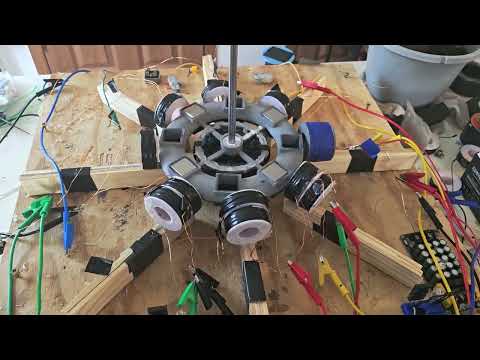 Long-form
2 circuits running a third room still for some growth/expansion.
Papa Bale here with a messy bench update.
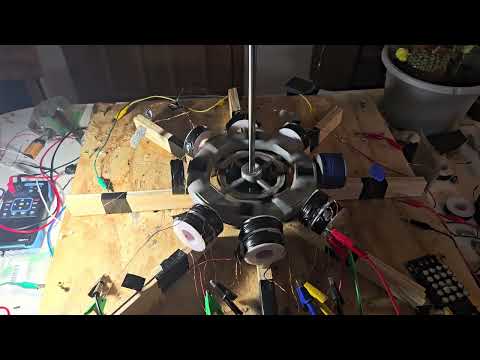 Long-form
M.P.H.'s pulse motor labs EP:2 Skin deep
I fire up two circuits at once, chase meter spikes, and retell the day a three magnet rotor one literally exploded at speed.
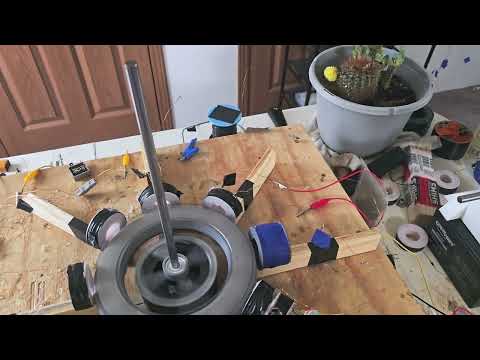 Long-form
Amp Funnel Coil: Pulse Motor Labs EP:1
Eight-magnet eight-coil pulse motor lab — amp funnel coil wiring, pickup coils, and give-and-take battery measurements.
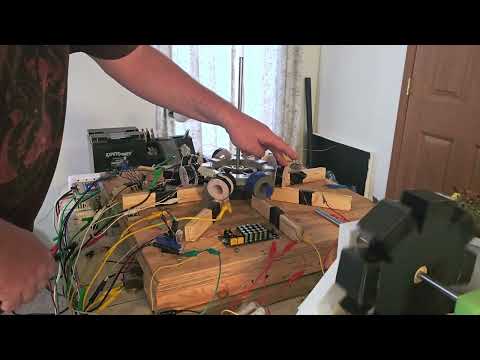 Long-form
MPH pulse motor lab
Real bench time with motor rotor magnets on a pulse motor rotor.
One path · free first
Watch free → subscribe → optional membership
Notes stay free. The full experiment lives on YouTube. Membership is optional when you want Discord and exclusives — not required to learn.
- 2
Subscribe free + turn on alerts
Hit Subscribe, then the 🔔 bell so you catch the next experiment.
Subscribe free + 🔔 - 3
Optional: join for $2.99/mo
Members-only videos, Discord, and live shoutouts — cancel anytime.
Join $2.99/mo
Longer sessions · ad-supported free library
Not done yet? Queue the next long-form run
Queue up the next long-form bench run on YouTube — longer sessions keep the workshop free for everyone.
- 1▶ Watch full on YouTube
Start: Shocking Truth About Pulse Motors
Notes & transcript on site - 2▶ Watch full on YouTube
2 circuits running a third room still for some growth/expansion.
Notes & transcript on site - 3▶ Watch full on YouTube
M.P.H.'s pulse motor labs EP:2 Skin deep
Notes & transcript on site - 4▶ Watch full on YouTube
Bifilar Pancake Coil Build for Pulse Motor Generator
Notes & transcript on site