Experiments·
Amp Funnel Coil – Pulse Motor Labs EP:1
Watch me fire up this 8-magnet 8-coil amp funnel coil pulse motor on a truncated Bedini circuit. Real bench talk on coil wiring, trigger strands in series, bifilar amp funnel effect and what actually happens when you give and take from the batteries.
Long-form · Full audio · Best on YouTube
Watch the complete video: Amp Funnel Coil – Pulse Motor Labs EP:1
Watch the full long-form video on YouTube — that's where the full bench audio, runtime, and experiments live.
See it on the bench · full runtime on YouTube
What to watch for
- ▸Eight neo magnets on rotor paired with eight drive coils plus three pickup coils already installed for generation.
- ▸Coils use 16/20/30 gauge combinations that perform well at 12 volts; trigger strands from all three coils wired in series.
- ▸Bifilar 26/32 gauge coils connected to create an amp funnel effect by running strands in series then parallel.
- ▸Truncated Bedini circuit runs two motor sections from one primary battery while charging a second battery.
- ▸Positive flow starts at battery positive through green power lead into the 16-gauge drive coil first.
- ▸Encourages builders to experiment and grow instead of staying locked in one “correct” method.
Watch the full long-form video on YouTube — that's where the full bench audio, runtime, and experiments live.
Experiment notes
Papa Bale walks through his new 8-magnet 8-coil pulse motor build running on a single primary battery with charge battery. He explains the give-and-take energy flow, coil choices, truncated Bedini circuit, trigger wiring in series, bifilar connections and why he’s deliberately trying things his own way instead of the “proper” boxed method.
Key takeaways
- Eight neo magnets on rotor paired with eight drive coils plus three pickup coils already installed for generation.
- Coils use 16/20/30 gauge combinations that perform well at 12 volts; trigger strands from all three coils wired in series.
- Bifilar 26/32 gauge coils connected to create an amp funnel effect by running strands in series then parallel.
- Truncated Bedini circuit runs two motor sections from one primary battery while charging a second battery.
- Positive flow starts at battery positive through green power lead into the 16-gauge drive coil first.
- Encourages builders to experiment and grow instead of staying locked in one “correct” method.
In the workshop today I’m messing with what I call the give and take on this new amp funnel coil pulse motor. Nothing runs itself so we give from one battery and take with another. That’s the whole idea I’m exploring in this first episode.
I started with an eight magnet eight coil layout. The rotor holds eight neo magnets and each drive coil has a pickup coil behind it. Right now three pickup coils are mounted and wired. Every time a magnet flies past you get a little generation spike that feeds the charge battery.
The first three drive coils are wound with 16 and 30 gauge plus two more 20 and 30 gauge. I hook them up middle first, then right, then left before the rest wrap around. That 16/20 combo seems to like 12 volts pretty well from what I measured.
Circuit wise it’s a truncated Bedini. Two motor sections share one primary battery and feed a separate charge battery. I could run it with a negative spike but I’m doing it this way on purpose to try fresh stuff. The cat bank sits between the two sections.
When I map the flow I start at the positive end of the battery. Green plug goes straight to power, through the 16 gauge coil, into the 20 gauge, then over to the next 20 gauge clip. All the secondary bifilar trigger strands are wired in series and act as triggers for the three active coils. That series trigger chain really wakes the whole thing up.
If I ever go full eight drive coils with eight pickups I’ll run all eight trigger strands in series too. You’ll probably need around 55 volts at the end but the extra triggers help a ton.
The bifilar coils are 26 and 32 gauge. I put the two strands in series first then parallel the pair. That gives what I call the amp funnel effect. Thick wire first, then the thinner one acts like a bottleneck and you get a burst. At least that’s the theory I’m testing on the bench. Electricity doesn’t flow exactly like water so I’m still watching the scope to see what really happens.
I’m not here to hand you the proper boxed way. I do the proper way too but I also like growth. If we lock every idea in a box we stunt new discoveries. So I show you what I’m actually doing, measurements and all, and I encourage you to run with any idea that sparks.
That’s where we’re at on this amp funnel coil pulse motor. First spin is coming, more coils are going on, and we’ll keep measuring what the pickup coils actually put back into the charge battery. Come along for the ride.
Related on this site
- How to Build a Pulse Motor: Parts, Coil Gap, First Spin — Builder checklist and basic rotor/coil layout reference
- Bedini Motor & SSG Circuit Guide (Beginner Bedini Explained) — Explains the truncated Bedini circuit used in the build
- Best Wire Gauge for Pulse Motor Coils (AWG Guide) — Discusses the 16/20/30 and 26/32 gauge choices
- Can a Pulse Motor Charge Batteries? What Experiments Show — Directly matches the give-and-take battery charging measurements
---
*Generated from video transcript (hash `4ad146f82e43…`).*
Full transcript
Hello ladies and gentlemen. What's up? It's Papa Bale aka Michael Page Hatton and we're here looking at uh I'm going to call it the give and take, right? Since uh there is no way this is going to run itself, we're going to give from one take with another. It's not going to run itself like that. No, it won't. All right. Um, so I want to start with the design. It's an eight magnet, eight coil design initially. So there's eight coils that uh wrap around the 8 Neo wheel. Okay. And then behind each one of those coils, I'm going to have a pickup coil. As you can see here, there are three pickup coils. already. And what those are going to do is is every time a magnet passes any coil, you're going to get a small little boost to uh pickup to generation. Okay. So, uh, the first three coils, the one in the middle is 16, uh, and 30 gauge, and then 20 and 30, and 20 and 30. And it's hooked up weird. Okay. So, it goes the one in the middle, then the one on the right is next, and the one on the left is the end, and then the rest of the coils wrap around. I think that 16 that 20 combo works really really well with 12 volts. Okay. Um, what do I want to do next? We got the the basics. Oh, the circuit. Let's do the circuit. It's a Bini. It's a truncated Medini because it's uh we got one here and we got one here. As you can see, there are two motors here, but both running on one battery and then the pickup uh charge battery. So, primary and charge. And then in between the two of these, we got the cat bank. Now, if I wanted to run it with a negative spike, I would do it differently. Okay? Just saying before all the, you know, obvious stuff comes back to me. You know, I'm doing this on purpose because I want to do different stuff. I don't want to be stuck. You get what I'm saying? All right. Cool. All right. So, we got the Bini circuit and the Badini circuit. Let me let me We're going to do a flow of energy. Uh so people understand it so they don't have to figure it out. You know what I mean? So like uh the positive flow of electrons comes from the negative side. We're going to leave that on the curb. That might be the way things work, but people don't get that. What do you mean? What do you mean? That's what I'm saying. What do you mean? Uh, so let's start with the connections cuz it's going to take a minute. positive end of the battery. Green green plug goes right to I want to say it's going to go to the power. Yeah, green power. This is the 16 gauge coil. The start. It's going to go through the 16 gauge coil uh to the 20 gauge and from the 20 gauge right here to this clip to the 20 gauge over here. And uh all of the secondary bif filer strands, trigger strands are all in working as triggers in series. if you're following me. So, all the three coils that are hooked up, their trigger strands are hooked up as trigger strands for these three coils. And it takes a lot of like work out of me off me to have that. And it's it's really makes it even more functional than I ever thought it could be. So, like if I ever decide to go all the way around with all eight uh with pickup coils and have it function with eight drive coils, I would go eight trigger strands in series with the drive coils. So, that's what I would do because it's going to make it work that much better considering you're probably going to have to put in 55 volts at the end there just to make it run. And then having the the extra triggers is really going to help a lot. That's what you're going to do. Um I do encourage people to, you know, if you get an idea from what you see, uh run with it. You know, go for it. since that's why I'm like doing this pretty much. Not the proper way of doing things, but you know, my way of doing things and then trying to explain it. I do the proper way as well. You know, I appreciate the proper way, but then I also appreciate growth. And when you put somebody, if you put the whole idea in a box like that, you stunt growth. You're like saying it's not my responsibility. I'm going to put this in a box. Not cool. All right. Um, so we got the drive set up with the trigger strands. We got possibilities with more drive and more trigger strands. Uh the this is a bif filer with uh 26 and 32. This is a single file 32 gauge coil. And this is uh same as this one 26 and 32. So I put the 26 and the 32 gauge strands in series. Uh, so you get a little kind of amp funnel action, but they are in parallel. You get what I'm saying? For the bif filer coils, when you connect them in series, the two strands, especially if they're different gauges, you get what I call um the amp funnel effect. Yeah. Uh especially if the thick wire is the first one. And I mean, it's not the way it works, but it if it is, it's it's sound. You know what I'm saying? And the soundness comes. If if you go with 26 gauge current and then all of a sudden you're bottlenecked at that bottleneck point, you're going to get a burst. You're going to get some sort of fire hose effect. But, you know, and then I'm like, well, it's electricity, dude. I mean, if you put a 32 gauge wire on the end, it's all going to be 32 gauge instantaneously. there's going to be no room or, you know, you're not going to get that burst effect because um but if you separate them to the point where the energy can't like from like the 26 and I don't know which way you would go with it, the the diode I don't know which way you would go with it whether it would be a backwards diode or a forwards diode. Um, I think it'd be a forward one. You take all that 26 gauge, um, I'm going to call it pressure, and you you shove it into the fire hose, and it's going to it's going to send your your rotor like going crazy speeds if it works that way, which, you know, I don't think it, you know, it was like a thought, an afterthought actually. Does it work this way? And I'm And more and more I learn the more and more it's like it's auto auto truncated and there's no it doesn't flow like water does. It flows differently or the amp funnel would be like an awesome coil. It would be like really powerful if we did fire hose effect. Uh but it's like a myth, you know. It's like uh the f the fire hose effect is um you know, it's not real. I wish it was real cuz I kind of made it up. the amp funnel. But, you know, I don't think electricity works the way I thought it worked at that point. But that coil in the back there is an amp funnel coil. It's got uh so it's got 28 in the middle and then it's got 26 around that and it's got 24 on the outside layer. And I'm pretty sure it's right around 1 lb 10 oz of uh coil. I run it as a as a drive coil and it it works pretty good as a drive coil like 400 RPMs with 50 volts in. It's not the best thing in the world and I wouldn't like uh maybe I would maybe I would use it as a drive coil. Uh it's got iron powder stacked up in the middle right now. So it's got it's got a core, but it's not the best core. And I I don't I don't care. I don't like using cores at all. So the fact that I'm doing this is like unheard of. And it's just because, you know, I like having my stuff kind of close and I don't have the best methods of like tightening things down. So, just cores never came naturally to me. But I got them in there now and they're working pretty good. Okay. All right, I think that's going to be it for today. Um, we'll pick this up later. Uh, I want to get into uh the circuitry. They are SSG circuits. And let's just go with the connections real quick. It goes from the battery through the system here to the circuit out to the cap bank. Then the cap bank is [snorts] spinning this wheel. Okay. So, it's being charged by this motor, the cap bank, and it's being used by this motor. They both have eight magnets on them. It's pretty neck and neck. It's been right around 4:30. It's gone up and down for 4 volts. That's how much juice is in the cap bank. So, we know it's working. We know it's working. Exactly the way it's supposed to. And then, uh, but this is the this is the sad part. the oscilloscope with the cap bank, you know it's weak. You already know that it's not going to be um you know all all spikes and stuff because but here this is how you get it. You take the SSG connection from that one and you put it onto this uh distribution block as the power input. You take the white one, you put it as the negative. And then the thing is this wheel won't spin without caps or some sort of power source. You can't just throw power at it and have it spin. I wish I tried it like four or five different ways. It's just not stable enough for you to run the motor with it. But this is the speed that we got. It's pretty good for 4 volts uh and 4.31 volts. Yeah. So, it's spending about exactly as much as it's generating. It's going probably downward by a little bit. Maybe upwards. I'm not sure. See, it's like it likes where it is. So, I'm thinking equilibrium here. We're pretty close. But that that's just in the cap bank here. And so, you know, you got to draw from the battery to make this one work. But then this Badini SSG dumps into the charge battery and that's it. Man, that's cool. It's not a closed loop, but you know, it's running on one battery basically. And you get this motor, you get to equilibrium here, at least for a little while. And then you get uh you have this Spadini SSG right here. And this one's charging and it works. It was It works like wonders. It's great. Um so like in the next video we'll we'll cover more of that and we'll we'll get some ratings on the batteries. [clears throat] And let me think here. This meter is hooked to that black coil down there on the bottom. Yeah. Look at that. Okay. See, that's that's because we have a capacitor. If we didn't have the cap, those spikes would be going to the top and bottom of the screen. It' be about 200k or not 200k, but 2k peak to peak. Sick damage, man. I mean, anyway, this has been really fun. Uh, I like doing this. Uh, whoever gets a chance to see it, more power to you. All right, this is episode one. Bye now.
Keep watching · longer sessions
More long-form bench runs
Queue up the next long-form bench run on YouTube — longer sessions keep the workshop free for everyone.
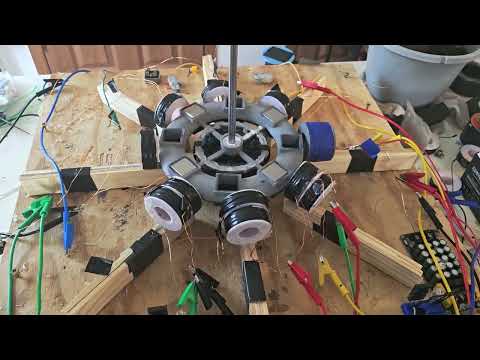 Long-form
2 circuits running a third room still for some growth/expansion.
Papa Bale here with a messy bench update.
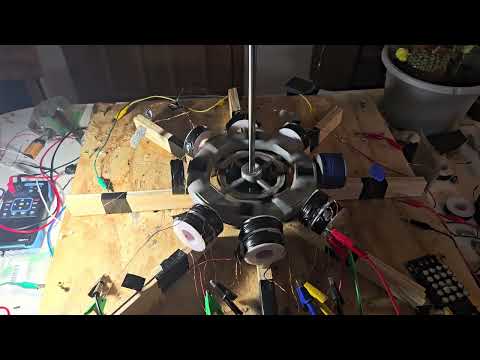 Long-form
M.P.H.'s pulse motor labs EP:2 Skin deep
I fire up two circuits at once, chase meter spikes, and retell the day a three magnet rotor one literally exploded at speed.
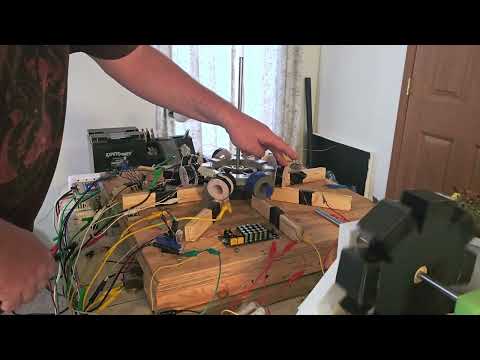 Long-form
MPH pulse motor lab
Real bench time with motor rotor magnets on a pulse motor rotor.
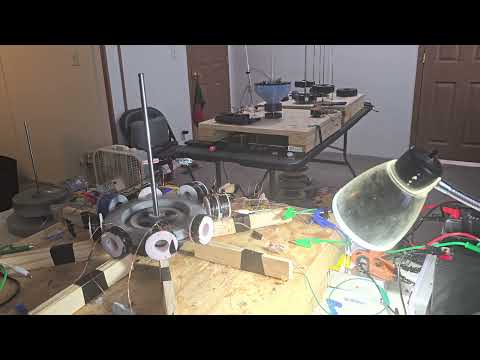 Long-form
8-Magnet Pulse Motor + Induction Coils (Bedini-Style Charge)
Eight-magnet pulse motor at 12V with series induction coils.
One path · free first
Watch free → subscribe → optional membership
Notes stay free. The full experiment lives on YouTube. Membership is optional when you want Discord and exclusives — not required to learn.
- 2
Subscribe free + turn on alerts
Hit Subscribe, then the 🔔 bell so you catch the next experiment.
Subscribe free + 🔔