Experiments·Transcript-backed
2 circuits running a third room still for some growth/expansion.
2 circuits running a third room still for some growth/expansion.
Long-form · Full audio · Best on YouTube
Watch the complete video: 2 circuits running a third room still for some growth/expansion.
Watch the full long-form video on YouTube — that's where the full bench audio, runtime, and experiments live.
Preview embed · full runtime is better on YouTube
Prefer the full player? Better audio, runtime, and next-video queue on YouTube.
▶ Open full on YouTubeExperiment notes (read while you watch)
Notes support the video — for the full-length run with complete bench audio, stay on YouTube.
From the video (spoken content)
> Hello, ladies and gentlemen. What's up? It's Papa Bale and welcome to the channel. So, what we have here, there are two circuits in this in this wheel. There are eight coil slots. And not all the coil slots are hooked up. Not all the coils are hooked up. Um let me show you the ones that are hooked up. For this breadboard right here, we've got this 20 gauge coil with its trigger, which is 30. And we've got this uh 24 gauge and 28 gauge. I think it is that. All right. And they're linked in series and connected to this breadboard and one half. I got the power supply can hold up to three uh you kn…
Full transcript notes
This page is grounded in the automatic captions for this video (8,928 characters, language: en, source: package).
A richer blog rewrite (Papa Bale DIY voice + SEO package) is generated only after the full transcript is processed by the content engine — never from the title alone.
Watch and listen
The embed above is the source of truth. Measurements and claims on this site should match what Papa Bale actually says in the video.
Full transcript (8,928 chars · en)
Hello, ladies and gentlemen. What's up? It's Papa Bale and welcome to the channel. So, what we have here, there are two circuits in this in this wheel. There are eight coil slots. And not all the coil slots are hooked up. Not all the coils are hooked up. Um let me show you the ones that are hooked up. For this breadboard right here, we've got this 20 gauge coil with its trigger, which is 30. And we've got this uh 24 gauge and 28 gauge. I think it is that. All right. And they're linked in series and connected to this breadboard and one half. I got the power supply can hold up to three uh you know, devices on it. So, I got both both circuits on this, so the amps go a little higher. That's basically what happens. All right. So, and then this 20 gauge and 30 gauge coil and this 26 and 32 gauge coil. So, this one's a little bit different than this one. But uh the positions are good. Really good. So, I'm going to turn it on. On this one, we have uh collector. Or is it this one? I think it's this one. This black clip right here is connected to the to the drive. And this green one over here is also connected to the negative end of that drive. And then they're both connected to this cap bank over here. And I might have these two things flipped as well. I I got to put this together a little bit better than I do right now have it right now. Everything works. It's just might be a little flopped. Flip-flopped. So, we're going to go 4.5. Okay, so that is going into the cap bank. Let me turn it up a little bit. We can see that the cap bank lights are lighting up. We're going to turn it up to nine all the all together. So, we're at like 9.2 Okay, we got we got the wheel moving at this space. 9.2 >> [clears throat] >> volts and it's uh 420 milliamps. Sweet. So, Now, that those are going up pretty well, you know, they're getting brighter. That's what I mean. So, I'm going to turn this on. Can you see them blinking? Maybe. >> And they're starting to move pretty good. Yeah, that's moving really fast. Sorry if I was a little working the power supply over here. I'm going to cut it off. Anyway, I think it's really cool that how I have the and set up like uh like this and then like like this and they're two different ones. And they work perfectly with the magnets. Uh using four magnets. I'm I'm taking energy off of one coil set and taking the BEMF off of one set of coils and I'm shoving it into this cap bank right here. The other set of coils is still yet to be yoked. But I still I feel like even like it's something's going to happen. Uh either it's going to slow down the frequ- Yeah, the frequency's going to change. And I think that's what's going to happen when I start siphoning energy off of these two coils. Maybe to run another motor on this side. You know, this this motor in the middle's running these two motors. Oh, I got to show you something. Okay, we're going to we're going to start it up again at 9 volts. Now before I start it, I'm going to show you Okay, it's not showing anything. How about there? Yeah, we got like 1.2 volts of AC electricity. Yeah, I said 61. 47 and it's going to be it'll level out to be about 20 and Yeah, you know, about 20 volts I got a glue I I just got my glue gun in. I got to glue these things to the battery so that those and maybe have less chance of flying off. I mean, it's pretty sound. It's just when it gets going really fast, it it starts to push forward. So you got a combination of what's coming off of that coil right there. Anyway, this meter right here is hooked to that black coil on the bottom. Right there. So when it like reads 61, you know that that big surge of energy just went through the coil. Uh it's not a fluke or a you know, it's it's real. Cuz the more energy goes through the coil uh the more I don't know what it's called. It's It's like the I don't know. Physical part of the whole thing. Uh, cuz that coil just buzzed and then this coil picks up the buzz. Like an imprint of the buzz onto the coil. And that's why the you know, having the 32 gauge uh, works better because there's [snorts] there's more surface area of the wire to imprint on. And then like every gap in between a 20 gauge strand, you could fit 15 or you know, 20 32 gauge wraps inside that little gap. So, just you know, more turns basically equals um, better reading, a higher reading. Wouldn't necessarily say the energy is all that gravy, but uh, yeah, it definitely is a better number and more What do you call it? Uh, robust. So, I think this is really cool. I mean, I'm not just working with the 20 gauge coils anymore. I've got now two more coils, one hooked up to each one. And that's all I'm going to do. That's that's pretty much it. I might hook up the other four in one single circuit. Just so it can hit on the off. Just you know, I don't know how to explain it. Just so it can have a more torque, more spin, more opportunity to uh generate more force. I believe is what I'm talking about here. Anyway, I hope you understand what I'm trying to say. So, when it's here, when the rotor's here, those four will hit at the same time. And when it's here, the two separate ones will hit at the same time. Like that. That's That's That's one way to do it. And as you can see, even though they're both hooked up and both running, I'm siphoning energy off of them. It's literally like the the BEMF diode, except it's this thing, which has caps. On one side, AC caps on one side and DC caps on the other. This It does um fortunately uh allow DC energy through the AC side without too much damage. It's the amps that really damage the thing, cuz the DC caps are not designed to handle a huge amount of amp. But that's why I like running it secondary. And even if when I'm running it secondary, sometimes I they blow. And if they blow, it's I'm not putting them back in there. I'll be changing them out. I didn't build it, so >> [sighs] >> I'll probably just buy another one. So, you you want to keep your amps uh reasonable um for what you're you're doing. And yeah, I'm just saying, you know, it's it's kind of common sense that the the caps there are 20 V, I think, and like 2,000 uh microfarad. So, they're not real big or strong. 20 volts is strong, uh in my opinion, for this. But, uh yeah, I think it's really, really cool. And I hope you guys stayed with me through that, and I'm going to cut it right now. Uh yeah, like I'm telling you we we're getting access energy off a coil that's hooked to absolutely nothing except a meter. And that's uh that's awesome. And in in some cases, it's more energy than what we're getting off of the coils drive coils. It's just, you know, so, yeah, we're going to set up something like this on the other side over here. We're going to move the light, we're going to move the batteries, we're going to move the switch. Might leave the power supply where it's at. And we are going to either siphon from this side, these two coils, or we're going to use that bottom coil right there. I don't know if we're making enough to run another unit, but we can see. And that way it'll be cascade, it'll go from here to here to the one over here. And, you know, who knows what we can do with it after that. But, I'm pretty sure there's going to be some kind of signature that will link them all together, even if we have diodes. Even even if we have diodes, it's going to find some way to make it so we cannot so it will not function when you connect it to a loop. When you connect the start to the finish, it's it's going to like know that you did that no matter what you put in its way. It's weird. I've tried lots of different things and I'll keep trying things. I will keep trying even though I am totally convinced that you know It's not about looking at it from a different point of view in my my mind. It's not. It's not like here, you just need to look at it like this and then it'll make sense. No. Uh I mean it probably would make sense and look crystal clear and everything, but just something in my gut says no. No. Uh So Yeah, but I'm going to keep trying. You know, and then something in inside my soul says yes. Keep trying. Keep trying to do those things that people say can't be done. You have to tell everybody But yeah, keep keep trying, but at the same time maintain a level head that yeah, these there's probably been at least a few people that have tried doing what you're doing before. Maybe not a lot of people like all these other things because you know, I don't I mean I see it like a few literally like a few people doing this stuff. I see a lot of interested people. And I think that's great. But I don't I don't see uh uh I don't know. I just I think it I think it's cool. I hope it continues to grow. And uh yeah, I'm going to Yep, I said I was going to cut it like 10 minutes ago. I'm going to cut it now. Uh thank you very much, ladies and gentlemen. Peace out. Have a wonderful day. Bye-bye now.
Keep watching · longer sessions
More long-form bench runs
Queue up the next long-form bench run on YouTube — longer sessions keep the workshop free for everyone.
 Long-form
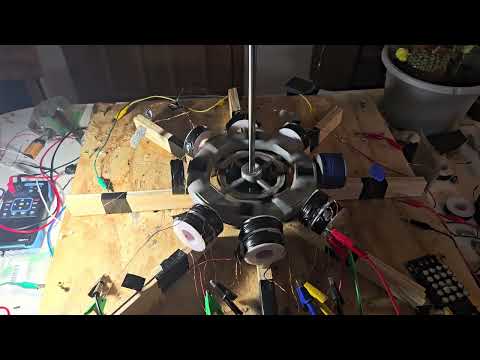
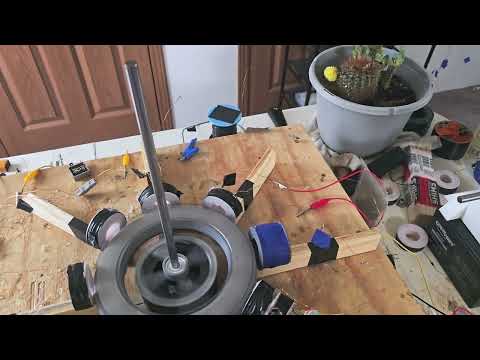
Amp Funnel Coil: Pulse Motor Labs EP:1
Eight-magnet eight-coil pulse motor lab — amp funnel coil wiring, pickup coils, and give-and-take battery measurements.
 Long-form
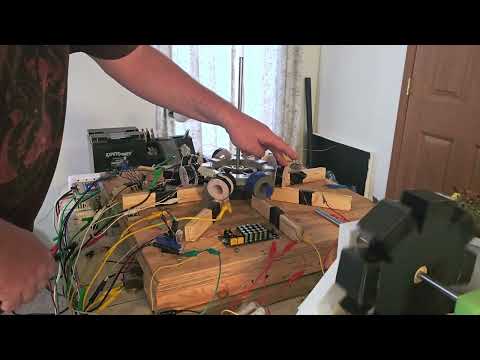
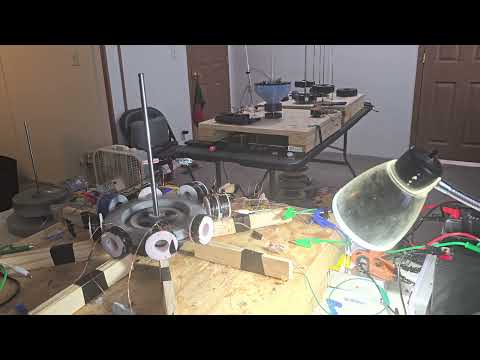
8-Magnet Pulse Motor + Induction Coils (Bedini-Style Charge)
Eight-magnet pulse motor at 12V with series induction coils.
One path · free first
Watch free → subscribe → optional membership
Notes stay free. The full experiment lives on YouTube. Membership is optional when you want Discord and exclusives — not required to learn.
- 2
Subscribe free + turn on alerts
Hit Subscribe, then the 🔔 bell so you catch the next experiment.
Subscribe free + 🔔 - 3
Optional: join for $2.99/mo
Members-only videos, Discord, and live shoutouts — cancel anytime.
Join $2.99/mo
Longer sessions · ad-supported free library
Not done yet? Queue the next long-form run
Queue up the next long-form bench run on YouTube — longer sessions keep the workshop free for everyone.
- 1▶ Watch full on YouTube
Start: Shocking Truth About Pulse Motors
Notes & transcript on site - 2▶ Watch full on YouTube
M.P.H.Jr Pulse Motor Labs EP:1 Just scratching the surface
Notes & transcript on site - 3▶ Watch full on YouTube
8 Neo Cube Magnet Pulse Motor Hits 1300 RPM — Amp Funnel Coil Power Test
Notes & transcript on site - 4▶ Watch full on YouTube
Name change, plans for the future, Motor generator start of something cool 😎
Notes & transcript on site