Build·Transcript-backed
pulsed motor: I Finally Got My Pulse Motor Running (Reed Sw
pulsed motor — Watch me get my reed switch motor spinning on its own after multiple fails. From 15V zero amps to a quirky 24 magnet pulse motor setup – …
Long-form · Full audio · Best on YouTube
Watch the complete video: pulsed motor: I Finally Got My Pulse Motor Running (Reed Sw
Watch the full long-form video on YouTube — that's where the full bench audio, runtime, and experiments live.
Preview embed · full runtime is better on YouTube
Prefer the full player? Better audio, runtime, and next-video queue on YouTube.
▶ Open full on YouTubeJump to the discussion · full video on YouTube
Hear it on the bench
Each link opens “pulsed motor: I Finally Got My Pulse Motor Running (Reed Sw” on YouTube at the first time that topic comes up in the captions. Stay on YouTube for the complete runtime.
- ▶ Watch at 5:22long spin magnetprimary
“…how long this thing can spin on its own power but now the magnet is going to attract…”
- ▶ Watch at 5:22spin magnet disclong-tail
“…how long this thing can spin on its own power but now the magnet is going to attract and it's going to get in the way and slow it down hardcore Rectify man but …”
- ▶ Watch at 4:27diy solenoid motorlong-tail
“…one solenoid magnet…”
- ▶ Watch at 4:27motor solenoidlong-tail
“…one solenoid magnet…”
See it on the bench · full runtime on YouTube
What to watch for
- ▸Reed switch on a wood stick eliminates magnetic interference that steel poles cause
- ▸The 24 magnet pulse motor uses a non-standard 1-3-1 array totaling eight magnets
- ▸One solenoid magnet setup draws microamps at 17-20 V and runs for minutes
- ▸Levitation plus central bearing lets the rotor spin freely with added weight possible
- ▸Backing voltage down prevents burnout while still producing visible rotation around 100 RPM
Watch the full long-form video on YouTube — that's where the full bench audio, runtime, and experiments live.
Experiment notes (read while you watch)
Notes support the video — for the full-length run with complete bench audio, stay on YouTube.
After burning up previous attempts I finally got the reed switch motor to run on its own power. It spins slow but steady using a weird 1-3-1 magnet pattern on a levitating rotor with one solenoid. Voltage climbs from 15.3 V at zero amps up toward 24 V while I wonder how long before it cooks.
Key takeaways
- Reed switch on a wood stick eliminates magnetic interference that steel poles cause
- The 24 magnet pulse motor uses a non-standard 1-3-1 array totaling eight magnets
- One solenoid magnet setup draws microamps at 17-20 V and runs for minutes
- Levitation plus central bearing lets the rotor spin freely with added weight possible
- Backing voltage down prevents burnout while still producing visible rotation around 100 RPM
Raw bench footage of the first successful reed switch motor spin. I show the exact magnet array, solenoid placement, voltage readings, and why wood beats steel for the sensor mount. Lots of “don’t burn it up” worry but it runs long enough to prove the concept for the upcoming magnetic double helix sculpture.
From the spoken experiment
The following notes stay close to what was said in the video about pulsed motor:
> I believe and believe I got it pulse motor or Reed motor pulse read motor hope it doesn't burn up on me like the last time just to like see if we got it we're gonna we're gonna do this here for like five minutes wow that looks fresh man that is it's not moving very fast but you know it is definitely moving not on my wrist power anymore this is by no means your standard magnet array for a pulse motor I've seen a lot of fours I've seen one with 11. this one has got three one three one so it's got eight all together totally cool man it's working it's working um we're gonna go over here it is running at 15.3 volts with zero amps 17.5 volts all this stuff is built to miss stand 12. so I wonder how long it's going to be able to go before it gets too hot 20 volts this is a combination of levitation and having a bearing in the middle yay it's working oh my God I got it to work so cool all right…
Builder checklist
- Confirm trigger/sensor timing before chasing higher voltage
- Watch heat on coils and transistors during longer runs
- Record voltage and behavior at each change (one variable at a time)
Related on this site
Related on this site
- Pulse Motor Rotor Design: Magnets, Materials and Balance — Discusses the 1-3-1 magnet array and rotor balance shown in the build
- 24-Node Magnet Array Pulse Motor — Single Solenoid Design — Companion video showing a higher node count version of the single solenoid approach
- Using a Hall Effect Sensor in Your Pulse Motor Build — Contrast with the reed switch mounting and interference issues we solved with wood
- Minor Adjustments, Major Results — Pulse Motor Optimization — Follow-up optimization video after this first successful reed switch run
---
*Generated from video transcript (hash `ab032dc9eed3…`).*
Full transcript (2,345 chars · en)
I believe and believe I got it pulse motor or Reed motor pulse read motor hope it doesn't burn up on me like the last time just to like see if we got it we're gonna we're gonna do this here for like five minutes wow that looks fresh man that is it's not moving very fast but you know it is definitely moving not on my wrist power anymore this is by no means your standard magnet array for a pulse motor I've seen a lot of fours I've seen one with 11. this one has got three one three one so it's got eight all together totally cool man it's working it's working um we're gonna go over here it is running at 15.3 volts with zero amps 17.5 volts all this stuff is built to miss stand 12. so I wonder how long it's going to be able to go before it gets too hot 20 volts this is a combination of levitation and having a bearing in the middle yay it's working oh my God I got it to work so cool all right let's Jack it all the way up 24. foreign microamps oh look at it go man that is that is cool we're gonna burn it out though and I'm never going to be able to set it up again that is moving so we can definitely use this for the base of our magnetic double helix sculpture that'll be sweet and I mean look I just I got my read switch right here on a wood stick which it runs better there's no magnetic interference so if you put it on a steel pole you're probably going to get some interference one solenoid magnet 25 n I can't clock the RPMs but it looks like it's going maybe a hundred and maybe a hundred we are not going to be able to go faster so we're going to back it down we're gonna let it spin we're gonna see how how long this thing can spin on its own power but now the magnet is going to attract and it's going to get in the way and slow it down hardcore Rectify man but for every disc that we put on here that's going to add some weight so we don't I don't know the pulse motor can run with some weight on it I mean I've seen some flywheels that look like they're pretty heavy but that's not what I'm talking about I'm talking about flywheel on flywheel and flywheel on flywheel and I'm just talking about one flywheel so but that's pretty pretty epic I like that if you got it to work and I got a video of it cool cool cool all right thank you very much have a good night see you later Please Subscribe if you want to see more stuff
Keep watching · longer sessions
More long-form bench runs
Queue up the next long-form bench run on YouTube — longer sessions keep the workshop free for everyone.
 Long-form
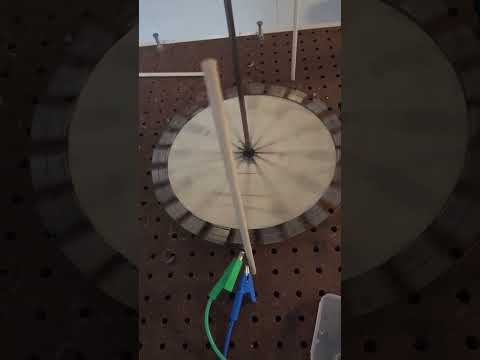
24-Node Magnet Array Pulse Motor — Single Solenoid Design
Reduced solenoid magnets down to ONE and bumped the rotor array to 24 magnets.
 Long-form
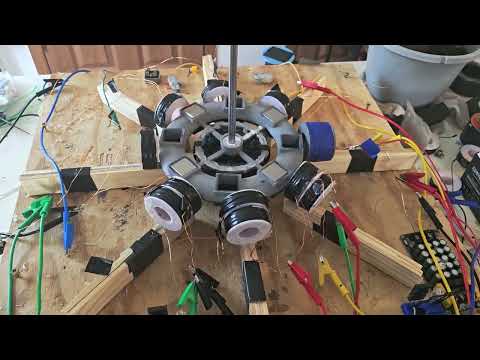
2 circuits running a third room still for some growth/expansion.
Papa Bale here with a messy bench update.
 Long-form
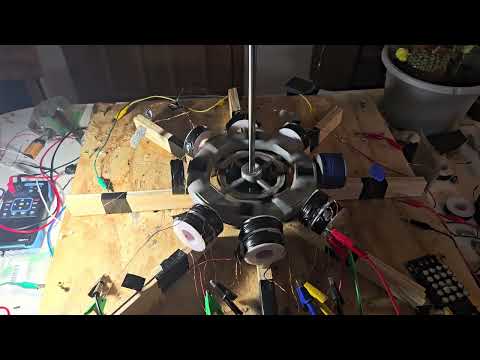
M.P.H.'s pulse motor labs EP:2 Skin deep
I fire up two circuits at once, chase meter spikes, and retell the day a three magnet rotor one literally exploded at speed.
 Long-form
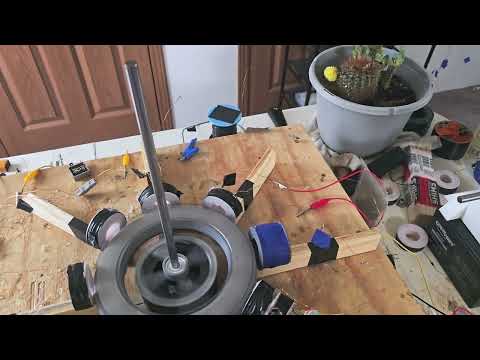
Amp Funnel Coil: Pulse Motor Labs EP:1
Eight-magnet eight-coil pulse motor lab — amp funnel coil wiring, pickup coils, and give-and-take battery measurements.
One path · free first
Watch free → subscribe → optional membership
Notes stay free. The full experiment lives on YouTube. Membership is optional when you want Discord and exclusives — not required to learn.
- 2
Subscribe free + turn on alerts
Hit Subscribe, then the 🔔 bell so you catch the next experiment.
Subscribe free + 🔔 - 3
Optional: join for $2.99/mo
Members-only videos, Discord, and live shoutouts — cancel anytime.
Join $2.99/mo
Longer sessions · ad-supported free library
Not done yet? Queue the next long-form run
Queue up the next long-form bench run on YouTube — longer sessions keep the workshop free for everyone.
- 1▶ Watch full on YouTube
Start: Shocking Truth About Pulse Motors
Notes & transcript on site - 2▶ Watch full on YouTube
M.P.H.Jr Pulse Motor Labs EP:1 Just scratching the surface
Notes & transcript on site - 3▶ Watch full on YouTube
8 Neo Cube Magnet Pulse Motor Hits 1300 RPM — Amp Funnel Coil Power Test
Notes & transcript on site - 4▶ Watch full on YouTube
Name change, plans for the future, Motor generator start of something cool 😎
Notes & transcript on site