Optimization·Transcript-backed
reed switch motor: magnetic levitation: Minor Adjustments
reed switch motor — magnetic levitation — Watch me tweak my pulse motor with graphite lube, better balance on the levitation discs, and lower voltage do…
Long-form · Full audio · Best on YouTube
Watch the complete video: reed switch motor: magnetic levitation: Minor Adjustments
Watch the full long-form video on YouTube — that's where the full bench audio, runtime, and experiments live.
Preview embed · full runtime is better on YouTube
Prefer the full player? Better audio, runtime, and next-video queue on YouTube.
▶ Open full on YouTubeJump to the discussion · full video on YouTube
Hear it on the bench
Each link opens “reed switch motor: magnetic levitation: Minor Adjustments” on YouTube at the first time that topic comes up in the captions. Stay on YouTube for the complete runtime.
See it on the bench · full runtime on YouTube
What to watch for
- ▸Graphite lubricant in the halls and on the discs cut friction dramatically
- ▸Pulse motor now runs at just 1.74 volts while still turning
- ▸Levitation discs use magnet arrays that can be a little off-balance but self-correct
- ▸Ideas for polarizing coils and Tesla coils to create lift with pulse motor rotor magnets
- ▸Simple bench tweaks can give major efficiency gains without fancy parts
Watch the full long-form video on YouTube — that's where the full bench audio, runtime, and experiments live.
Experiment notes (read while you watch)
Notes support the video — for the full-length run with complete bench audio, stay on YouTube.
I dropped the voltage on this pulse motor down to 1.74 V after adding graphite lubricant and tweaking the levitation discs. The pulse motor rotor magnets now run with way less friction even if it's not screaming fast. Lots of wild ideas about Tesla coils, polarization, and magnetic levitation for vehicles too.
Key takeaways
- Graphite lubricant in the halls and on the discs cut friction dramatically
- Pulse motor now runs at just 1.74 volts while still turning
- Levitation discs use magnet arrays that can be a little off-balance but self-correct
- Ideas for polarizing coils and Tesla coils to create lift with pulse motor rotor magnets
- Simple bench tweaks can give major efficiency gains without fancy parts
Short bench session showing how a few tweaks made my pulse motor run smoother at super low voltage. I talk about the levitation discs, future vehicle ideas, and why we should all be able to experiment with this stuff.
From the spoken experiment
The following notes stay close to what was said in the video about magnetic levitation:
> yo yo what's up Michael page hat in here we're just looking um and how to reduce the amount of energy that I was putting into this and where it's running and 1.74 volts heck yeah now it's not going very fast granted but there's so much less friction now that I put some more graphite lubricant in in all the Halls and then this clamp that I have see the disc on the top there a six inch disc there's one underneath it too and it clamps down on the on the Murray disc well they all have a ray on them but I call them levitation discs because they make it float get a thesaurus man that's what I do yeah there's a pole there so what so they're a little bit off balance they need to grab full every once in a while so they don't fall and that's what they do there's nothing that said there couldn't be a shaft in there man nothing that says there can't be a shaft in levitation nothing although the levi…
Builder checklist
- Confirm trigger/sensor timing before chasing higher voltage
- Watch heat on coils and transistors during longer runs
- Record voltage and behavior at each change (one variable at a time)
Related on this site
Related on this site
- How to Wind Coils for a Pulse Motor (Step by Step) — Directly matches the secondary keyword pulse motor coil winding and gives step-by-step guidance
- Pulse Motor Rotor Design: Magnets, Materials and Balance — Complements the primary keyword pulse motor rotor magnets with design and balance tips
- I Finally Got My Pulse Motor Running (Reed Switch) — Shows earlier reed switch success that is referenced in the transcript
- Magnetic Levitation on a Pole – Experiment 1: Push, Pull & Balance — Matches the levitation disc discussion in the video
---
*Generated from video transcript (hash `d0e470e98e4a…`).*
Full transcript (4,047 chars · en)
yo yo what's up Michael page hat in here we're just looking um and how to reduce the amount of energy that I was putting into this and where it's running and 1.74 volts heck yeah now it's not going very fast granted but there's so much less friction now that I put some more graphite lubricant in in all the Halls and then this clamp that I have see the disc on the top there a six inch disc there's one underneath it too and it clamps down on the on the Murray disc well they all have a ray on them but I call them levitation discs because they make it float get a thesaurus man that's what I do yeah there's a pole there so what so they're a little bit off balance they need to grab full every once in a while so they don't fall and that's what they do there's nothing that said there couldn't be a shaft in there man nothing that says there can't be a shaft in levitation nothing although the levitation without the shaft is really really cool and what I want to it's what I really want to have a crack at doing something like that one day that would be really really cool to uh have you know actual levitation like say on a vehicle you know but since we're talking here I'm I was thinking about Tesla coils and if you know if you can polarize a wire say north or south and you can then you can definitely polarize a Tesla coil north or south as long as that Reed switch is working should continue to move um yeah and then you could have one of these discs like attached to the wheel of your car so it could be a you know hybrid of sorts and then the Tesla coil you can put them close enough together quantumized of course which means you got the same amount of power or more power and a much smaller space and yeah that would be great then you could do exactly the levitation trick that I'm doing with these magnets you put them so close together with the all facing the same way it tricks the other disc which has the same array on it into thinking there's only one polar on Pole you get what I'm saying I mean the other side is still there and if you push hard enough on the discs they're going to latch together but if you don't it works but that's just these and I was thinking that um you know you get one of those magnet array directional things going or whatever however you're going to do it and you create the same uh pull that's coming from the Tesla coils and then poof you got this pillow of electrical energy that when those magnets on the wheels are the levitation devices on the wheels hit that pillow they're gonna you're gonna lift up and you're gonna be able to move and do whatever you need to do I'm sure there's some great Engineers that could piece that together but I'm telling you man utilize the Tesla coil and under different leadership it could be cheap to do I'm sorry but you know you can't well I mean you can do you pretty much do whatever you want you know but uh I just think it would be a great idea to utilize the knowledge that we already have to create new and better things for now in the future oh I come up with ideas all the time man but I I I'm lazy sometimes you know I mean it's not an excuse but I'm pretty sure that if you can polarize a wire like I was saying before you could polarize the coil so why aren't we getting on that I want to fly before I die man and you got to make that available for everybody man not just the super rich or the sick and dying it doesn't make a sweepstakes win or something like that no man everybody should be able to do this the government should make that a priority you know if any of it's real to begin with which you know if you can't polarize the Tesla coil it's kind of that is a whole different ball game it's a lot harder try and figure out and you know you see like you work with the infrastructure you get asphalt for rubber tires and it works or concrete for rubber tires it works see what I mean so you get Tesla coils for levitating vehicles and it works question mark all right that's all I got have a good night and thank you for watching peace out
Keep watching · longer sessions
More long-form bench runs
Queue up the next long-form bench run on YouTube — longer sessions keep the workshop free for everyone.
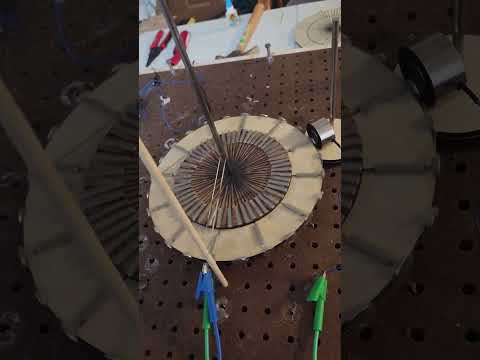 Long-form
250N Solenoid Upgrade: Dramatic Speed Response & Voltage Tests
Papa Bale installs a 250N solenoid magnet and the results are immediate.
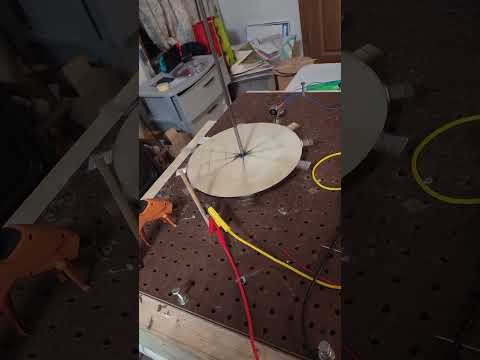 Long-form
I Finally Got My Pulse Motor Running (Reed Switch)
Reed switch on a wood stick, 1-3-1 magnets, 15–24 V and tiny current.
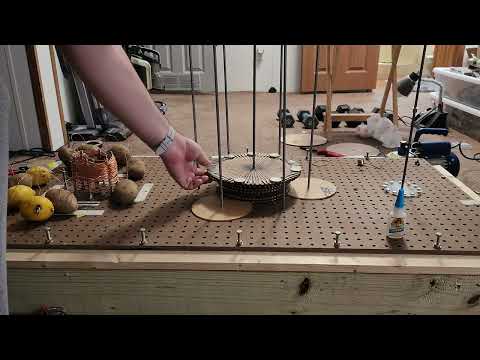 Long-form
Less Is More — Clockwise vs Counterclockwise
Comparing clockwise and counterclockwise rotation efficiency under the less-is-more design principle.
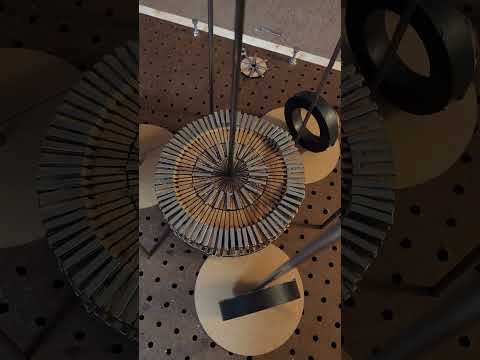 Long-form
More for Less / Less Is More
Achieving more output with less input, and using fewer magnets for better results.
One path · free first
Watch free → subscribe → optional membership
Notes stay free. The full experiment lives on YouTube. Membership is optional when you want Discord and exclusives — not required to learn.
Watch full-length on YouTube
Open the complete bench run — full audio and runtime. Free path that keeps the workshop online.
- 2
Subscribe free + turn on alerts
Hit Subscribe, then the 🔔 bell so you catch the next experiment.
Subscribe free + 🔔 - 3
Optional: join for $2.99/mo
Members-only videos, Discord, and live shoutouts — cancel anytime.
Join $2.99/mo
Longer sessions · ad-supported free library
Not done yet? Queue the next long-form run
Queue up the next long-form bench run on YouTube — longer sessions keep the workshop free for everyone.
- 1▶ Watch full on YouTube
Start: Shocking Truth About Pulse Motors
Notes & transcript on site - 2▶ Watch full on YouTube
M.P.H.Jr Pulse Motor Labs EP:1 Just scratching the surface
Notes & transcript on site - 3▶ Watch full on YouTube
8 Neo Cube Magnet Pulse Motor Hits 1300 RPM — Amp Funnel Coil Power Test
Notes & transcript on site - 4▶ Watch full on YouTube
Name change, plans for the future, Motor generator start of something cool 😎
Notes & transcript on site