Experiments·Transcript-backed
Pulse Motor Generator Setup – N/S Magnet Array on Rotor
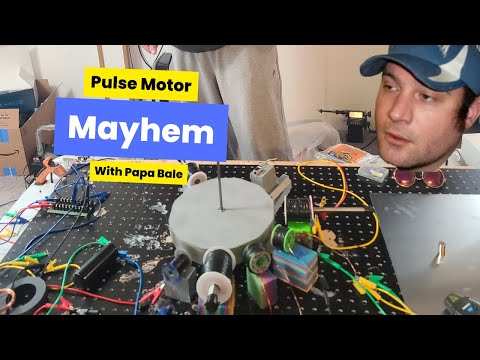
Watch how I solved the north south magnet array problem on my pulse motor rotor by putting one magnet in the center. Reed switch timing, aluminum core drive coil, 120 degree generator phases and first spin results.
Long-form · Full audio · Best on YouTube
Watch the complete video: Pulse Motor Generator Setup – N/S Magnet Array on Rotor
Watch the full long-form video on YouTube — that's where the full bench audio, runtime, and experiments live.
Preview embed · full runtime is better on YouTube
Prefer the full player? Better audio, runtime, and next-video queue on YouTube.
▶ Open full on YouTubeJump to the discussion · full video on YouTube
Hear it on the bench
Each link opens “Pulse Motor Generator Setup – N/S Magnet Array on Rotor” on YouTube at the first time that topic comes up in the captions. Stay on YouTube for the complete runtime.
See it on the bench · full runtime on YouTube
What to watch for
- ▸Putting one magnet in the center with a stick lets the reed switch fire at the right intervals for the six north/six south outer array.
- ▸Aluminum core on the bifilar drive coil reduces unwanted flux for a smoother ride instead of generating extra power.
- ▸Three separate 120 degree coils (34ga, 32ga, 14ga) act as a three-phase generator; polarity and hookup order still need real-world testing on the bench.
- ▸First spin worked with six inner magnets replacing the previous twelve, giving stronger hits at lower complexity.
- ▸Plans include bridge rectifying each phase, testing capacitor dump back to the drive circuit, and possibly sawing the big core for faster RPM.
- ▸The makeshift stick holder lets easy RPM adjustment without holding it by hand.
Watch the full long-form video on YouTube — that's where the full bench audio, runtime, and experiments live.
Experiment notes (read while you watch)
Notes support the video — for the full-length run with complete bench audio, stay on YouTube.
Papa Bale figures out how to run a pulse motor with an alternating north south magnet array on the rotor by adding one central magnet timed with a reed switch. He uses an aluminum core drive coil for a smooth kick, three 120 degree generator phases in different gauges, and shares his bench thoughts on bridging, rectifying, and possible series/parallel hookups while the rotor spins.
Key takeaways
- Putting one magnet in the center with a stick lets the reed switch fire at the right intervals for the six north/six south outer array.
- Aluminum core on the bifilar drive coil reduces unwanted flux for a smoother ride instead of generating extra power.
- Three separate 120 degree coils (34ga, 32ga, 14ga) act as a three-phase generator; polarity and hookup order still need real-world testing on the bench.
- First spin worked with six inner magnets replacing the previous twelve, giving stronger hits at lower complexity.
- Plans include bridge rectifying each phase, testing capacitor dump back to the drive circuit, and possibly sawing the big core for faster RPM.
- The makeshift stick holder lets easy RPM adjustment without holding it by hand.
In this bench session I tackled the north south magnet array on the rotor by putting one magnet in the center. The reed switch now fires six times per revolution instead of twelve and the whole thing spins nicely. I used an aluminum core on the drive coil to keep magnetic flux low and give the rotor a smooth kick. Three 120 degree generator coils in different wire gauges are wired up next and I'm curious what each phase will put out once rectified. Everything is still experimental but the first spin looked promising.
Related on this site
- Pulse Motor Rotor Design: Magnets, Materials and Balance — Directly matches the magnet array and central magnet timing discussion
- How to Wind Coils for a Pulse Motor (Step by Step) — Covers the 5000 turn 34ga coils, clockwise winding, and aluminum core addition
- Best Wire Gauge for Pulse Motor Coils (AWG Guide) — Compares the 34ga, 32ga, and 14ga phases used in the three 120 degree circuits
- I Finally Got My Pulse Motor Running (Reed Switch) — Companion reed switch timing video with similar central magnet approach
- Pulse Motor vs Bedini Motor: What's the Difference? — Explains the Bedini-style circuit elements mentioned in the transcript
---
*Generated from video transcript (hash `9ead5beb7aa7…`).*
Full transcript (8,633 chars · en)
hey ladies and gentlemen what's up this is Papa Bale and welcome to the channel so I was presented with a predicament and this is how I solved it um I wanted to do north south uh array of magnets on the outsides we have six North Six South alternating uh magnets on the outside and so I was thinking like how am I going to get my pulse motor to run this so there was a suggestion made to me on my Channel that I put one magnet in the center and use a stick to adjust the RPMs well I just I timed it with the six same magnets on the outside so there's six of the same on the inside but you know there was 12 on the outside and it moved with 12 now it's six on the inside and it moves everything with six hits instead of 12 so there are six magnets positioned under the read switch at timed intervals with the outer magnets of the same polarity and then uh we have uh we have three coils in the drive circuit now we got the bif filer coil right here with a with a 13 uh inch aluminum core see what we're trying not to do is have a lot of magnetic flux I know it generates power and all that but that's that's not what we're we're just looking for a smooth ride here so just enough kick to get it going in a Direction so an aluminum core will do the trick it will close everything up it'll finish everything off off um the way I'm doing it is the last piece you add to the coil it's not the first thing you do so last thing you do is that the problem I have is that is this is the only size core that I have that fits any of my [Music] bottomin so and the circuits go like this you got a 120 degree 34 gauge circuit which has 5,000 turns in each coil they're all clockwise um that's pretty much all you need to know and I marked the front and the back the only thing I haven't checked is the polarity but I'm pretty sure since they were wound the same way and they all have the same front and the same back that they're going to be the same polarity but that who knows right so I got to test that but I think I can really test that just by using the motor itself I I don't need any like tricks or anything I can just tell you know is it better or worse when you had this coil usually if it's counterproductive it's going to be worse you can tell right away there's no need to uh do anything else um and I'm hoping with the alternating magnets that we get some different readings um I'm not I don't know what we'll get but it's fun to find out so we got the like I'm saying I'm sorry I apologize for straying off like that we got the 120s we got three of them so it's a three-phase generator and we got the Drive circuit it used to be one one drive coil and then 11 generator coils but I figured like if we just do it in a phase and do it 120 [Music] um that it would work out uh we could even put switches in between each phase so All Phases would be running at the same time but they wouldn't be congruent or working together until you threw the switch you get what I'm saying I'm not sure if that's a thing but feel I feel like I could do that if I wanted to like it might be counterproductive in the long run to have that at all but just to be in more control of what was going on I might do that because the last circuit last 120 degree coil circuit is going to be these 14 gauge I'm trying to generate you know amps and then I'm trying to see what each circuit can generate I'm trying to see what they generate allog together trying to see series circuit trying to see if a parallel circuit might be useful cuz I don't I think I'm I'm meaning like micro amps like mini amps milliamps whatever kind of small ass amps we're talking here to make this thing work but apparently I'm getting you know minus .01 amps of any kind but I'm dying to see what that 14 gauge uh circuit will provide if I wash it all through a bridge Rectify then send it through a capacitor back to the to the to the drive circuit so when the power supply says that hopefully this thing will be moving uh and what I what I think this should might thank you thank you you know that's that's a sign there you go it's off now um but what I was thinking oh man if we get to 14 what I want to know is I mean I'm just looking at this core right here it is freaking L maybe I could saw it down maybe I can't I don't know but I'm thinking maybe I saw it in half saw an inch off and then saw it in half and get two six inch cores out of it so that works and that'll get going really fast and it's on a little wheel so I can just if it needs to be turned a little bit I can turn it the light has blown out though so I don't know how much longer this one's going to last all right so I'm going to get to hooking up these uh coil circuits and making the last two 14 gauge that's awesome that is literally awesome the Jerry rigged makeshift so you get the the alternating magnets to spin set set up this way so that's awesome that and I don't have to sit here and hold it you know and if I need to move it a little bit I can oh that's going to be so cool all right so we got two 120s here we got a 34 and the next one is a 32 and then the 14 gauge and I'm thinking that they're all going to be the wrong circuit you know I'm thinking about how I'm going to bring them all together or if I even need to um yeah it's kind of perplexing now because you can put all the the dump ends the negative ends the uh finish ends if you say you start to the right but let's say you start to the left no we're starting to the right all right so we go one two three that's what I'm wondering should we go one two 3 and then connect it to a one two 3 connected to one two three like in a parallel circuit of series circuits if that's a thing because they all got to be Bridge rectified and I'm wondering how I'm going to do that because if you you tie each circuit because I want to make the 120 circuit okay then I want to have that go to the bridge rectifier and make the next 120 and see we have three three AC nodes on the bridge rectifier we got three AC generator circuits 3 AC circuits 3 AC nodes makes sense to me right but now I know it's not that simple so what I'm thinking is the one end yeah see the capacitor you could throw that in there that gives us another two or three hookups so what another way I see is as being as we give each their own one of these and then you use two AC's and you send the DC to the next uh one of these and this time you're only going to need one because you're going to hook the DC end of all three of the bridge rectifiers to the AC one of these and you're going to hook the DC probably to the capacitor and then the capacitor is going to be hooked to the positive end of your drive circuit now now I know there's other circuitry that I could be using that would probably be useful but I don't know how to use it I don't know is you got to use layman's terms can't go like glb 409250 I don't know what that means okay and and I'm really really really lazy I mean look I'm not going to look that up um now if you are kind enough to drop me a comment and you leave like like that in a comment I will definitely uh I I usually unless it's like straight up like perpetual motion stuff I'm not I'm not trying to do that whoever like made like put even the the term forever in the dictionary is a religious fanatic you know that's it's BS man it's straight up nothing lasts forever nothing lasts forever man even the most Primal nature forces have a spark to them something started that you know and it's going to end yeah it all exists within the Paradigm man everything you can do it's already been done and it already exists within the Paradigm me I'm just trying to do whatever I can without actually you know I I appreciate YouTube comment learning I've learned a lot from you YouTube comments and then some of this stuff is my own desires I mean the size the weight the big magnets that's all me you know nobody really has an opinion on the size of magnets you're supposed to use but I found using bigger magnets on whatever size coil uh produces better results and what I'm saying is the power they don't really have to be that big see these aren't that that big they're just they're really powerful that's what I mean um yeah torn this thing open a hundred times I like this this is righteous see this is four volts this is eight see it's got the pickup of six but once it gets going man it's good good enough I'm going crank it all the way up real fast there's our light that was 25 Volts for a little while I don't want to like really do that for too long all right sounds good to me man peace out have a good night please subscribe bye now
Keep watching · longer sessions
More long-form bench runs
Queue up the next long-form bench run on YouTube — longer sessions keep the workshop free for everyone.
 Long-form
Reed Switch on a Multi Pulse Motor Setup
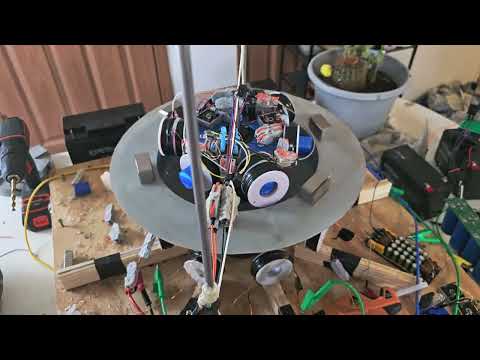
Hooking a reed switch into the multi pulse motor: transistor out, 200 ohm resistor, amp and volt readings on the bench.
 Long-form
Turbo Drive Concept for Counter Rotator
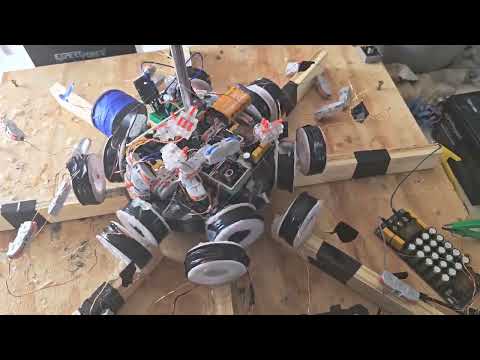
Putting a drive coil on a counter-rotator: 2.5V start, capacitor-fed LEDs, mutual inductance on the bench.
 Long-form
Coil Passes in My Pulse Motor Sandbox (Magnet Induction Test)
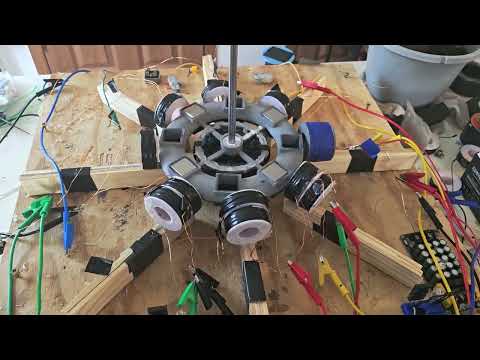
6-magnet rotor vs 8 bifilar stator coils: coil passes from 400 Hz down to 100 Hz at 12–30 V, north/south fields, under 130 mA.
 Long-form
2 circuits running a third room still for some growth/expansion.
Papa Bale here with a messy bench update.
One path · free first
Watch free → subscribe → optional membership
Notes stay free. The full experiment lives on YouTube. Membership is optional when you want Discord and exclusives — not required to learn.
- 2
Subscribe free + turn on alerts
Hit Subscribe, then the 🔔 bell so you catch the next experiment.
Subscribe free + 🔔 - 3
Optional: join for $2.99/mo
Members-only videos, Discord, and live shoutouts — cancel anytime.
Join $2.99/mo
Longer sessions · ad-supported free library
Not done yet? Queue the next long-form run
Queue up the next long-form bench run on YouTube — longer sessions keep the workshop free for everyone.
- 1▶ Watch full on YouTube
Start: Shocking Truth About Pulse Motors
Notes & transcript on site - 2▶ Watch full on YouTube
M.P.H's pulse motor labs Ep:3 Sandbox
Notes & transcript on site - 3▶ Watch full on YouTube
2 circuits running a third room still for some growth/expansion.
Notes & transcript on site - 4▶ Watch full on YouTube
4 parallel drive coils pulse motor generator 25x with 2.08v .7 amps in 55v 1 amp out
Notes & transcript on site