Experiments·Transcript-backed
M.P.H's Pulse Motor Labs Ep:3 Sandbox
Watch me test coil passes on a 6-magnet rotor and 8-electromagnet stator setup. From 400 Hz down to 100 Hz at 12-30 volts, see the north/south fields, current draw, and what happens with magnet induction and electric coil behavior. Real bench results only.
Long-form · Full audio · Best on YouTube
Watch the complete video: M.P.H's Pulse Motor Labs Ep:3 Sandbox
Watch the full long-form video on YouTube — that's where the full bench audio, runtime, and experiments live.
Preview embed · full runtime is better on YouTube
Prefer the full player? Better audio, runtime, and next-video queue on YouTube.
▶ Open full on YouTubeJump to the discussion · full video on YouTube
Hear it on the bench
Each link opens “M.P.H's Pulse Motor Labs Ep:3 Sandbox” on YouTube at the first time that topic comes up in the captions. Stay on YouTube for the complete runtime.
See it on the bench · full runtime on YouTube
What to watch for
- ▸Coil passes at lower frequencies (down to 100 Hz) produced detectable north and south magnetic fields from the stator coils at 20-30 volts and 50-130 mA.
- ▸Bifilar coils on the drive half showed polarity differences even when scavenged parts had opposite winding directions.
- ▸Goal was to make stationary coils puff out a field strong enough for the rotor's induction coils to generate transformer-style voltage on each pass.
- ▸One coil produced a north field, the adjacent a south field, proving the magnetism came directly from the pulsed coils, not the shaft or magnets.
- ▸Higher voltage (25-30 V) increased current but still stayed under 130 mA while trying to enlarge the magnetic field for better coil passes.
- ▸Compared earlier 32-gauge iron-core coil that could spike over 1000 V (low current) on similar induction passes.
Watch the full long-form video on YouTube — that's where the full bench audio, runtime, and experiments live.
Experiment notes (read while you watch)
Notes support the video — for the full-length run with complete bench audio, stay on YouTube.
Papa Bale spins up a 6-magnet electromagnetic rotor against an 8-coil stator wired in series. Starting at 400 Hz and dialing down frequency while increasing voltage, he hunts for strong enough magnetic fields from the coils to act like permanent magnets. Bifilar coils, low current draw under 130 mA, and visible north/south poles on different coils.
Key takeaways
- Coil passes at lower frequencies (down to 100 Hz) produced detectable north and south magnetic fields from the stator coils at 20-30 volts and 50-130 mA.
- Bifilar coils on the drive half showed polarity differences even when scavenged parts had opposite winding directions.
- Goal was to make stationary coils puff out a field strong enough for the rotor's induction coils to generate transformer-style voltage on each pass.
- One coil produced a north field, the adjacent a south field, proving the magnetism came directly from the pulsed coils, not the shaft or magnets.
- Higher voltage (25-30 V) increased current but still stayed under 130 mA while trying to enlarge the magnetic field for better coil passes.
- Compared earlier 32-gauge iron-core coil that could spike over 1000 V (low current) on similar induction passes.
In this sandbox episode I fired up the 6 mag electromagnetic rotor against the 8 electromagnet stator. All eight outer coils are bifilar and wired in series with a trigger strand ready if I swap the rotor. I pulsed them with a signal generator, starting around 400 Hz like last time but decided to walk it down by 10 Hz steps.
Power supply sat at 12 V first, then I took it to 20 V. Current stayed low — 50 mA at 300 Hz, 60 mA at 200 Hz. Spinning the rotor by hand let me watch the fields appear. One coil clearly showed a north field when I brought the test magnet close; the next one flipped to south. That polarity flip came from the way some coils were wound in opposite directions — classic scavenged-parts moment.
I kept dropping frequency and bumping voltage to 25 V (80 mA) then 30 V (130 mA). The idea was to get the stationary coils to puff out a magnetic field big enough that the passing rotor magnets and induction coils would feel it like a permanent magnet. When an induction coil passes one of these energized coils it should create a quick transformer-style voltage spike. Earlier on the other bench I saw spikes over a thousand volts (though tiny current through 32 gauge wire). Even 10 mA at high voltage can do work if you catch it right.
At 100 Hz the rotor actually stopped for a second — spacing and coil distance seemed critical. Some coils might need to sit closer; on the other table the coils were literally touching and one had a fat iron-powder core. That setup made over a thousand volts DC on induction passes, but you can't push much current through 32 gauge without melting it. Still, the point stands: a little current at the right voltage packs a punch.
Nothing ran perfectly in this sandbox, but watching the north and south fields appear straight from the coils (not the shaft or rotor magnets) felt like real progress. The primitive gauss tool had to sit right in the middle to read anything. Next steps will be closing that gap and maybe swapping in a core.
Related on this site
- How to Wind Coils for a Pulse Motor (Step by Step) — Directly supports discussion of bifilar coils, winding direction, and polarity flips observed in the sandbox.
- Best Wire Gauge for Pulse Motor Coils (AWG Guide) — Addresses the 26 gauge and 32 gauge wires used, current limits, and why thin wire still produces high voltage spikes.
- DIY Magnetic Induction Motor: Hobbyists in 2026 — Matches the magnet induction and transformer-style generation goal described when induction coils pass energized stator coils.
---
*Generated from video transcript (hash `2136f56c28fc…`).*
Full transcript (7,435 chars · en)
Hey, hey, hey. What's up? Here we go. It's Papa Bell and his lovely cat, Tigs. Want some loving right now. All right. So this is a six mag uh electromagnetic rotor and an 8 electromagnet stator. The eight on the outside are connected in series with the trigger strand waiting in case I want to take out the electromagnetic rotor. Okay, we pulse those eight coils with a signal generator. And I we I started at 400 hertz the last time I did this. I think we're going to start lower than that. or start at 400 and go down. We'll go down by 10. Okay. So, I'm what I'm going to do first. Well, our objective is to get a magnetic field off of as many of these coils as we can on the outside. The pressure is kind of an issue. There's like a could only get these three to light up last time. Okay. So, or actually there was four, a fourth one. Right now, it's kind of hard to differentiate the two, but I'm going to spin the the rotor and you'll see real quick how it goes. Okay, let's turn on some power. 12 volts. Remember that's through eight coils and some of them are pretty thin. I think 26 is my smallest one and the drive half of the coils. They're all Bif filer coils. So turn up to 20 20 volts. Give it another spin. I don't know if I'm going to start turning it down now. You get the drift, right? Going down by increments of 10. This is 300 hertz at 20 volts and uh 50 milliamps. Going to drop it some more. That's 200. We're up to 60 milliamps being drawn from the power supply here. All right, I'm going to spin it up again. All right. I want to find I don't know where it is right now. I need to find that. So, I'll be right back. All right. Is this clever device? [snorts] Oh, we are getting a north field on that coil. Now, let's stick it in this coil. Oh, it's a south field. Huh. This is what happens when you scavenge for parts. You know, in some instances, the coils are wrapped one way and direction. I mean, that's pretty cool. We got a north coil here and a south coil there. And that's all from 200 hertz and the signal generator and 20 volts and 60 milliamps. see if I can get this magnetic field to be strong enough to trigger. Uh it's just strong enough to act like a permanent magnet. Then the drive coil will bounce off of uh this coil with force. You know, that's what I'm trying to get or trying to make happen is to have these coils have a little bit of magnet magnetism to them so that when you know things are supposed to happen with the permanent magnet, they would happen with the coil. Pretty simple idea actually. Oh yeah. How about I turn up the juice a little bit? 20 volts might be a little low. Go up to 25 and give it another whirl. All right, I'm going to drop it to to 150. We're at 200 right now. All right, we're at 25. We're up to 80 milliamps. We haven't even br, you know, breached 100 milliamps yet. And we're at 25 volts. Awesome. That is so cool. I'm pretty sure nothing is happening right now, but the fact that we're getting magnetic field a north on this coil and a south on that coil. This just proving that there it's coming from the coils. It's not coming from the mag lab. It's not coming from the shaft, you know, it's coming directly from the coils. And I think that's awesome. If we can get that field to puff out, you know, just become a little bit off there. You know what I'm saying? Touch touch the rotor coils enough that something happens. You know, that's the objective right now. Got to make that field as big as we can. And since it's a stationary coil, we have to do it through pulsing and through voltage input. 30 volts 130 milliamps. See? And then when when when one of the induction coils passes the coils that have the strong field, they should generate transformer style real quick. They should definitely do that. And you know that makes it so you know it works. It's supposed to. Well, it should. You know what I mean? If you get the same transformer action here that I did on the other table where I'm generating, you know, 1,000 volts. Um, now it Yeah, it I know it's not 1,000 usable volts, but out of those thousand volts, you should be able to get something. Even at 10 milliamps, you should be able to get something, you know, and you don't need much. You really don't. You don't need much at all. But anyway, there's like several induction coils and there's one drive coil. And then when the drive coil passes the magnet, it should operate as a drive coil. But, you know, I don't I don't know exactly how far that field is reaching. I mean, this tool, it's a it's pretty primitive to figure that out. this tool. So, it's like you got to be right up in in the middle here. Let's turn down the hertz again. 100 hertz. Oh, it like stopped. That's weird. See, and then the the spacing I think it's where it has to be, but you know, some of the coils might be able to be a little closer. Because I mean the experiment in the other room, the coils are literally touching. So, and they have cores. At least the one does. It's a nice fat 32 gauge coil with an iron powder core. And it's uh I don't know. It only weighs about a pound and a half, but a pound and a half of 32 can generate over a,000 volts DC electricity. Uh maybe not usable volts because it's like 32 gauge and you you can't shuffle a bunch of current through 32 or you're going to blow a wire up. But there's a small amount of current and at thousand volts I mean a small amount of current can be pretty good. I'm just saying even if it's yeah dinky winky you know can pack a punch at the right voltage and and I mean it's exactly the same for amperage. You know, if you don't have at least some Yeah, there should be a way to convert uh like other than a cap like something that you don't have to be explained how it works. You know, you get it, it's in a box. Uh there's instructions and you set it up and it's good. That's what I'm talking about. Yeah. So cool. All right. So, as you can see, it's not working the way I want it to, but you do know how I want it to work now. So, and then like that transformer action when like a 32 or 30 30 gauge coil passes this coil right here they it should get a an energy pickup should pick up that coil. You know what I mean? But it's got to be close enough. I'm still just baffled how you get 1,000 volts off of, you know, just screwing around. Literally, I I had a 1 kilohz and 12 volts, I think. forgot how much voltage I had in there, but it wasn't that much. And then playing with the hertz, I got it to go above a th00and. And that that's that's when it it goes, you know, uh o overload at the highest setting, you know, that that's that. Cool. Cool. All right. Well, I'm going to get back to building the one that I'm going to be end up using. So, you got uh two 30 gauge coils and then I'm going to have two more over here. And they're going to be linked in series so that there's an an increase in voltage per coil. And then those two, this one over here and this one over here are going to be they're going to have 20 gauge and 30 gauge bifiler uh parallel coils. And that'll work really good with uh the you know the hexel system that I'm using all the sixes and everything. So, it'll go real good with this another six. So, that right there is probably where it's going to end up uh in the Utron, which I have tucked away for right now. All right. Well, thank you very much, ladies and gentlemen. Peace out. Have a wonderful day. Bye now.
Keep watching · longer sessions
More long-form bench runs
Queue up the next long-form bench run on YouTube — longer sessions keep the workshop free for everyone.
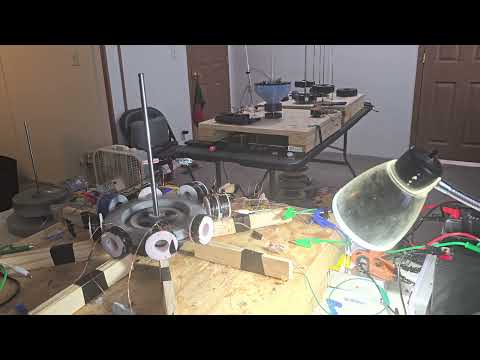 Long-form
8-Magnet Pulse Motor + Induction Coils (Bedini-Style Charge)
Eight-magnet pulse motor at 12V with series induction coils.
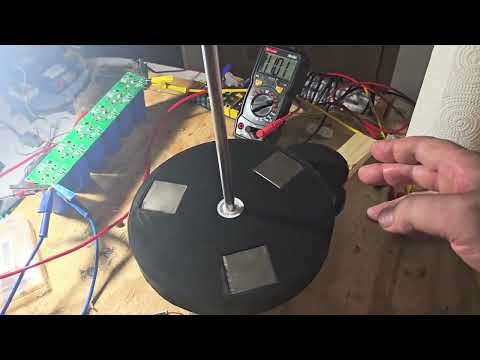 Long-form
Bedini Does Spike: Speed Increases Through Induction in Three Magnet System
Three-magnet 120-degree rotor: Bedini spike into cap banks and how induction changes speed.
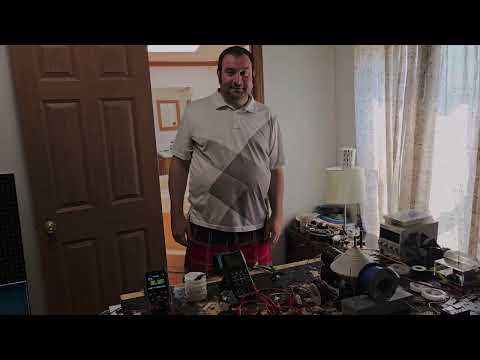 Long-form
Dual Bifilar Coil: Self-Running Energy Experiment
Dual bifilar coil with a pickup coil at 38–39V DC, then another coil under it to test residual spin.
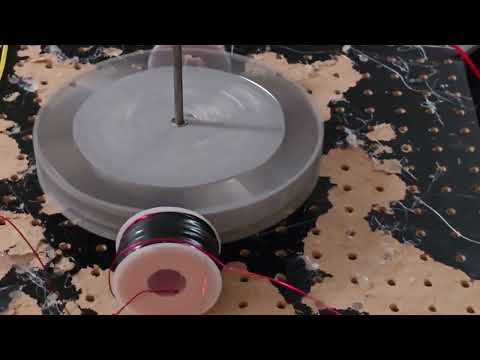 Long-form
Pulse Motor Mayhem: 4-Magnet Rotor Bifilar Test
Four magnets on the rotor, 20/30 AWG bifilar coils, held at 12V DC.
One path · free first
Watch free → subscribe → optional membership
Notes stay free. The full experiment lives on YouTube. Membership is optional when you want Discord and exclusives — not required to learn.
- 2
Subscribe free + turn on alerts
Hit Subscribe, then the 🔔 bell so you catch the next experiment.
Subscribe free + 🔔 - 3
Optional: join for $2.99/mo
Members-only videos, Discord, and live shoutouts — cancel anytime.
Join $2.99/mo
Longer sessions · ad-supported free library
Not done yet? Queue the next long-form run
Queue up the next long-form bench run on YouTube — longer sessions keep the workshop free for everyone.
- 1▶ Watch full on YouTube
Start: Shocking Truth About Pulse Motors
Notes & transcript on site - 2▶ Watch full on YouTube
2 circuits running a third room still for some growth/expansion.
Notes & transcript on site - 3▶ Watch full on YouTube
M.P.H.'s pulse motor labs EP:2 Skin deep
Notes & transcript on site - 4▶ Watch full on YouTube
Bifilar Pancake Coil Build for Pulse Motor Generator
Notes & transcript on site