Experiments·
mayhem 4-magnet rotor bifilar: Rotor Bifilar Test – 4
mayhem 4-magnet rotor bifilar — Watch our rotor bifilar test with a 4-magnet rotor. We compare speeds at 12V, share real RPM numbers from the bench, and…
Long-form · Full audio · Best on YouTube
Watch the complete video: mayhem 4-magnet rotor bifilar: Rotor Bifilar Test – 4
Watch the full long-form video on YouTube — that's where the full bench audio, runtime, and experiments live.
See it on the bench · full runtime on YouTube
What to watch for
- ▸4-magnet rotor reached roughly 630-650 RPM at 12 V, placing third behind the 6-magnet and 12-magnet runs.
- ▸Bifilar coils (20 ga drive / 30 ga trigger and 26/30 ga) with two SG circuits produced steady blinking lights and consistent triggering.
- ▸Removing the MagLab alignment tool dropped RPM by about 7, showing the importance of centered magnet-coil alignment.
- ▸Magnets on the second 4-magnet rotor appeared stronger and lined up nicely, giving similar top speed around 650 RPM max.
- ▸A small DC voltage booster pushed the input to 78 V; further two-magnet testing was teased for the next run.
Watch the full long-form video on YouTube — that's where the full bench audio, runtime, and experiments live.
Experiment notes
In this rotor bifilar test we ran a 4-magnet rotor with two bifilar coils (20/30 gauge drive/trigger and 26/30 gauge) and dual SG circuits at a steady 12 volts. Speeds landed around 630-650 RPM. We also tested removing the MagLab alignment tool and tried a quick voltage boost that hit 78 V.
Key takeaways
- 4-magnet rotor reached roughly 630-650 RPM at 12 V, placing third behind the 6-magnet and 12-magnet runs.
- Bifilar coils (20 ga drive / 30 ga trigger and 26/30 ga) with two SG circuits produced steady blinking lights and consistent triggering.
- Removing the MagLab alignment tool dropped RPM by about 7, showing the importance of centered magnet-coil alignment.
- Magnets on the second 4-magnet rotor appeared stronger and lined up nicely, giving similar top speed around 650 RPM max.
- A small DC voltage booster pushed the input to 78 V; further two-magnet testing was teased for the next run.
Short bench session testing a 4-magnet rotor in our ongoing speed challenge. Dual bifilar coils and SG circuits at fixed 12 V. Real numbers, messy alignment fixes, and a quick high-voltage peek. All data pulled straight from the bench.
From the spoken experiment
The following notes stay close to what was said in the video about mayhem 4-magnet rotor bifilar:
> hello ladies and gentlemen what's up this is Papa Bale welcome to the channel in our speed challenge for magnets on the rotor we are currently doing four magnets on the rotor we have two uh bif coils both with 20 gauge and 30 gauge 20 gauge Drive 30 gauge trigger here we have 26 gauge and 30 gauge uh we have two SG circuits on the transistors feeding from the first pulse motor to the second one we're going to start at 12 volts and that's what we're going to stay at now we did 12 12 was at UH 60 680 to 720 6 was 730 to 750 4 like four might actually win here we got three amps coming out9 2.9 here we go and our little six magnet rotor whipping not exactly sure how fast that one's going we might test it all right four magnets in the rotor here we go 622 621 I think I might need a new battery in my Tac meter 614 H oh that's terrible maybe it's [Music] uh we to see if there's uh really an acc…
Builder checklist
- Confirm trigger/sensor timing before chasing higher voltage
- Watch heat on coils and transistors during longer runs
- Record voltage and behavior at each change (one variable at a time)
Related on this site
Related on this site
- Pulse Motor Rotor Design: Magnets, Materials and Balance — Directly supports the magnet and rotor discussion in the 4-magnet test
- Best Wire Gauge for Pulse Motor Coils (AWG Guide) — Covers the 20 ga, 26 ga, and 30 ga wires used in the bifilar coils
- Which Transistor for Your Pulse Motor? (2N3055, TIP31, and More) — Relevant to the dual SG circuits and transistor performance at 12 V
- How to Maximize RPM on Your Pulse Motor — Explains the speed challenge context and why alignment and magnet count matter
---
*Generated from video transcript (hash `0251dd02cebc…`).*
Full transcript
hello ladies and gentlemen what's up this is Papa Bale welcome to the channel in our speed challenge for magnets on the rotor we are currently doing four magnets on the rotor we have two uh bif coils both with 20 gauge and 30 gauge 20 gauge Drive 30 gauge trigger here we have 26 gauge and 30 gauge uh we have two SG circuits on the transistors feeding from the first pulse motor to the second one we're going to start at 12 volts and that's what we're going to stay at now we did 12 12 was at UH 60 680 to 720 6 was 730 to 750 4 like four might actually win here we got three amps coming out9 2.9 here we go and our little six magnet rotor whipping not exactly sure how fast that one's going we might test it all right four magnets in the rotor here we go 622 621 I think I might need a new battery in my Tac meter 614 H oh that's terrible maybe it's [Music] uh we to see if there's uh really an acceleration phase going on here or what's going on 615 so that's pretty much it so four we're going to say is right around 600 650 being generous however I do think I should remove the maglab AL together wow that just dropped by seven should remove the maglab all together so that it rests right where it's supposed to rest right dead center I don't know if it'll change anything but yeah I have a feeling that raised up that high it's not getting its Optimal Reading so this is third place four magnets is in third place I don't see anything other than uh changing this rotor back that will affect you know anything I'll do that I'll do that just because so we're going to stop it just for the sake of continuity we are going to put the other rotor back on I love how it spins on that pole though all right so we're moving right along here we're on four magnets and we're going to mimic that with this rotor four magnet rotor these magnetes in my opinion are bigger though nice and or stronger than the ones that I'm working with on the other rotor and there it's magl so it lines up pretty nicely all right so the next thing I need to do is make cores of the iron infused pla for holes that size like I'm about this long and then put my 10 coils on the pole and see what happens just the whole thing in series be interesting to see what the effect is on the main Drive having a pickup coil like that all right so lights are good lights are blinking rather rather well this one's a little off it's always been a little off so now we have the four magnet rotor sorry about uh not keeping it on the thing here so we got the four magnet rotor it's moving rather quickly the four magnet rotor over here what we're testing 645 6005 so roughly going the same speed that's a awesome so we're going to say 630 to 650 for the four magnet rotor I'm going to say uh yeah virtually that's what it is it's going to be Max is 650 so 720 for 12 750 for 6 650 for 4 and I'm I'm going to blame it all on my back meter 630 okay so I did want to try something I don't know if it's going to be safe but this little devil right here will Jack it up to 78 volts just as is all right so currently we got 12 in second place we got six in first place and we've got four magnets in third place all right we're going to do two magnets now and then we might try our little voltage booster DC voltage booster all right thank you very much peace out have a great day please subscribe and stay tuned for our two magnet demonstration peace out yeah
Keep watching · longer sessions
More long-form bench runs
Queue up the next long-form bench run on YouTube — longer sessions keep the workshop free for everyone.
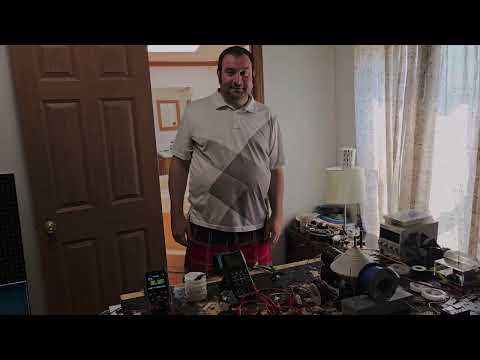 Long-form
Dual Bifilar Coil: Self-Running Energy Experiment
Dual bifilar coil with a pickup coil at 38–39V DC, then another coil under it to test residual spin.
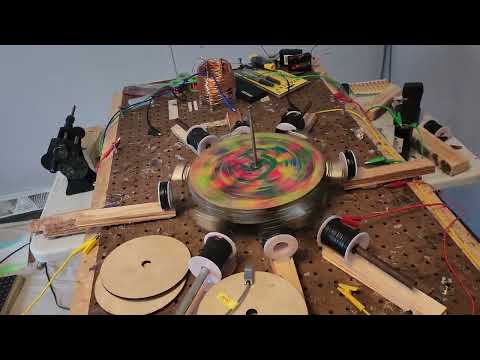 Long-form
6+6 Offset Magnet Rotor Pulse Motor (205V Bench Test)
Six magnets on the edge plus six offset underneath.
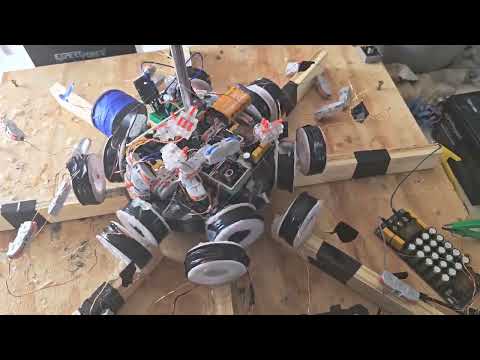 Long-form
Coil Passes in My Pulse Motor Sandbox (Magnet Induction Test)
6-magnet rotor vs 8 bifilar stator coils: coil passes from 400 Hz down to 100 Hz at 12–30 V, north/south fields, under 130 mA.
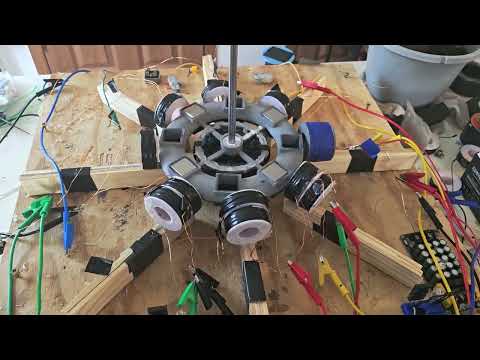 Long-form
2 circuits running a third room still for some growth/expansion.
Papa Bale here with a messy bench update.
One path · free first
Watch free → subscribe → optional membership
Notes stay free. The full experiment lives on YouTube. Membership is optional when you want Discord and exclusives — not required to learn.
- 2
Subscribe free + turn on alerts
Hit Subscribe, then the 🔔 bell so you catch the next experiment.
Subscribe free + 🔔