Experiments·
6+6 Offset Magnet Rotor Pulse Motor (205V Bench Test)
Watch a pulse motor with 6 magnets on the edge and 6 offset on the bottom. Reed-switch timing, 205V peaks, and why this six-magnet layout still spins hard.
Long-form · Full audio · Best on YouTube
Watch the complete video: 6+6 Offset Magnet Rotor Pulse Motor (205V Bench Test)
Watch the full long-form video on YouTube — that's where the full bench audio, runtime, and experiments live.
See it on the bench · full runtime on YouTube
What to watch for
- ▸Six top + six offset bottom magnets produce up to 205V and smooth high RPM spin.
- ▸Reed switch triggers every time a magnet passes, sometimes hurting coasting.
- ▸Counterclockwise rotation works better with this magnet spacing and the third circuit.
- ▸Offset bottom magnets register differently than perfectly aligned ones.
- ▸Six-magnet setup generates voltage slower than 12 but still hits impressive peaks.
Watch the full long-form video on YouTube — that's where the full bench audio, runtime, and experiments live.
Experiment notes
Papa Bale tests a pulse motor rotor with six magnets spread on top and six offset underneath, opposite polarity. The setup reaches nearly 205 volts and shows strong counterclockwise spin with the reed switch triggering every time a magnet passes.
Key takeaways
- Six top + six offset bottom magnets produce up to 205V and smooth high RPM spin.
- Reed switch triggers every time a magnet passes, sometimes hurting coasting.
- Counterclockwise rotation works better with this magnet spacing and the third circuit.
- Offset bottom magnets register differently than perfectly aligned ones.
- Six-magnet setup generates voltage slower than 12 but still hits impressive peaks.
In this bench session I ran the pulse motor with a 6-magnet hex spread on top and 6 offset underneath. The bottom set sits opposite in polarity and just enough off-center to register as offset. Voltage climbed steadily to around 185 V then I tweaked the reed switch and watched it hit 205 V. RPM looked strong, the spin stayed clean, and counterclockwise seemed to suit the cores and coils best. The starter capacitor (roughly 10,000–12,200 µF, 110–125 V, 50–60 Hz) helped get it going. When I reversed direction the reed switch engaged every time a magnet passes and the rotor slowed quicker than with 12 magnets. Overall the 6-magnet layout still performed surprisingly well once spacing and direction lined up with the circuit.
Related on this site
- Pulse Motor Rotor Design: Magnets, Materials and Balance — Directly supports discussion of 6+6 offset magnet layout and balance
- I Finally Got My Pulse Motor Running (Reed Switch) — Complements the reed-switch timing behavior shown when every time a magnet passes
- Less Is More — Clockwise vs Counterclockwise — Explains why counterclockwise performed better with this exact rotor
---
*Generated from video transcript (hash `621169b96fd6…`).*
Full transcript
hello ladies and gentlemen this is Papa Bale and welcome to the channel we're looking at the pulse motor and right now we got a six magnet we got a hex spread on the top we got six magnets and underneath we have six magnets as well now what's cool about the ones underneath is they're opposite the ones on the top so got north and south and they're offset not perfectly off offset but they're offset enough to uh register as being offset all right so um with six instead of 12 this is what we're looking at the energy electricity generation goes up much slower and it won't go up as high either look at how well that's spinning that is immaculate we're damn near it looks like 185 is going to be our voltage 26 199 holy wow that's pretty amazing with just six magnets we're getting like 200 volts I want to say 200 but it's not quite I wonder if I adjust that res switch just a little bit y there it goes 205 and cut it back so the six works really well with this spread is two and then but that's natural because the 12 works good naturally the six is going to work good if your spacing is right and it's going the right way to work with the third circuit there so right now right this very moment those two coils are very active and pushing uh counterclockwise you got to understand that the cores are you know they make make a stop and they do it less when it's going counterclockwise well there's just there's it's actually working right now I think that's great because especially with the six magnets because it triggers the read switch I don't even think think it's triggering the read switch right now but uh when it's closer the read switch will trigger every time a magnet passes and that's not good well I don't know it's looking like it's working pretty good having the re switch not engage when it's off and get a better Coast all right so there we go there's a little bit that capacitor is a starter capacitor start capacitor it's got 1,00 to 12200 uh microfarad and then it has a 110 to 125 voltage and it has 50 to 60 hertz ah so I'm going to spin it the other way and we'll see if it's working right now see if there were 12 magnets that would have slowed down a lot faster let's see here with the read switch engaging every time I don't know if it's generating enough energy to really work very well I kind of want to put the other uh six magnets back on there it's amazing it's awesome it just gets gets going there six magnets that's pretty awesome get a quick RPM test 16 under e that's pretty cool well thank you very much ladies and gentlemen for watching have a great day peace out please subscribe
Keep watching · longer sessions
More long-form bench runs
Queue up the next long-form bench run on YouTube — longer sessions keep the workshop free for everyone.
 Long-form
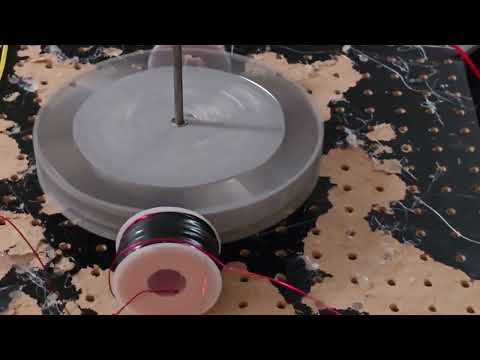
Pulse Motor Mayhem: 4-Magnet Rotor Bifilar Test
Four magnets on the rotor, 20/30 AWG bifilar coils, held at 12V DC.
 Long-form
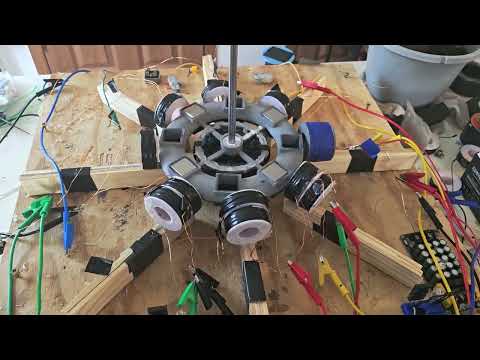
2 circuits running a third room still for some growth/expansion.
Papa Bale here with a messy bench update.
 Long-form
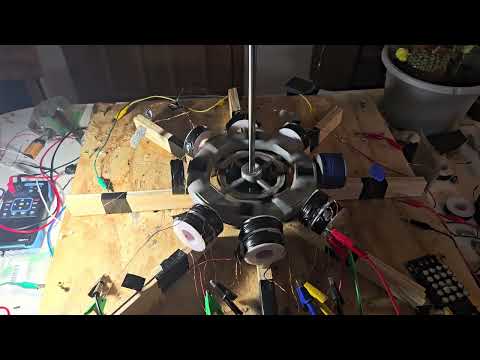
M.P.H.'s pulse motor labs EP:2 Skin deep
I fire up two circuits at once, chase meter spikes, and retell the day a three magnet rotor one literally exploded at speed.
 Long-form
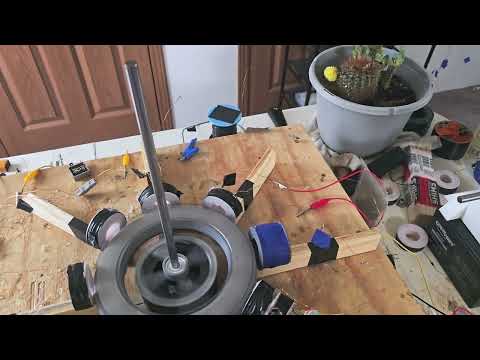
Amp Funnel Coil: Pulse Motor Labs EP:1
Eight-magnet eight-coil pulse motor lab — amp funnel coil wiring, pickup coils, and give-and-take battery measurements.
One path · free first
Watch free → subscribe → optional membership
Notes stay free. The full experiment lives on YouTube. Membership is optional when you want Discord and exclusives — not required to learn.
- 2
Subscribe free + turn on alerts
Hit Subscribe, then the 🔔 bell so you catch the next experiment.
Subscribe free + 🔔