Build·Transcript-backed
24 volt magnet: 24-Node Magnet Array Pulse Motor — Single S
Watch me test a 24-node magnet array on a solenoid pulse motor with one reed switch. It spins easy at 12-20V, picks up speed quick, and runs smoother th…
Long-form · Full audio · Best on YouTube
Watch the complete video: 24 volt magnet: 24-Node Magnet Array Pulse Motor — Single S
Watch the full long-form video on YouTube — that's where the full bench audio, runtime, and experiments live.
Preview embed · full runtime is better on YouTube
Prefer the full player? Better audio, runtime, and next-video queue on YouTube.
▶ Open full on YouTubeJump to the discussion · full video on YouTube
Hear it on the bench
Each link opens “24 volt magnet: 24-Node Magnet Array Pulse Motor — Single S” on YouTube at the first time that topic comes up in the captions. Stay on YouTube for the complete runtime.
See it on the bench · full runtime on YouTube
What to watch for
- ▸Single solenoid + 24 magnets on the disc works with one reed switch
- ▸Magnets spaced so reed switch doesn't stay triggered
- ▸Extra weight slows initial spin-up but it reaches good speed
- ▸Just touching the rotor starts rotation — no big push needed
- ▸Plan to add second disc for counter rotating pulse motor action using same reed switch
- ▸Modular hot-glue mount lets me reuse the solenoid holder
Watch the full long-form video on YouTube — that's where the full bench audio, runtime, and experiments live.
Experiment notes (read while you watch)
Notes support the video — for the full-length run with complete bench audio, stay on YouTube.
I swapped to a single 12V solenoid and loaded the flywheel with a 24-node magnet array. One reed switch fires it up — just a light touch starts the spin. It takes a bit to get going because of the extra weight but once rolling it looks promising for speed. I hit 20 volts and watched the amp draw auto-adjust. Modular build so I can tweak without tossing parts.
Key takeaways
- Single solenoid + 24 magnets on the disc works with one reed switch
- Magnets spaced so reed switch doesn't stay triggered
- Extra weight slows initial spin-up but it reaches good speed
- Just touching the rotor starts rotation — no big push needed
- Plan to add second disc for counter rotating pulse motor action using same reed switch
- Modular hot-glue mount lets me reuse the solenoid holder
I modified the flywheel again — dropped to one solenoid on this solenoid pulse motor and went big with the magnet count on the disc. One reed switch, 12-20 volts, and it runs. The 24-node magnet array makes the nodes close but not too close for the switch. It picks up speed after a few seconds and keeps spinning a while once you let off. I like this setup best so far because it should hit higher speeds and leave me parts for other experiments.
Bench notes show 15.5V at 0.0A with the amp pot wide open — it adjusts on its own based on load. At 20V it clearly speeds up. The reed switch doesn't catch every single magnet but it's enough to keep it going. Hot glue holds the solenoid at perfect height on a bolt-washer-flange stand. Everything stays modular so I can rip it apart and try the next idea without wasting money.
The counter rotating pulse motor idea is already forming — align a second smaller disc above the big one, share the same reed switch or add another, and drive both directions at once. Or drop the upper disc close enough for the bar magnets to push each other magnetically. Bearings are in but the wood fit is sloppy; aluminum and steel each have trade-offs with the permanent magnets. Steel interferes a bit but the distance seems to keep it manageable. This is pure experimentation — I'm learning as I go and having fun when it finally spins on its own.
Related on this site
Related on this site
- Pulse Motor Rotor Design: Magnets, Materials and Balance — Directly supports discussion of the 24-node magnet array and modular rotor choices
- How to Maximize RPM on Your Pulse Motor — Reader can learn next steps after seeing the single-solenoid speed behavior
- Counter-Rotating Device: Troubleshooting Resonance & Safety Relay Upgrade — Links to related counter rotating pulse motor experiments on the channel
- I Finally Got My Pulse Motor Running (Reed Switch) — Companion video showing earlier reed-switch success before the 24-node upgrade
---
*Generated from video transcript (hash `ecc3f0d6eda7…`).*
Full transcript (4,803 chars · en)
hello this page and I've modified again the flywheel of the pulse motor and we've reduced the amount of solenoid magnets down to one being increased the magnet array on the disc itself to 24. and with one read switch let's see what happens since this is a 12 volt solenoid magnet we're going to jack it up to 12 volts 12.3 uh I believe we're going to go counterclockwise wow just touched it and it it's off foreign so apparently with one magnet and one read switch it works 24 magnets they are not too close together to trigger the switch I was afraid that they'd be so close together that uh they would constantly be open you know and it wouldn't work and that that'll pick up speed it's a little bit heavier with the the extra 24 magnets on there so it takes a little while with one solenoid to pick up speed but once it gets going takes a while for it to stop I like this the best because I believe under the correct uh circumstances this will go the fastest and leave me with you know a bunch more resources to use elsewhere all right 15.5 volts 0.0 amps and the amp switch I have all the way open it kind of automatically adjusts ampage based on the based on need that is so cool that's one magnet and one Reed switch I mean I guess with the other Reed switch and the other magnet things got confusing with that many or I had them plug I had one plugged in one way and one plugged in another way I've decided that having both those wires be blue is a pain in the ass because you know all I had to do was switch the alligator clips from one to the other and it would have worked fine and you know what I believe the RPMs are going to be the same no matter what I do because the solenoid magnets are 25 n across the board so it has the same rate of lift no matter what you do with it I mean I could probably get a little bit faster if I just put it like a half a millimeter away from the magnet array but it's gonna the magnets are gonna jump onto the it's that no that won't work because I didn't glue the magnets onto the array and I'm modular experimentation is key man you got to be able to reuse a lot of your stuff or you're going to be paying through the nose I mean yeah that solenoid magnet is glued onto that little apparatus that I made out of a bolt a washer and two flanges and it's perfect height I mean why wouldn't you do it it's stable it's perfect it's a little messy because there's glue on it but it's hot glue so I can take that all apart if I want here we're going to jack it up see if we can't get some speed 20 volts I don't think it's speeding up yeah there it goes really Nifty I never thought the 24 and yellow I already have been saying the 24 magnet array is was bold move and some bold move but yep there it is and it it gets going without even you all you have to do is touch it you don't even have to push it in any kind of Direction you just touch it and that's enough because the magnets on the array are so close together and it's great because that that read switch picks and picks up I mean it might not hit every single note but it's enough for it to get going I like it I think I'm going to keep it the way it is for right now um now the idea that I have to get this disc hovering just above um so the magnets will push it along or we can have it up higher not too much higher and use a solenoid magnet and hook it to the same Reed switch or have a new read switch but anyway the idea is to align because 24 and 12. to align these magnets with the magnets on the big disk and use the same read switch to Prime two solenoid magnets one to push this disc and one to push that disk so both discs will be spinning or or we do it the old-fashioned way and we put it down close enough so the bar magnets on the big wheel and the bar magnets on the small wheel but you know the wood pulls the bearing doesn't fit very well in the wood doesn't fit very well on the aluminum fits perfect on the steel but you know we can't use the steel because that interferes with the mat the magnet permanent magnets the pole in the middle of Steel but that's because it the magnets aren't facing um well that's not true they're all facing the pole but they're far enough away that it's not affecting haha it's hard hard to explain that without sounding like an idiot um but the idea is to get two spirals going at the same time around this uh big disc down here and that'll be pretty Epic thank you have a nice night Please Subscribe and join me on my my journey having a lot of fun doing this especially when I have success so you know if you have any ideas and watching me do this stuff and you have any ideas man just let me know the guy who you know told me to use bearings I mean yeah it's good but you know it's has his pros and his cons so yes please join me have a good night
Keep watching · longer sessions
More long-form bench runs
Queue up the next long-form bench run on YouTube — longer sessions keep the workshop free for everyone.
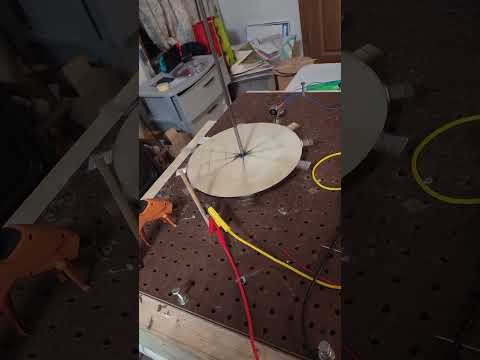 Long-form
I Finally Got My Pulse Motor Running (Reed Switch)
Reed switch on a wood stick, 1-3-1 magnets, 15–24 V and tiny current.
 Long-form
DIY Low Cost Pulse Motor Build with 16AWG Coil
Papa Bale proves you don't need expensive parts to get impressive results.
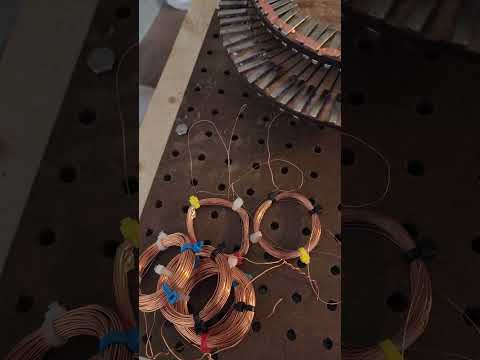 Long-form
Building a Double Helix Magnetic Sculpture
Double helix design with 72 magnets in N-S stagger pattern — preparing the foundation for an ambitious magnetic sculpture build.
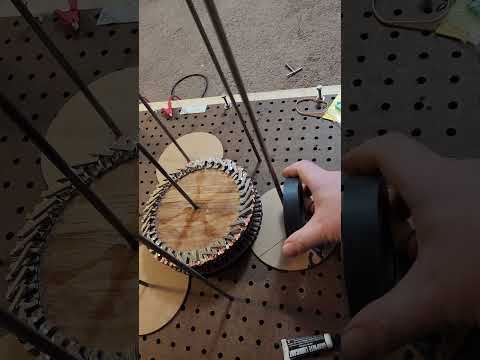 Long-form
Saw Blade Windmill — Future Plans
Planning a saw blade windmill design using magnetic principles — combining renewable energy concepts with pulse motor technology.
One path · free first
Watch free → subscribe → optional membership
Notes stay free. The full experiment lives on YouTube. Membership is optional when you want Discord and exclusives — not required to learn.
Watch full-length on YouTube
Open the complete bench run — full audio and runtime. Free path that keeps the workshop online.
- 2
Subscribe free + turn on alerts
Hit Subscribe, then the 🔔 bell so you catch the next experiment.
Subscribe free + 🔔 - 3
Optional: join for $2.99/mo
Members-only videos, Discord, and live shoutouts — cancel anytime.
Join $2.99/mo
Longer sessions · ad-supported free library
Not done yet? Queue the next long-form run
Queue up the next long-form bench run on YouTube — longer sessions keep the workshop free for everyone.
- 1▶ Watch full on YouTube
Start: Shocking Truth About Pulse Motors
Notes & transcript on site - 2▶ Watch full on YouTube
M.P.H.Jr Pulse Motor Labs EP:1 Just scratching the surface
Notes & transcript on site - 3▶ Watch full on YouTube
8 Neo Cube Magnet Pulse Motor Hits 1300 RPM — Amp Funnel Coil Power Test
Notes & transcript on site - 4▶ Watch full on YouTube
Name change, plans for the future, Motor generator start of something cool 😎
Notes & transcript on site