Build·Transcript-backed
drehen dünnwandiger scheiben: While Waiting for Supplies: Pr
drehen dünnwandiger scheiben — Papa Bale experiments with magnet wire while prepping a double helix magnetic sculpture. Watch every third magnet get fli…
Long-form · Full audio · Best on YouTube
Watch the complete video: drehen dünnwandiger scheiben: While Waiting for Supplies: Pr
Watch the full long-form video on YouTube — that's where the full bench audio, runtime, and experiments live.
Preview embed · full runtime is better on YouTube
Prefer the full player? Better audio, runtime, and next-video queue on YouTube.
▶ Open full on YouTubeJump to the discussion · full video on YouTube
Hear it on the bench
Each link opens “drehen dünnwandiger scheiben: While Waiting for Supplies: Pr” on YouTube at the first time that topic comes up in the captions. Stay on YouTube for the complete runtime.
- ▶ Watch at 2:23every third magnetprimary
“…every third magnet I flip it and so it's…”
- ▶ Watch at 2:23third magnet fliplong-tail
“…every third magnet I flip it and so it's…”
- ▶ Watch at 2:26third magnet nowlong-tail
“…north south north south every third magnet now I haven't like marked it…”
- ▶ Watch at 2:28magnet now havenlong-tail
“…magnet now I haven't like marked it…”
See it on the bench · full runtime on YouTube
What to watch for
- ▸Every third magnet is flipped north-south to create a staggered field that affects levitation and induction.
- ▸Thin magnet wire coils put out more voltage than fat ones on the same pass but run hotter.
- ▸Running one coil on top of another produces sporadic AC in the millivolt range that could be rectified later.
- ▸The double-helix design will have two independent spirals rising at the same rate on separate paths.
- ▸Lightweight discs give almost no flywheel inertia so any spin dies quickly without help.
Watch the full long-form video on YouTube — that's where the full bench audio, runtime, and experiments live.
Experiment notes (read while you watch)
Notes support the video — for the full-length run with complete bench audio, stay on YouTube.
In this laid-back bench session I’m killing time before more magnets and discs arrive by playing with magnet wire coils, flipping polarity on a levitating stack, and sketching out a double-helix sculpture that walks up two poles at once. Light discs, micro-volt AC spikes, and zero patience for waiting around.
Key takeaways
- Every third magnet is flipped north-south to create a staggered field that affects levitation and induction.
- Thin magnet wire coils put out more voltage than fat ones on the same pass but run hotter.
- Running one coil on top of another produces sporadic AC in the millivolt range that could be rectified later.
- The double-helix design will have two independent spirals rising at the same rate on separate paths.
- Lightweight discs give almost no flywheel inertia so any spin dies quickly without help.
Short bench notes from the double-helix prep day. I had a pile of light discs, a handful of rectangular magnets, and some magnet wire. While the next order ships I started laying out two separate spirals that will climb the poles together. Flipped every third magnet so the stack wants to levitate instead of lock. Ran a few quick passes over the thin-wire coil and saw a couple millivolts of bouncy AC. Nothing finished, just honest shop time.
From the spoken experiment
The following notes stay close to what was said in the video about drehen dünnwandiger scheiben:
> foreign things to do while we wait for materials to come now I was watching some videos today about flywheels and weight and inertia and we're going to spin these without all that these are light as a feather um the magnets are on the Outer Rim you know there's I guess a hundred thousand different ways to do stuff like this but this is the way I I'm doing it now I do have 20 bearings here and a few coupler flanges and I'm preparing to build a double helix see we're gonna start here and we're going to start here and this one's going to weave this way and this one's going to weave that that way I think that's the way it's going to go well it'll come to me when I build it but there's going to be a it's basically going to walk up and then this one's going to walk up at the same rate yeah so it'll go here over like this and like that but and it'll stop up here on both sides and then I'm debat…
Builder checklist
- Confirm trigger/sensor timing before chasing higher voltage
- Watch heat on coils and transistors during longer runs
- Record voltage and behavior at each change (one variable at a time)
Related on this site
Related on this site
- Pulse Motor Rotor Design: Magnets, Materials and Balance — Discusses magnet placement and polarity patterns that match the every third magnet flip shown in the video
- Magnetic Levitation on a Pole – Experiment 1 — Directly relates to the levitating disc stack and third magnet now tests
- Dabbling with Different Coils — Voltage, Heat & Magnetic Response — Compares thin vs fat magnet wire coils exactly like the bench test here
---
*Generated from video transcript (hash `2bd4633897fd…`).*
Full transcript (7,645 chars · en)
foreign things to do while we wait for materials to come now I was watching some videos today about flywheels and weight and inertia and we're going to spin these without all that these are light as a feather um the magnets are on the Outer Rim you know there's I guess a hundred thousand different ways to do stuff like this but this is the way I I'm doing it now I do have 20 bearings here and a few coupler flanges and I'm preparing to build a double helix see we're gonna start here and we're going to start here and this one's going to weave this way and this one's going to weave that that way I think that's the way it's going to go well it'll come to me when I build it but there's going to be a it's basically going to walk up and then this one's going to walk up at the same rate yeah so it'll go here over like this and like that but and it'll stop up here on both sides and then I'm debating whether or not to have a you know a center column on the on the center Pole uh I need a lot more discs done to make this work though uh oh let me explain this one this is pretty neat every third magnet I flip it and so it's north south north south every third magnet now I haven't like marked it um but I think I'm gonna make uh either an eight which would be that first ring R6 which would be the second ring all the same so a little levitate without help because it won't levitate the way it is right now with uh the staggered north south like that but I used some magnets to make that so if I ever want to generate power that would help and I was experimenting with these coils with the fat wire and these coils with the thin wire and the thin wire coils produce more voltage now I understand there's a heat issue with the plastic and the small wire but just you think about what's going on here I mean we got featherweight stuff so we're not going to get you know a three-day spin or anything like that and I mean when I uh like put a coil here like this and then I run that one on top run the other one on top of it you know it it spikes some voltage but it's nothing it's my mini volts and it's sporadic AC charging so it's like it'll go nine zero ten two minus five and I mean I got a few things in here I could probably take a part and get some pieces to build some electrical stuff but I'd rather Jerry rig it see if I can Jerry regular with what I have uh I'm probably gonna get uh uh a circuit board probably going to start off with a starter kit work my way up from there and somehow find a way to incorporate this into a circuit which will be pretty cool I think which right now I have absolutely no idea what I'm doing I mean look at that that's what I thought needed to happen for a capacitor lucky I still have lunch left but I'm I'm poor man I I it's gonna take me three years just to get done what I want to get done but you know what I got more patience than most people combined and I measure time differently so you know that was the parameters I set for myself and I'm well you know I'm well aware that it could take longer than that if the money doesn't uh straighten itself out I mean at work I work and you know I'm making ends meet but there's barely any money left over to mess around with and I mean if you can't [ __ ] around you're never gonna find [ __ ] out you know what I'm saying I mean yeah you can watch a video and then you know half of the yeah is just gone already you know it's like oh man look what I did but it's not really what I did it's what he did but I did it better than him so or whatever you know whatever the case may be uh so while I'm waiting for components to come which are magnets and discs I had my guy cut a 5 8 hole with a laser in the center to make sure I get it in the middle I mean I have a drill guide right down there the 5 8. bit but it's like sticky and you know this bit right here I don't know if it's dead center all I know is I have a better chance of him being dead center if I just buy them so discs are part of the money magnets are another part of the money like these rectangle magnets cost about roughly twenty dollars for 50 of them I got no MIDI neodym magnets those are the 40 centimeter 40 millimeter by 20 millimeter by 20 millimeter foreign running those magnets over these coils produce up to three three four volts on just a pass not every time but you know it it definitely goes overload on on micro volts so that's at least two volts so like 200 microvolts in like a setup like this if I'm getting microvolts I'm happy you know I'm not worried about it too much now with the circuit board I'm hoping to store get some diodes and store that energy either in capacitors or in a battery as DC energy I think that's the way it works you use the diodes to change the AC into DC and then you can send it through transistors and resistors and capacitors and I need to learn all that stuff what it does where it goes and that's if I'm gonna have any hope of getting you know the electricity that I make from these to say a light bulb or a battery uh yeah I couldn't get any sleep last night so I've been up pretty much all night just rearranging this different let's see what we have here you can see it is an eight inch and then a six inch a ten inch and another six inch sandwiching the 10 inch sandwich between another eight so you see how that works the six and the ten are both levitating off the eight on the bottom and moving eight on the top is levitating off the ten and the six see and that's a pretty stable uh and but you know I'm not expecting too much because it's very very light all these discs are extremely light I think my heaviest disc might be the 10 incher or the eight incher with the two one on the bottom because it has magnets on both sides and it has a six inch or four four inch that's what it is so I might move my poles around get them a little closer together yeah that'll eliminate some of the bounciness yeah it's still going but you see it's not being thrown around by itself that's pretty much just all from my hand I mean it has a little bit of those forces like inertia gravity definitely plays a role in the vertical setup um I would try to do a horizontal setup but none of the stuff none of what I'm doing will apply to that and that won't happen for a long time but I think it should be pretty cool see I got plans it's not like I'm doing the same thing over and over and over and over again trying to refine and make it better but right now this disc and that 10 inch disc this goes on the top like that oh you'll see I gotta switch out this pole yeah this bearing won't even fit somebody took a hammer to two of these poles I think it was me to get him out of some plastic pegboard and now they have little lips on them and the bearings flanges all all the quarter inch stuff won't fit them so I gotta take out two poles and put two different ones in now I have aluminum tubes which are Hollow and that should be I might use some of those might have one of those in the middle here because then you can you can send wiring up or down it should be pretty fun all right well I'm looking forward to doing this and oh oh man well besides from being disorganized having my stuff all over the place mind you those clothes are clean I just haven't put them away yet and I'm probably not the only person in the world that has that problem foreign I just love that that spins so well and with that I'm Gonna Let You Go have a nice night thank you very much please subscribe and come with me on this uh Journey I'm sure some of it will be frustrating as hell with what I've chosen but uh we'll get through it all right thank you
Keep watching · longer sessions
More long-form bench runs
Queue up the next long-form bench run on YouTube — longer sessions keep the workshop free for everyone.
 Long-form
Hexagon Magnetic Sculpture Build
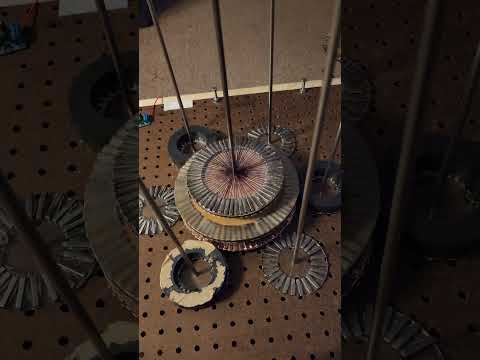
Building a hexagonal magnetic sculpture — combining art and engineering in a uniquely shaped permanent magnet array.
 Long-form
24-Node Magnet Array Pulse Motor — Single Solenoid Design
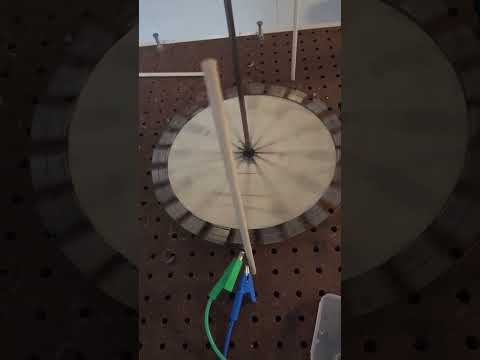
Reduced solenoid magnets down to ONE and bumped the rotor array to 24 magnets.
 Long-form
I Finally Got My Pulse Motor Running (Reed Switch)
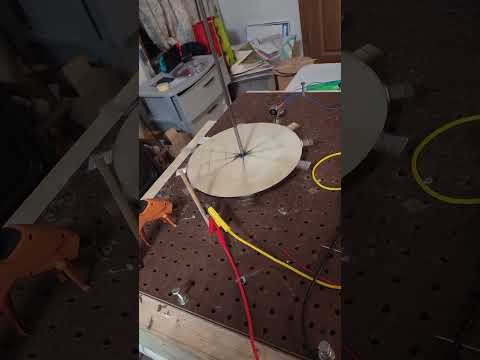
Reed switch on a wood stick, 1-3-1 magnets, 15–24 V and tiny current.
 Long-form
DIY Low Cost Pulse Motor Build with 16AWG Coil
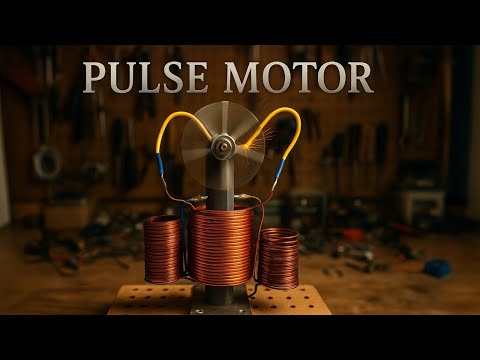
Papa Bale proves you don't need expensive parts to get impressive results.
One path · free first
Watch free → subscribe → optional membership
Notes stay free. The full experiment lives on YouTube. Membership is optional when you want Discord and exclusives — not required to learn.
- 2
Subscribe free + turn on alerts
Hit Subscribe, then the 🔔 bell so you catch the next experiment.
Subscribe free + 🔔 - 3
Optional: join for $2.99/mo
Members-only videos, Discord, and live shoutouts — cancel anytime.
Join $2.99/mo
Longer sessions · ad-supported free library
Not done yet? Queue the next long-form run
Queue up the next long-form bench run on YouTube — longer sessions keep the workshop free for everyone.
- 1▶ Watch full on YouTube
Start: Shocking Truth About Pulse Motors
Notes & transcript on site - 2▶ Watch full on YouTube
M.P.H.Jr Pulse Motor Labs EP:1 Just scratching the surface
Notes & transcript on site - 3▶ Watch full on YouTube
8 Neo Cube Magnet Pulse Motor Hits 1300 RPM — Amp Funnel Coil Power Test
Notes & transcript on site - 4▶ Watch full on YouTube
Name change, plans for the future, Motor generator start of something cool 😎
Notes & transcript on site