Build·Transcript-backed
DIY Low Cost Pulse Motor Build with 16AWG Coil
Watch me fire up a low-cost hall effect sensor motor using a 16AWG coil on just 3-5 volts. Real bench tests, what worked, what smoked, and why this little coil surprised me.
Long-form · Full audio · Best on YouTube
Watch the complete video: DIY Low Cost Pulse Motor Build with 16AWG Coil
Watch the full long-form video on YouTube — that's where the full bench audio, runtime, and experiments live.
Preview embed · full runtime is better on YouTube
Prefer the full player? Better audio, runtime, and next-video queue on YouTube.
▶ Open full on YouTubeJump to the discussion · full video on YouTube
Hear it on the bench
Each link opens “DIY Low Cost Pulse Motor Build with 16AWG Coil” on YouTube at the first time that topic comes up in the captions. Stay on YouTube for the complete runtime.
- ▶ Watch at 5:12hall effect sensor motorlong-tail
“…have the option. I might hook a Hall effect sensor up to this…”
- ▶ Watch at 5:12hall sensorlong-tail
“…have the option. I might hook a Hall effect sensor up to this…”
- ▶ Watch at 5:12hall effectlong-tail
“…have the option. I might hook a Hall effect sensor up to this…”
See it on the bench · full runtime on YouTube
What to watch for
- ▸A single 16AWG coil with 280 turns runs a rotor at 3 volts drawing ~500-700 mA
- ▸The little coil on top stacked for height gave a clean 1-2 cm air gap and strong trigger
- ▸5 volts produced massive speed but quickly burned the coil
- ▸Hall effect sensor is planned next because the 3-volt system may need 5 V to drive it reliably
- ▸Zero external resistance except coil resistance produced surprising acceleration
Watch the full long-form video on YouTube — that's where the full bench audio, runtime, and experiments live.
Experiment notes (read while you watch)
Notes support the video — for the full-length run with complete bench audio, stay on YouTube.
Papa Bale tests a single 16AWG coil (280 turns) plus 26AWG trigger strand on a transistor. Starts at 3V, hits strong RPM at 5V, then the coil lets the smoke out. Ceramic bearings, no added resistance, and plans to add a hall sensor next.
Key takeaways
- A single 16AWG coil with 280 turns runs a rotor at 3 volts drawing ~500-700 mA
- The little coil on top stacked for height gave a clean 1-2 cm air gap and strong trigger
- 5 volts produced massive speed but quickly burned the coil
- Hall effect sensor is planned next because the 3-volt system may need 5 V to drive it reliably
- Zero external resistance except coil resistance produced surprising acceleration
Quick bench session with a 16AWG coil pulse motor. 3 volts got it spinning nicely, 5 volts made it scream like a train before the coil went up in smoke. Ceramic bearings helped it freewheel. Thinking about swapping the trigger strand for a hall sensor next. Fun, cheap, and a little messy—just how I like it.
Related on this site
- Using a Hall Effect Sensor in Your Pulse Motor Build — Directly matches the next step discussed in the video for the hall sensor upgrade
- Best Wire Gauge for Pulse Motor Coils (AWG Guide) — Viewer likely wants to know why 16AWG was chosen and how it performed
- How to Wind Coils for a Pulse Motor (Step by Step) — Explains the 280-turn 16AWG and 26AWG trigger construction shown
---
*Generated from video transcript (hash `2bf785484fab…`).*
Full transcript (2,987 chars · en)
Yo, what's up everybody? It's Papa Bale and welcome to the channel. Okay, so I got, you know, I'm just thinking of things I can do to occupy my time and this was one of them. So I have three 16 gauge coils with 280 turns in them and one of them has a trigger strand of 26 gauge. So right now I'm just testing out the one coil on this transistor. It's stacked up on one of the other coils so I get height enough height to be in the zone. You can have a large air gap but you know you don't need one. So you should just not have one. It should be a you know mediocre air gap. You know a few centimeters to a centimeter. Usually the hit zone is a centimeter away from the coil. So, all right, I'm going to turn this on. 3 volts. You think that would be enough to get it going, huh? But it's a 26 gauge trigger, so you got to give a little boost. So, this is 3 volts in. We are going to be drawing about 700, I think. Maybe 500 at the end once it gets going. So, this is just that little coil on the top or med I'm going to call it a mediumsiz coil. Freaking awesome. Yeah, I don't know what that noise was. It was rattling, so I turned it off. The noise went away. 3 volts. Freaking sick, dude. That this is a threevolt system. Seriously. I'm not joking. You don't want to turn this bad boy up. You don't. It's just this little coil right here. 16 gauge and 26 gauge hooked to one of the transistors. Let me see what I can one of those. Sweet. That's awesome. It does have ceramic bearings. Wow. And it's still picking up speed, man. It's not done yet. Wow. I want to enclose that and make it let it run. Dude, that's freaking awesome. I was still picking up speed, but I don't I don't want any damage. It's far too much fun to just have it all fall apart with one second. I mean, it takes less than a second, actually. But, uh, yeah, man. Just messing around. We can hook up more to this power supply if we want. We don't want to, though. Maybe we just have the option. I might hook a Hall effect sensor up to this and then hook uh you know the trigger strand of it up to the base. You know why? Cuz it's a 3volt system. You need 5 volts I think though. Let me see if it'll work at 5 volts. 5 volts. Wow, dude. Wow. That's that power that I've been like looking for. 16 gauges. 16 gauge. Um 280 turns. around that bobin right there. Wow, dude. Wow. Mine is officially on fire. It's blown, man. That's freaking cool. I mean, it's going so fast. It sounds like a train. Wow. Sorry, I said that like 18 times in this video already. That's with zero resistance, though. There's no resistance on this except for what's in the coil. And I can guarantee that's very little. That's Oh, that's that's awesome, man. Having a 16 gauge coil open all the way up, having the transistor be able to take that and turn it into this freaking awesome. Well, that's it for today or for right now. Anyway, thank you very much, ladies and gentlemen. Peace out. Have a wonderful night. Please subscribe. Bye now.
Keep watching · longer sessions
More long-form bench runs
Queue up the next long-form bench run on YouTube — longer sessions keep the workshop free for everyone.
 Long-form
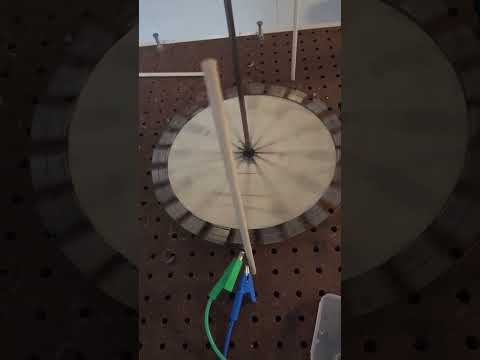
24-Node Magnet Array Pulse Motor — Single Solenoid Design
Reduced solenoid magnets down to ONE and bumped the rotor array to 24 magnets.
 Long-form
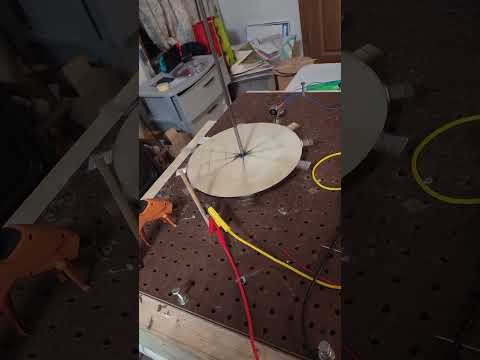
I Finally Got My Pulse Motor Running (Reed Switch)
Reed switch on a wood stick, 1-3-1 magnets, 15–24 V and tiny current.
 Long-form
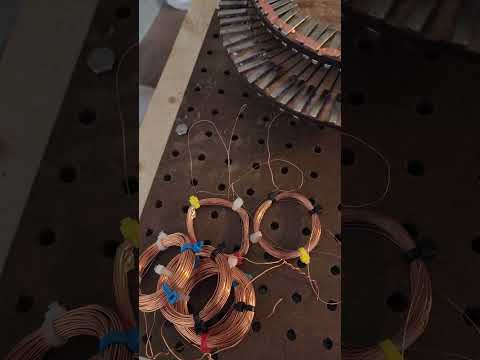
Building a Double Helix Magnetic Sculpture
Double helix design with 72 magnets in N-S stagger pattern — preparing the foundation for an ambitious magnetic sculpture build.
 Long-form
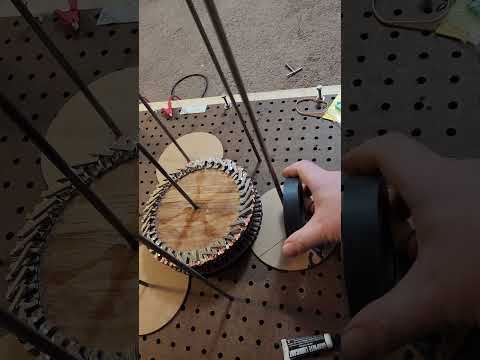
Saw Blade Windmill — Future Plans
Planning a saw blade windmill design using magnetic principles — combining renewable energy concepts with pulse motor technology.
One path · free first
Watch free → subscribe → optional membership
Notes stay free. The full experiment lives on YouTube. Membership is optional when you want Discord and exclusives — not required to learn.
Watch full-length on YouTube
Open the complete bench run — full audio and runtime. Free path that keeps the workshop online.
- 2
Subscribe free + turn on alerts
Hit Subscribe, then the 🔔 bell so you catch the next experiment.
Subscribe free + 🔔 - 3
Optional: join for $2.99/mo
Members-only videos, Discord, and live shoutouts — cancel anytime.
Join $2.99/mo
Longer sessions · ad-supported free library
Not done yet? Queue the next long-form run
Queue up the next long-form bench run on YouTube — longer sessions keep the workshop free for everyone.
- 1▶ Watch full on YouTube
Start: Shocking Truth About Pulse Motors
Notes & transcript on site - 2▶ Watch full on YouTube
M.P.H.Jr Pulse Motor Labs EP:1 Just scratching the surface
Notes & transcript on site - 3▶ Watch full on YouTube
8 Neo Cube Magnet Pulse Motor Hits 1300 RPM — Amp Funnel Coil Power Test
Notes & transcript on site - 4▶ Watch full on YouTube
Name change, plans for the future, Motor generator start of something cool 😎
Notes & transcript on site