Experiments·Transcript-backed
Papa Bale Tests a 100-Watt Load on the Hall Effect Controller
Watch Papa Bale fire up his hall effect controller on a multi-coil pulse motor running a 120W halogen at 75 volts. Real bench measurements, heat, and shutdown.
Long-form · Full audio · Best on YouTube
Watch the complete video: Papa Bale Tests a 100-Watt Load on the Hall Effect Controller
Watch the full long-form video on YouTube — that's where the full bench audio, runtime, and experiments live.
Preview embed · full runtime is better on YouTube
Prefer the full player? Better audio, runtime, and next-video queue on YouTube.
▶ Open full on YouTubeJump to the discussion · full video on YouTube
Hear it on the bench
Each link opens “Papa Bale Tests a 100-Watt Load on the Hall Effect Controller” on YouTube at the first time that topic comes up in the captions. Stay on YouTube for the complete runtime.
- ▶ Watch at 37:21hall effect pulseprimary
“…a homie Hall effect X…”
- ▶ Watch at 37:21motor hall effectlong-tail
“…a homie Hall effect X…”
- ▶ Watch at 13:2516 gauge coillong-tail
“…Awesome. Then we got this 16 gauge coil…”
- ▶ Watch at 6:07bedini pulselong-tail
“…And there's there's my uh Bedini light…”
- ▶ Watch at 12:33magnets pulselong-tail
“…magnet rotor. Neodymium cubes, south…”
See it on the bench · full runtime on YouTube
What to watch for
- ▸75 volts lights the 120W halogen extremely bright on the output coil
- ▸Input measured around 9V at 3A while producing 75V output
- ▸Iron-infused PLA locks neodymium magnets in place for higher RPM confidence
- ▸MOSFET on big heatsink gets hot quickly at higher voltage
- ▸Multiple 90° coil triggers and series copper give good resistance but not top efficiency
- ▸Rotor levitates on a toroidal magnet and runs smoother at 75V than 31V
Watch the full long-form video on YouTube — that's where the full bench audio, runtime, and experiments live.
Experiment notes (read while you watch)
Notes support the video — for the full-length run with complete bench audio, stay on YouTube.
I finally put a real load on the hall effect controller build. Running a 120W halogen bulb bright while pulling from a 9V 3A input stepped up to 75V output. Lots of coil copper in series, magnetic levitation rotor, heat on the MOSFET, and some scope talk.
Key takeaways
- 75 volts lights the 120W halogen extremely bright on the output coil
- Input measured around 9V at 3A while producing 75V output
- Iron-infused PLA locks neodymium magnets in place for higher RPM confidence
- MOSFET on big heatsink gets hot quickly at higher voltage
- Multiple 90° coil triggers and series copper give good resistance but not top efficiency
- Rotor levitates on a toroidal magnet and runs smoother at 75V than 31V
Short bench session where I slapped a 100-watt-ish halogen load on the hall effect controller. The motor is a four-magnet rotor on a levitating toroidal base with a mix of 16ga, 18ga, 20ga, 26ga, 32ga coils all wired in series. At 31V input it barely spins under the weight, but 75V wakes it right up and the light gets crazy bright. MOSFET heatsink got hot so I had to back off. Smelled something burning and shut it down. Classic live-stream troubleshooting.
From the spoken experiment
The following notes stay close to what was said in the video about how does a generator work:
> Nice brightness. That's awesome. So cool. We got a nice bright light over here. Hey, society. How's it going? Ah. Hey, how's it How's it hanging? Awesome. I finally decided to put a load on it. Yeah, I like that. It's this thing right here. It uh converts the whatever I put from the power supply into my desired voltage. So So it's my high voltage device. Awesome. So we're we're doing 75 volts on one of my circuits and we got 31 going in on the other or 32. So, it's like uh placid start and then you turn down the the the turbo boosters. You got to turn it up to like 10 just to just to turn it on really. So, the reason why there's so many coils is because all my coils are tiny, but when you add them together, they actually turn out to be quite a bit. So, that's that's why I'm doing it that way. Um, so I did them on 90°. Boom, boom, boom, boom. Like two 90° circuits. two triggers and then a…
Builder checklist
- Confirm trigger/sensor timing before chasing higher voltage
- Watch heat on coils and transistors during longer runs
- Record voltage and behavior at each change (one variable at a time)
Related on this site
Related on this site
- Using a Hall Effect Sensor in Your Pulse Motor Build — Directly matches the hall effect controller and sensor discussion in the live test
- Bedini Motor & SSG Circuit Guide (Beginner Bedini Explained) — The build is described as Bedini-esque with the same style output bulb
- Pulse Motor Rotor Design: Magnets, Materials and Balance — Covers the four-magnet levitating rotor with iron-infused PLA locking
- How to Wind Coils for a Pulse Motor (Step by Step) — Details the trifilar, dual drive, and series 16-32 gauge coil choices
- I Finally Got My Pulse Motor Running (Reed Switch) — Similar first-person title style and earlier pulse motor success video
---
*Generated from video transcript (hash `931e76692115…`).*
Full transcript (25,418 chars · en)
Nice brightness. That's awesome. So cool. We got a nice bright light over here. Hey, society. How's it going? Ah. Hey, how's it How's it hanging? Awesome. I finally decided to put a load on it. Yeah, I like that. It's this thing right here. It uh converts the whatever I put from the power supply into my desired voltage. So So it's my high voltage device. Awesome. So we're we're doing 75 volts on one of my circuits and we got 31 going in on the other or 32. So, it's like uh placid start and then you turn down the the the turbo boosters. You got to turn it up to like 10 just to just to turn it on really. So, the reason why there's so many coils is because all my coils are tiny, but when you add them together, they actually turn out to be quite a bit. So, that's that's why I'm doing it that way. Um, so I did them on 90°. Boom, boom, boom, boom. Like two 90° circuits. two triggers and then all that copper in like a series circuit. So you get the good resistance benefits of having all the copper. Now is it uh efficient? I would say not entirely the best. So yeah, having uh having the rotor be hit from multiple sides definitely turns that up. Uh, but sometimes it doesn't catch the little thing that I got. You can hear it trying to. I don't know. I see what you're saying. Yeah. Here we go. Boom. You can, you know, when it's on. And there's there's my uh Bedini light that's on my circuit. It's 120 watt H hallogen bulb. Look at how bright that sucker is. That you can tell the voltage is going through it. Hello, Yanni. Yeah. Sorry, guys. I've been really swamped with life lately. I've been trying to get on, have some fun, you know, talk stuff out and yeah, but and well, I got on now. Been really busy. That's all I'm trying to say. But yeah, I'm I'm glad to be here. Um, yeah, there you go. Thank you, sir. Cheers. So, I'm definitely going to check out Mike's channel tonight. Seems like a lot of people are going to be there. [Music] That That's cool, man. I mean, me and him are kind of up the same alley. He encouraged me to do 75 volts on my last live stream and it works out just perfect, man. It's awesome. He's like, there was a video done a while back where it's like, stop being a wussy, stop doing 12 volts. I watched that video and I he I guess, you know, it's kind of he's right. Not about the wussy part, but about it being so much better above 12. And I guess you can kind of say that if you're trying to encourage somebody to increase the voltage a little bit. It's like stop stop doing that. But it's weird because this is how much we're taking from the power supply and then we put it through that and it equals 75 volts. All right, I smell something. So, I'm going to I'm going to turn it down. Yeah, I think when uh this MOSFET right here, see this big heat sink on there? I think that MOSFET guy is getting hot. Uh this is a I would say it's a bedin-esque style motor. This is the circuit we're using right here. Uh we're getting good uh output from the coils enough to light this light up really bright. We're going to take a look at the wave, too. Well, we'll see. We're We're going to get it. Yeah. So, we got uh this light attached to the uh positive and negative end of one coil series. I'm just trying to get that fired up right now, though. All right. Yes. >> Yes. >> Got to let it cool off, I guess. Uh, the max is 345. Um, but I'm not going to I'm not going to go that high. I mean, that's what this thing can do is uh 345. Yeah, that sucks with about that thing. Um if you don't have, you know, the right kind of wire exactly, um you're going to draw too much power and it's going to get hot. That's But that's the only problem right now. I have quite a few build videos. Um, but I I can break this down for you real quick. All right. So, the rotor is a four magnet rotor. Neodymium cubes, south facing out, north facing in. It's resting on a uh toid magnet, north facing up. [Music] Oh, and the cool thing about this rotor, see those magnets are not falling out of there because this is iron infused PLA. So, they're magnetically locked in. And that gives me a lot more confidence going at higher RPMs. And then boom, it it levitates on itself with the 4-in toid magnet. And then, all right, that's the rotor setup. Awesome. Then we got this 16 gauge coil with the 26 gauge trigger. And that's connected to these, this one, and this one. And then this is a trifiler coil which is 18 20 and 32 all in series to finish it off. So that doesn't like go around in a circle like this. It goes boom boom boom boom like that. And then this is a solo trigger. There's no bif filer here, but it the red one and this 16 gauge coil and then this is my uh dual drive coil. And it's all hooked in series right now for this project. But that has two 20 gauge strands and two 32 gauge strands. Uh so it can run like a two mpns at the same time. Now, what I was going to do is you see these spokes on this rotor. I was going to print out another one and have, you know, them be on a 30° angle, right? So, you you guys basically seen maybe maybe you didn't see, I don't know, but this can get going spin pretty fast. So if 30° is enough to get you know elevation, levitation See at 31 volts that circuit is drawing 100 milliamps. Yeah, I don't like that. There's too much weight on the on the coil. I'd have to glue it down. I don't want to do that. There we go. But that 31 volts because there's so much copper doesn't uh that's not very fast. But when you put the the 75, man, that's it's a whole another ball of wax. Let's see if it's ready to go. Man. Oh, it's frustrating. This might be a short one. We'll see. There we go. Yay. Sweet. So, like immediately we're drawing 3 amps, 9 volts, but we're getting 75 out of that. So, and our light is like so bright and is that's our output light. That's brilliant. And there's our resistance light. And that's also brilliant. That's awesome. Now, what I'm going to add to this is I'm going to add two pos or pesos to each one. So, that's four. They're right over here. Just little baby ones. Absolutely. Then it's going to be popping like all over the place. Popping. Yeah, I might have to if I want to play with this more, I might have to glue it down because this is just rolling all over the place and it shouldn't be moving. Awesome. Awesome. Awesome. Awesome. And I know that just took me a while to get started, but I think if I cut it off, it's it's a lose-lose situation with this thing because, you know, you cut it off and don't let it get hot and then it might not work at all. And the same thing if you let it get too hot, then it might not work at all. Uh, yes, this is a DC brushless motor. Uh, it's uh bedin-esque, I would say. There's no I don't have any uh extensions on my collector though. Not yet anyway. So, it's just uh the solid connection. You know, you got your base. You got two connections for your collector, the light, and the um coil. And then you got your uh ground for your trigger. You got your um ground connection. And you got your other light connection. on your emitter. And then your base is just connected to the other end of your trigger coil. And and that's really all all you need to make it work. You can hook it up to a battery, a capacitor, power supply like I have. Um, yeah, you can do all that stuff. It's very versatile, especially if you don't glue your coils down. And I mean, it's good for them not to uh move around a whole lot, but if you if you're able to move them at least in a uh organized fashion, it's probably going to be that much better for you. I I have a lot of options. There are a lot of options. Um, you know, you can do it my way. I like to call it my way, but it's not my way. It's uh the rudimentary way. It's like uh doing it all like the opposite way that I don't know. I feel other people do it. I like to build it first and then do the science about it later or I don't I don't even know if I even do the science half the time. And that's I don't think it's the best way to do it. I think you should do your homework. I'm like, you know, I asked a bunch of questions. That's how I learned. You know, that was my homework. I got on YouTube and you I asked my uh you know, my audience, how do I do this? If you if you go back to my starting videos, you'll see that I didn't even know how to build a motor. I was just working with permanent magnets. I didn't even know how to work with electricity until I started doing this. It's awesome. So you put longer long a longer thread of wire in a series circuit and then I say you taper from the large gauge or the 16 gauge down to the 32 gauge. I call that the amp funnel because it draws 16 gauge amps from your power supply. But by the time it reaches back to the ground, it's going through a 32 gauge wire. And that you don't you can't force that many amps. Well, you can you can force it through that little wire. And that's what, you know, I think you get half the speed from is doing that because it's going from a 16 to a 20, then it's going to an 18. and then to a 20 and then to a 32. So it kind of goes. Wow. See, now this is weird. This is weird. The the light is faltering. And turn up the juice just a little bit. There you go. So it was just too low. It's really This is like kind of like because it's a range between like two volts, between like 9.5 and 10.5. You go above that, you're going to blow everything up. There we go. There we go. Look at that. Look at that shaft, man. If you can see that, it is vibrating like crazy. Yeah, I think uh especially my trifiler coils, the the impedance is the same. I mean, it's the same length of wire per kind. It's just uh the different gauges. I'm not sure. I agree. And I think having especially for a motor like this, having more voltage is is way better. But it's weird because if you do the math on the input from the power supply, we're getting more voltage out, more volts out for the 30 watts we're putting in. No, no, it's not the most efficient thing in the world. But I think with the 75 volts we're getting All right, welcome everybody. Just chilling here with the pulse motor. I'm trying to get my second drive hooked up. Maybe if I turn off the light switch while I'm trying to turn this on. Yeah, there we go. wants to go. So, how's everybody been? Yeah, we got better results without that on start. There we go. Yay. You can hear that thing just screaming. So, like there's this layer of uh atmosphere when you when you reach it, it sounds like a million people screaming at the same time. Like they call it the screaming layer. Uh but that's basically where the atmosphere meets the stillness of space. And the earth is spinning at what phenomenal rate of speed. And when it hits that that stillness, you get that basically what you're hearing now, except amplified many many times over. [Music] So cool. Um, these two silver ones, not the red one, but these two have a soft uh iron powder core and all the other ones are air core. but it's a big river small flowing into a smaller one and it's what it's either going to break the bank which it does most of the time or it's going to uh overflow. It's definitely going to saturate immediately. Oh, I can smell that. Yeah, I got to I got to let this thing chill. That sucks, man. I'm going to have to find a different way to get up up there in voltage. I think this will work for now. But so cool. And I'm still aiming at 31 volts on the second uh 90 degree circuit here. I'm still drawing 100 milliamps 130. I mean, and there's a lot of there's a lot of mass there. Yeah. and and that's fine. Then 32 is is better than all these other ones. It's just uh you know I think with the prop with the length involved for resistance and everything this kind of pans out pretty good with the variety. I I will uh just because of the way I chose to do things will never like agree that having all the coils be the same is the best way. I will never agree to that. I will I will always say and I don't know and I think Mike is right that you know if you put a 16 gauge wire and a 32 gauge wire together in series that that current flow is going to be of a 32 gauge wire uh ultimately but I still think um and that's just because h so yeah maybe that is Okay. And you don't get that surge of uh amperage from having the 16 g gauge coil be first. But for all the other reasons that I mentioned, this is actually working out pretty well. Yeah, current limiting. Uh, that's what we call it. That's exactly what I'm talking about. See, but the the current gets limited, but you you for all intents and purposes, you get different resistance and you get different mass for the same amount of turns. And I mean that might be more complicated in the long run, but I mean if it works better, being more complicated isn't necessarily wrong. And I and I per personally will never know if it works better. I thought 32 gauge alone worked pretty good with like a read switch. Like it works really good. Yeah. A pulse motor generator. There we go. Yay. Oh, look at that brightness. All right. So, it's just a standard hookup from the front of the circuit to the rear of the circuit. for the light right here, man. Yeah, Mike was right. Newton the high voltage is uh satisfying. I'll tell them where I'm at. I'm not worried about it. Hell yeah. And I don't have my pesos hooked up yet. When I get those hooked up, that sound is going to amplify by four times. It's just going to be popping. Awesome. Awesome. Yeah, I got that that smell. You know that smell that I'm talking about when something's getting too hot. Yeah, I got that smell. That's not good. Um, well, really what happened is me and uh a homie Hall effect X uh sat down and had a conversation. And I believe Mike does was around at that that point too. And we just hammered out exactly how we were going to hook up our transistors. And this was about a year and a half ago, two years ago. Soon as I learned how to do that, it was to the races, man. I mean, I I tested everything, you know. I tested 24 different gauges. I tested different ways to hook up coils. I've, you know, I've done a lot of stuff and I'm pretty sure honestly almost all of it's already been done before. But I don't care. I didn't I don't want to look it up, man. I just want to do it. And it's not like I don't care what the other people have done. I would just rather talk to them about it than read a book about it. You know what I'm saying? I I don't read very well. I mean, I can read if it's a if it's a necessity, but it makes my head hurt. So, I just I don't like doing it. But talking, you know, if we can get into a conversation about it and I ask you the right questions because, you know, and I'm trying to learn from you. So, I need to ask you the right question because you have the answer that I need. Um, and I got to do it the right way. That's that's the problem that I have tremendous problem with, man. I'm always like uh paranoid about stuff, you know? I'm like and it's just a bad habit. It really is. But I think it's, you know, uh, the pulse motor itself, it's been like a friend of me for, uh, a while now. You know, I have, uh, it's gotten me through some difficult times. Just being able to focus on building it and then having it work properly, you know, it gives a a boon, you know, a bolster to uh, you know, your idea of yourself and what you're capable of doing. So, but I mean like I said I had to ask you know like the base connection and I I you know I you know you connect it to the positive end of your trigger strand which is which is the positive end the positive end is the end that you started wrapping with. That's your positive end. And then you know, so what do I do with the other end? Well, you got to ground it to your emitter. So you got your trigger taken care of now. You got one end on the base and one end on the emitter. And the emitter is grounded. So there you've just grounded your your trigger coil, which you need to do for it to operate properly. How long does this run for? Like this? Not very long. It gets hot. So I got to turn it off. See, we're at now 40 43 vol uh watts. 44 Something's getting hot at that. Um, yeah. Um, I'm running this on a power on power supplies right now just to uh get a feel for it. Now, this this little contraption here will hook up to a 12volt battery and function properly. I just don't know how long that'll last for. So, right now it's running on its second circuit with 31 volts in and pushing through. Let's see how much wire it's actually going through. We got a 16 gauge coil over here about um a third 3/4 of a pound. Uh, we have a 24 gauge coil here. Yay. Yes. Thank you. Uh, 24 gauge coil here. That's about 3,000 turns. Uh, it weighs about 1 and 12 lb. And then this one weighs about 2.143 lbs. And it's uh 20 gauge and 32 gauge. Nice. All right. So, we're pumping 31 volts through all of that. And this is a trigger coil for that that line. It's an external trigger. I can move it. If I move it over just a little bit like off center from the red one across from it, it'll start going a lot faster at 31. That's why it's good to have your your at least your trigger coil able to move just like a read switch. You know, you move it off center and you're going to get that burst on the edge. Yep. very different very different magnetic fields. Um, the one circuit it's running on less voltage and has different coils. And then this circuit, if I can get it going real quick, is like completely different with more voltage going through. I am from Michigan, United States of America. But I'm a true Michigander, man. I I've been living in like 20 different places in Michigan. Love Michigan cuz it's cold when you want it to be cold. That's why I love Michigan. Uh two different power supplies. The cap bank is not in uh commission right now. Yeah, this this is Oh, come on. There we go. Come on. Come on. Come on. Yay. Here we go. Woo. Now, this is 75 volts in on the inverted. I'm going to There's two 45 uh two two 90° anglers right there. Dang. Well, um, the different coil, these are an assortment of coils that I've built over the years, so that's why they're all different. But what I believe the benefit of having a different one is is that you don't have to have um what am I trying to say? Uh you get less if you need less resistance, you can have less resistance. Okay? Each coil has its own ohms. So the 16 gauge coil is going to have a lot less ohms. And if you need less ohms, that's great. So having 16 gauge coil is good then. Okay. But they're all in series. So, um, what Mike does was saying is that if if you have a 32 gauge strand in your series circuit, then your whole entire series circuit will have the um amperage of a 32 gauge strand current limiting. Uh, but it's mainly for the resistances and the fact that it's a hodgepodge. really it is. Um, but I've I've kind of done a little bit of the math because I know these are like 2 ohms, a little bit less than 2 ohms, these big 16 gauge coils. These these two 20 gauge coils are 8 ohms a piece. So, it's like uh you know there are subtle differences. Um, there's no real reason though other than, you know, I'll just show you a little bit more. What I have like this coil right here is 10 strands of 26 gauge and it's a parallel wrap. So, I can actually hook 10 transistors up to this coil. You know what I'm saying? I got my pancake coil here. Got 2432. Got a couple of those 2432 bif filers that are tiny. Just look at the size of these things, man. They're they're small, but they're powerful. They let energy just pass right through them. I'm not You're not trying to amplify or get more out on the other side. Having the energy pass right through real fast is a good thing, you know. And I had a setup using uh this rotor right here with uh four of those tiny coils. One of them was actually running another pulse motor. Uh two of them were charging uh two batteries. And it it was great because I had this wheel powering another wheel over here which was doing you know lighting light bulbs and all that stuff. And then on the same wheel, I had, you know, battery charging going on. It was just amazing. It was immense. Uh, it was a mess. It was But it was awesome. I had like literally three motors going on one power supply and in series. It was fun. There we go. Yay. So maybe I can put a resistor on here or something. So I want to be able to start up more reliable than that. Cheers, Yanni. Thank you. Uh there's actually a diode in between every coil on this. So in every uh you know bif filer, quad filer, trifiler, they're all hooked in series with a diode and then each coil is hooked to each other with the diode in the respective. So it's it's only goes one way basically. The only thing that's really heating up fast is this Um, and that's what's giving me the 75 volts that I'm working with. Um, yeah. I mean, like I could get a spray and maybe that would work. Yeah, the MOSFET on uh this contraption is gets hot like really fast. And that's because I'm pumping so many amps through it. I don't know if that can really change. I mean, maybe it can uh how many amps are being pulled, but I don't I don't think so because I mean, it's already making more volts than it can with the 30 amps that I'm giving it based on the, you know, uh, amperage that's being pulled. So, you know, if you do the math on here, it's 30 watts. And then if you push the 30 watts through this, it's going to come out 75 volts, one amp. Maybe um it's very a lot less amps. So it's like a converter of some kind, but it's I love it, man. This is so cool. And then bulb is lighting up. That's 120 watt bulb or volt 120 volt bulb. Thanks, Josh. And I I do believe that I'm maintaining that half inch coiled uh spacing. I'm pretty sure. Wow, dude. [Music] Woo. You know, you're right, but I don't think it's going to happen tonight. Huh? Well, I mean, do the math. do do the math yourself. 75 volts are coming out the side of this thing. Uh so I don't know, man. I I did I did the what do you call it? The tac me or the multimeter reading on the end of it. Let's do that again with it hooked up and see what happens. Yeah, I smell uh burning transistor. That's what I smell. But it's just cuz it was hot. Let's see here. What? Where is my other clamp clamperoon? Over here. There it is. All right. So, we got our DC on. Dang. Okay. All right. Let's try that again. So 72. Just got to get it kicking here. But we see it's turned on. It's not pumping though. There we go. There we go. All right. Kind of sucks having to do that by hand. Okay. So, this is uh this is the amount that's coming up the end. So, it's a little bit less than I thought. 61. This is with it being on. So, 61 volts. So cool though, man. And we can turn it up, you know. This is its lowest setting. [Music] But I think honestly with the that much voltage I can afford to put another 32 gauge coil in here like a big one. Yeah, it is absolutely man. This thing is freaking uh amazing like with the high voltage. Awesome. Yeah, I made the thicker coils to have less of a turn amount actually. That's why they are the way they are. But yes, definitely need more to get those amps down. I mean, Jesus, I think it's the same way to do it. See, I guess when turning it down, you can make the the voltage go lower. But at 9.5 is where it turns off. Wow. So much fun. No, that's what I'm putting in. That's 60 odd volts in. And I'm not I don't have anything for the Let me Let me see here. This one might work for the out. Let's Let's look. Yeah, I think this one is hooked up to the output. Let's see what happens. Okay. And this is with the 100 watt bulb for a load. So, where I have the the line hooked up right now is not a good spot for a reading. And it's hooked up. It's got the whole series coil setup in there. Uh, I mean the the voltage reading is good, but the sine wave reading is not good. It's been better. It's been better. Maybe I'll do an individual coil real quick instead of the whole system. We'll do one of these uh 20 gauge coils. All right. Now, let's see what we get. There we go. There it is. All right. And that's just one coil in the series. We're getting 84 off of that. Nice. It is a negative dominant right now. negative dominant. [Music] So, you know what else I can do is I can hook the signal generator up to uh the high voltage circuit and pump, you know, kil kilohertz into the coil system. Yeah, they are not very smooth. That's just on the one coil though. And it does have a powder core. Yeah. You see how it started out though with the four each each one of these lines here is four spikes. Let's do this. I haven't done this yet. Wow, dude. Wow. Sorry. Let's see here. Jesus. Divide that by four. Dang. That's like uh 1,00500. So, is that why it's shaking like that? I mean, there could be numerous reasons why it shakes. Thanks, Josh. Yeah, that's what I was thinking. Right around 1500 RPMs, it starts shaking. Like the pole just starts vibrating. I'm like, "Oh, man." It can go way higher than that, though. Well, I really appreciate everybody hanging out. Um, I'm probably going to go make dinner now for my family. Uh, I appreciate it. So, thank you very much. Peace out. Have a wonderful night. Bye now. Later, Mike. Later, Yanni. Thank you. Uh, true that. Well, I think it's it's pretty good. Uh, bye now.
Keep watching · longer sessions
More long-form bench runs
Queue up the next long-form bench run on YouTube — longer sessions keep the workshop free for everyone.
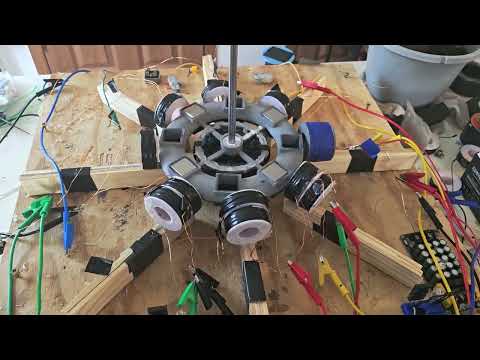 Long-form
2 circuits running a third room still for some growth/expansion.
Papa Bale here with a messy bench update.
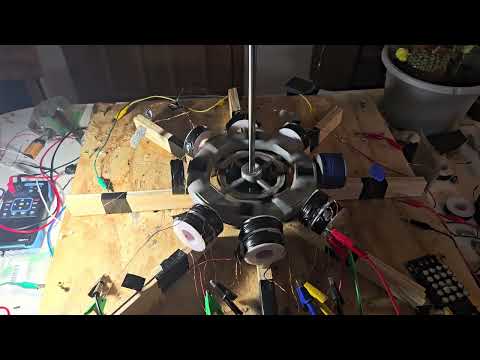 Long-form
M.P.H.'s pulse motor labs EP:2 Skin deep
I fire up two circuits at once, chase meter spikes, and retell the day a three magnet rotor one literally exploded at speed.
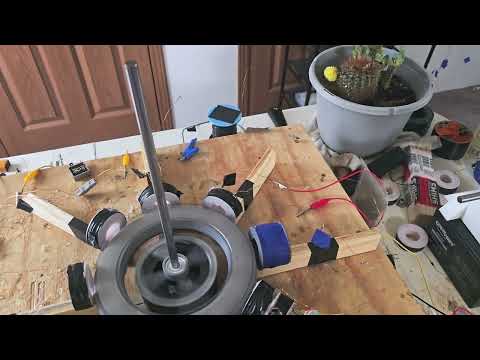 Long-form
Amp Funnel Coil: Pulse Motor Labs EP:1
Eight-magnet eight-coil pulse motor lab — amp funnel coil wiring, pickup coils, and give-and-take battery measurements.
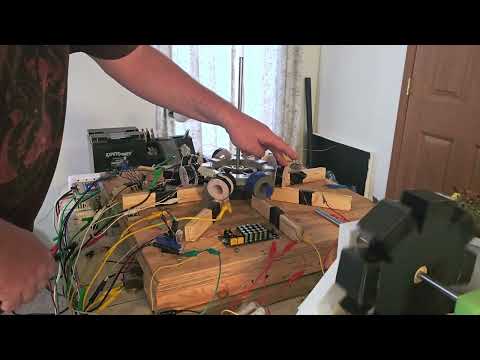 Long-form
MPH pulse motor lab
Real bench time with motor rotor magnets on a pulse motor rotor.
One path · free first
Watch free → subscribe → optional membership
Notes stay free. The full experiment lives on YouTube. Membership is optional when you want Discord and exclusives — not required to learn.
- 2
Subscribe free + turn on alerts
Hit Subscribe, then the 🔔 bell so you catch the next experiment.
Subscribe free + 🔔 - 3
Optional: join for $2.99/mo
Members-only videos, Discord, and live shoutouts — cancel anytime.
Join $2.99/mo
Longer sessions · ad-supported free library
Not done yet? Queue the next long-form run
Queue up the next long-form bench run on YouTube — longer sessions keep the workshop free for everyone.
- 1▶ Watch full on YouTube
Start: Shocking Truth About Pulse Motors
Notes & transcript on site - 2▶ Watch full on YouTube
M.P.H.Jr Pulse Motor Labs EP:1 Just scratching the surface
Notes & transcript on site - 3▶ Watch full on YouTube
8 Neo Cube Magnet Pulse Motor Hits 1300 RPM — Amp Funnel Coil Power Test
Notes & transcript on site - 4▶ Watch full on YouTube
Name change, plans for the future, Motor generator start of something cool 😎
Notes & transcript on site