Experiments·
30 Gauge Coil Off: Pulse Motor with Nine Magnet Rotor & Bridge Rectifier Pulse
Watch me run a heavy nine magnet rotor flywheel on an SSG circuit with a 30 gauge coil off setup. See bridge rectifier pulse charging, how the 3.5 lb rotor spins 5-10 minutes after power off, and real battery charging results from the bench.
Long-form · Full audio · Best on YouTube
Watch the complete video: 30 Gauge Coil Off: Pulse Motor with Nine Magnet Rotor & Bridge Rectifier Pulse
Watch the full long-form video on YouTube — that's where the full bench audio, runtime, and experiments live.
See it on the bench · full runtime on YouTube
What to watch for
- ▸12V wasn't enough to charge the battery; increasing power made measurable progress in seconds.
- ▸The nine magnet rotor acts as a flywheel, maintaining speed with almost no audible change even after power off.
- ▸Bridge rectifier pulse from the generating coil can produce usable DC to light loads or charge caps.
- ▸Voltage on the cap bank and battery levels out after initial drop when power is cut, sometimes ending higher than start.
- ▸SSG circuit with 20-gauge and 30-gauge coil off setup charges better than the generator circuit in this test.
- ▸Flywheel action is loved here despite some builders trying to eliminate it.
Watch the full long-form video on YouTube — that's where the full bench audio, runtime, and experiments live.
Experiment notes
Papa Bale solves a battery charging issue by turning up the power on his SSG pulse motor. A heavy nine magnet rotor flywheel (about 3.5-4.5 lbs) keeps spinning for minutes after the 30 gauge coil is switched off. We charge a cap bank and battery while observing bridge rectifier pulse effects and flywheel momentum.
Key takeaways
- 12V wasn't enough to charge the battery; increasing power made measurable progress in seconds.
- The nine magnet rotor acts as a flywheel, maintaining speed with almost no audible change even after power off.
- Bridge rectifier pulse from the generating coil can produce usable DC to light loads or charge caps.
- Voltage on the cap bank and battery levels out after initial drop when power is cut, sometimes ending higher than start.
- SSG circuit with 20-gauge and 30-gauge coil off setup charges better than the generator circuit in this test.
- Flywheel action is loved here despite some builders trying to eliminate it.
In this bench session I finally cracked the charging problem on the pulse motor by bumping the volts. The nine magnet rotor spins for 5-10 minutes once you kill the power thanks to all that mass. With the 30 gauge coil off the sound barely changes and the cap bank still climbs. Real measurements only – no clean RPM reading but the flywheel action is obvious and the bridge rectifier pulse gives nice DC spikes.
Related on this site
- Bedini Motor & SSG Circuit Guide (Beginner Bedini Explained) — Directly referenced SSG circuit and combo circuit used in the test
- Pulse Motor Rotor Design: Magnets, Materials and Balance — Covers the nine magnet rotor and flywheel construction details shown
- Can a Pulse Motor Charge Batteries? What Experiments Show — Matches the exact battery and cap bank charging observations
- Best Wire Gauge for Pulse Motor Coils (AWG Guide) — Discusses the 20-gauge and 30-gauge coil off combination used
- I Finally Got My Pulse Motor Running (Reed Switch) — Similar first-person success story style with pulse motor running
---
*Generated from video transcript (hash `fbcbf629eebf…`).*
Full transcript
Hello, ladies and gentlemen. What's up? This is Papa Bale. Welcome to the channel. So, I been having an issue that I think I solved today charging my batteries. There it goes. Yes, we figured it out. Uh all we had to do was turn the power up a little bit. 12 volts wasn't going to charge my battery. It doesn't matter what I did. If it's not a smart goal, it doesn't count. Okay? If it doesn't If it can't be done in a measurable amount of time, it doesn't matter at all. It It's compounded over lifetimes and all that crap. You know, it's nothing that you need to worry about. Uh So, what I'm doing here with the nine magnet rotor that's basically a flywheel. This thing weighs like 4 and 1/2 lbs straight up. Maybe more than that. Uh I know that it's 2 lbs of plastic. Um and then the neo nine neo magnets that are cubes. So, yeah. Roughly 3.75 4 lbs. It would take a pound or two. No, couple ounces or so. Anyway, running this on this 20-gauge and 30-gauge coil off of the SG SSG and we're charging this cap bank, which is in It looks to me to be like a 20-V cap bank. And we're halfway there. Boom, it goes up. In my opinion, this is fast for a pulse motor. It's like just a couple seconds and you get a 100. And this one is eking its way up there. But the thing is, as soon as I turn it off, it's going to adjust. So, I'm I'm going to Well, let's check out what the adjustments will be when I hit the power switch right here. Immediately, that starts going down. And so did this. This went down as well. But I think it's going to level out. We'll see where it levels out. And then the course the flywheel action is just awesome. This is It's off. It It's definitely not running right now. So, I'm hoping it'll level off at like 12. Now, if you if you pay attention to the way a motor sounds, that sound has not changed at all since I turned it off. Like very minuscule change. Like it hasn't changed really. It's still going the same speed pretty much. Maybe even a little bit faster. I'm I'm just fascinated with this thing. And I guess for a lot of people, these implications are actually bad and you're trying to get rid of these. Some people don't like flywheel implications. I love it. This thing If I'm like generating some off-scale DC through like a bridge rectifier and I just have a coil here and it's generating its AC. We put it through the bridge rectifier, I bet I can light a light pretty freaking bright just using the flywheel. Aw, sounds like a challenge. Sounds like a challenge. It's not really a challenge. It's really easy to do. What we're at 12.1. 12.01. There's like, you know, and I think Tesla coils are really cool. As a matter of fact, you know, I have one Tesla coil. I actually owned quite a few of them. This one right here is pretty cool. We're going to We're going to get this out of the box. All right. Get it over on the table real quick. It's just a tiny little thing, but it'll dance to the music and all that jazz. There it is. It looks like a little record player. Isn't that neat? Okay, but um as for building one and having, you know, massive amounts of discharge going I got two kids, man. And my my brother's already freaking out over cuz I had some engineering issues with my rotors and of course magnets were flying everywhere. He's got PTSD from that. And I don't blame him. Those things are like bullets when they're Things going above 1,000 RPMs. But as we're starting to chill out here, funny thing is been about 4 or 5 minutes. I mean, that'll continue to spin pretty fast, but it you can tell it's slowing down. No. 12 volts. Will it keep going down? Yes, it will. Why does it do that? I mean, what what is it like is it what's draining it? Or was the energy that was put into the battery worthless and it's now spitting it back out? The cap seems to have leveled out. No, it's still draining. Okay. SSG. But every time I do this, it goes up and stays up like above the last time it dipped. You know, sometimes I'd go for a couple hours and then I'll come back and check it. Not having it on, just having it having the battery just sit there hooked up the way it is though. And we'll look and it would be, you know, like three tenths higher. So, it would be like 11.78 when I started. And I'd turn it off at like 12.11 and then it would dip down to like 12.84 or 11.84. Uh start We started 11.85 tonight. And this is the SSG circuit of the combo circuit. So, and it's generating as well though. It's like It's pretty good actually. Maybe even a little better than the generator circuit. But we are like pumping 16.2 volts. I know if I throw the generator circuit, the amps are going to go up to like one or 0.9. Doesn't look like I need to do that though. Should I do it anyway? So, when I flip the switch, we go up to 0.9 and 16.2. But the battery's charging a lot faster. So, is the cap bank or is it It's probably about the same. Um but the battery is definitely being juiced. All right. Well, that's what I'm doing right now. So, I'll hook up that Tesla coil though. We'll get some uh something going with that. I don't think we're going to run anything with it, but we're going to hook it up and we're going to see We're going to play with it a little bit. All right. Thank you very much. Peace out. Have a good night. Please subscribe. Bye now.
Keep watching · longer sessions
More long-form bench runs
Queue up the next long-form bench run on YouTube — longer sessions keep the workshop free for everyone.
 Long-form
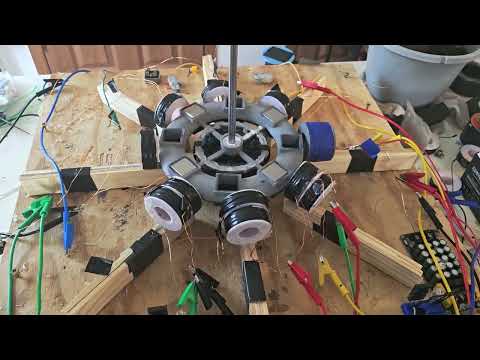
2 circuits running a third room still for some growth/expansion.
Papa Bale here with a messy bench update.
 Long-form
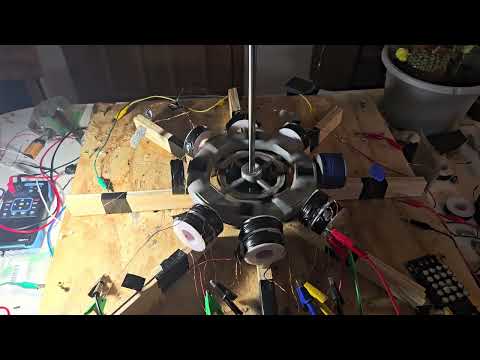
M.P.H.'s pulse motor labs EP:2 Skin deep
I fire up two circuits at once, chase meter spikes, and retell the day a three magnet rotor one literally exploded at speed.
 Long-form
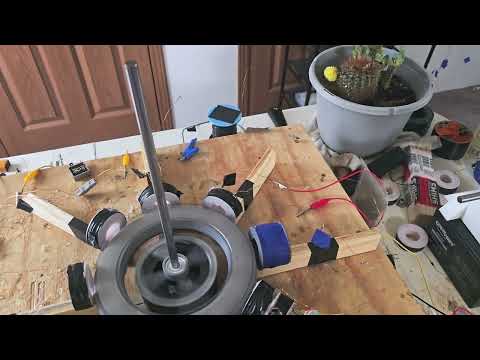
Amp Funnel Coil: Pulse Motor Labs EP:1
Eight-magnet eight-coil pulse motor lab — amp funnel coil wiring, pickup coils, and give-and-take battery measurements.
 Long-form
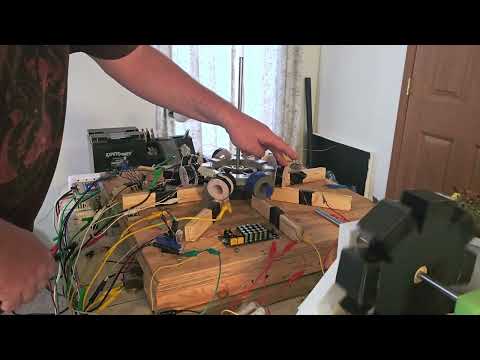
MPH pulse motor lab
Real bench time with motor rotor magnets on a pulse motor rotor.
One path · free first
Watch free → subscribe → optional membership
Notes stay free. The full experiment lives on YouTube. Membership is optional when you want Discord and exclusives — not required to learn.
- 2
Subscribe free + turn on alerts
Hit Subscribe, then the 🔔 bell so you catch the next experiment.
Subscribe free + 🔔