Experiments·
Pulse Motor 180 Degree Rotor with Reed Switches
Watch me experiment with a motor 180 degree rotor using two reed switches and separate circuits. See the choppy torque spikes, flyback voltages between …
Long-form · Full audio · Best on YouTube
Watch the complete video: Pulse Motor 180 Degree Rotor with Reed Switches
Watch the full long-form video on YouTube — that's where the full bench audio, runtime, and experiments live.
See it on the bench · full runtime on YouTube
What to watch for
- ▸Reed switches create choppy but high-torque spikes compared to a trigger coil
- ▸180 degree rotor timing allows one coil to generate flyback while the other drives
- ▸Spikes measured 10-38V peak-to-peak on the oscilloscope
- ▸Coils are custom 20 gauge with 666 turns plus parallel 30 gauge winding
- ▸Plan is for the two 12V batteries to charge each other via flyback diodes
- ▸Special low-friction bearing helps the rotor spin freely
Watch the full long-form video on YouTube — that's where the full bench audio, runtime, and experiments live.
Experiment notes
Papa Bale shows his latest pulse motor build using a 180 degree rotor, two reed switches, and two separate drive circuits each with its own battery and flyback diodes. The setup produces choppy torque spikes instead of smooth trigger-coil operation, with measured flyback between 10-38 volts.
Key takeaways
- Reed switches create choppy but high-torque spikes compared to a trigger coil
- 180 degree rotor timing allows one coil to generate flyback while the other drives
- Spikes measured 10-38V peak-to-peak on the oscilloscope
- Coils are custom 20 gauge with 666 turns plus parallel 30 gauge winding
- Plan is for the two 12V batteries to charge each other via flyback diodes
- Special low-friction bearing helps the rotor spin freely
In this bench session I swapped the trigger coil for two reed switches on my motor 180 degree rotor. The waveform changed from smooth magnetic induction waves to sharp flyback spikes once both circuits were running. I measured small but real spikes between 10 and 38 volts. The 180 degree layout means when one magnet is activating a reed the opposite coil is in the float zone so its battery can accept charge through diodes without being loaded. I ran it on 12 V and also tested 24 V from two batteries in series. The special bearing under the rotor gives it extra free spin. All coils are my own experimental 20 gauge 666-turn windings with parallel 30 gauge wire. Looking forward to seeing if the batteries will actually charge each other through the flyback loops.
From the spoken experiment
The following notes stay close to what was said in the video about reed switches:
> all right ladies and gentlemen what's up this is Papa Bale and welcome to the channel so here I've made a few adjustments I've got rid of the trigger coil I got two read switches here and we got phenomenal Spike with the read switches it's just way different it's a lot less smooth it's really choppy but that chop is torque which we don't get with the trigger coil so here I'm going to start it with the one circuit and that'll settle down once it gets going but there we go okay so we got our wave from the magnetic induction but once we throw the other circuit you're going to see this switch to a spike so here we go one two 3 activate see that now what I need to do to make it legit is hook up this battery right here with a a toggle switch an onoff switch like this um and then we'll be able to hook up our you know our generator circuit we'll have our dodes attached to each end of our 30 gaug…
Builder checklist
- Confirm trigger/sensor timing before chasing higher voltage
- Watch heat on coils and transistors during longer runs
- Record voltage and behavior at each change (one variable at a time)
Related on this site
Related on this site
- Can a Pulse Motor Charge Batteries? What Experiments Show — Directly matches the flyback charging test Papa Bale is trying with the two batteries
- Pulse Motor Rotor Design: Magnets, Materials and Balance — Covers the 180 degree magnet spacing and bearing choice shown in the video
- Understanding Back EMF in Pulse Motors — Explains the spike behavior and diode placement Papa Bale describes
- I Finally Got My Pulse Motor Running (Reed Switch) — Companion reed-switch build video from the same channel
---
*Generated from video transcript (hash `08786f2363b1…`).*
Full transcript
all right ladies and gentlemen what's up this is Papa Bale and welcome to the channel so here I've made a few adjustments I've got rid of the trigger coil I got two read switches here and we got phenomenal Spike with the read switches it's just way different it's a lot less smooth it's really choppy but that chop is torque which we don't get with the trigger coil so here I'm going to start it with the one circuit and that'll settle down once it gets going but there we go okay so we got our wave from the magnetic induction but once we throw the other circuit you're going to see this switch to a spike so here we go one two 3 activate see that now what I need to do to make it legit is hook up this battery right here with a a toggle switch an onoff switch like this um and then we'll be able to hook up our you know our generator circuit we'll have our dodes attached to each end of our 30 gauge Strand and we'll plug it parallel into the batteries and we'll see what happens um [Laughter] boom well actually it'll kind of just boil over you know but that's some fabulous uh actually it's not very big spike it's only like between 10 and 30 volt spikes Peak to Peak so they're very small spikes in this that's this coil and then when I turn that coil off with the switch down here it Mellows out into a wave which is like a saw blade wave it's very spiky in and of itself but it's not activate if you get what I mean and then we'll replace the power supply with the other battery once I get the toggle switch hooked up so this is 12 volts and I've got a a special bearing underneath the wheel here that it's resting on which is extremely good at spinning so that that adds a little bit of spin extra spin let's see what the Millie but before I couldn't even get a single reading on this wavelength huh now it's like gone I don't get that so H I don't know it doesn't look right at all maybe we'll have to turn it off and then turn it back on I don't like it when my equipment doesn't work right there we go some spike it's still like not good I don't get it did a clip Come Undone or something does look like it oh I see what the problem is let's go time [Music] back huh that sounds weird maybe that's the bearing I put in there all right now exit voltage so it's very small spikes but they're definitely uh between I don't know 10 and 38 volts really cool I think it's really cool and we're going to see if it's going to work um probably later on today what I mean by work is that these batteries should charge each other via the flyback spikes so two things are happening here one the activated wire is not activated anymore and and it slows down when I turn this off so it gets wider and it get it's less spiky so we'll turn it off see spikes dissipate and it gets fewer waves because it slows down anyway so that we're running it with a 12 because all I have is two 12vt batteries right here uh but you know this is a 20 24 wat power supply or 24 volt power supply with the 20 amps and this is 24 volt when you tie in series so I ran it with 24 volts and it works with 24 volts but we won't be able to do the flyback thing with 24 volts until until we get two more of these batteries and then we can charge the series and the series the series can charge each other and yeah it'll be awesome because the spikes are that much more pronounced with 24 and there aren't any gaps in the spikes uh all my coils are experimental and they do not reflect what anybody else has done thusly I like the number 666 so these coils right here are 20 gauge with 666 turns and 30 gauge wound parallel counterclockwise all right you show me another person that's got a coil like that give them my number all right I don't think you're going to find one I really don't it's it's a challenge too if you want to make one make one I think they work pretty well 12 volts that's our AG all right so let me just make sure we got an end here yeah it'll work it's tiny but it'll work at least I don't have to make another coil just yet because the 30 gauge strand on this coil here broke at the seam like right there but we got that much of it so we can make do I love it we're going to we're going to we're going to do this and this thing is going to run [Laughter] forever just kidding but it'll run for quite a while cuz these batteries last for quite a while even without charging them anyway I hope I hope that there is a way to charge these maybe this charger down here can charge them if this fails because I would like to use these batteries fully charged fully charged batteries um so if the charging with this fails I would like to be able to charge them so hopefully the T Energy charger will work all right now the power is completely off we got our wave which will produce a little bit of electricity even when it's off which is awesome so I'm thinking that the connection here is going to be uh diod across uh we we we'll get it virtually this coil will be charging that coil's battery and vice versa with the 30 gauge strand so this will be awesome thank you for tuning in and the double bre switch flyback Loop relay thing my Bobby is underway and the reason I think it'll work is because it's 180° and when this one is being hit this one won't be being hit and so the power won't be being drawn from the battery and then power can go into the battery you just got to put the diodes in the right place and virtually they going to be two diodes one on each end and they're both going to be facing the battery like this thank you very much ladies and gentlemen peace out have a great night great day please subscribe bye now
Keep watching · longer sessions
More long-form bench runs
Queue up the next long-form bench run on YouTube — longer sessions keep the workshop free for everyone.
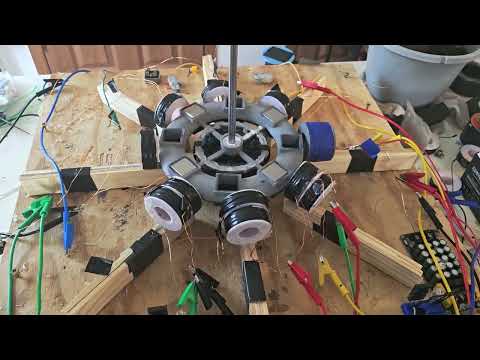 Long-form
2 circuits running a third room still for some growth/expansion.
Papa Bale here with a messy bench update.
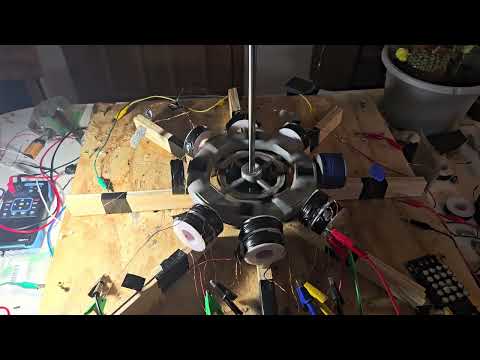 Long-form
M.P.H.'s pulse motor labs EP:2 Skin deep
I fire up two circuits at once, chase meter spikes, and retell the day a three magnet rotor one literally exploded at speed.
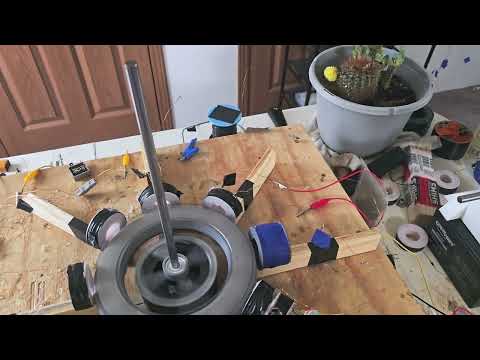 Long-form
Amp Funnel Coil: Pulse Motor Labs EP:1
Eight-magnet eight-coil pulse motor lab — amp funnel coil wiring, pickup coils, and give-and-take battery measurements.
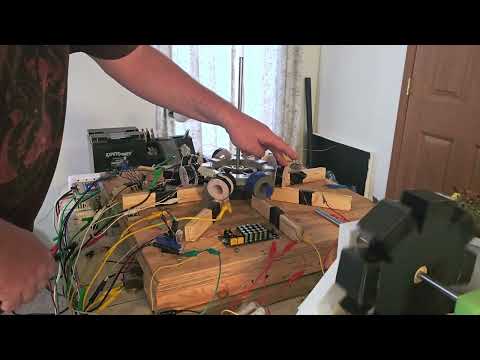 Long-form
MPH pulse motor lab
Real bench time with motor rotor magnets on a pulse motor rotor.
One path · free first
Watch free → subscribe → optional membership
Notes stay free. The full experiment lives on YouTube. Membership is optional when you want Discord and exclusives — not required to learn.
- 2
Subscribe free + turn on alerts
Hit Subscribe, then the 🔔 bell so you catch the next experiment.
Subscribe free + 🔔