Experiments·Transcript-backed
26AWG Litz Wire Coil Pickup with 16AWG Dual Drive: 220mA Output Amazes
Watch me hook up a 26AWG Litz wire coil as pickup with a 16AWG dual drive coil. We pulled over 200mA and nearly 10V off the edge of the cap bank. Real b…
Long-form · Full audio · Best on YouTube
Watch the complete video: 26AWG Litz Wire Coil Pickup with 16AWG Dual Drive: 220mA Output Amazes
Watch the full long-form video on YouTube — that's where the full bench audio, runtime, and experiments live.
Preview embed · full runtime is better on YouTube
Prefer the full player? Better audio, runtime, and next-video queue on YouTube.
▶ Open full on YouTubeJump to the discussion · full video on YouTube
Hear it on the bench
Each link opens “26AWG Litz Wire Coil Pickup with 16AWG Dual Drive: 220mA Output Amazes” on YouTube at the first time that topic comes up in the captions. Stay on YouTube for the complete runtime.
See it on the bench · full runtime on YouTube
What to watch for
- ▸Litz wire coil made from 12 strands of 26 gauge wire, half-and-half series for trigger/drive
- ▸Measured 198-220mA output from the pickup while the heavy rotor spun rapidly
- ▸Voltage on the DC cap bank side reached 8-10V with one or both drives connected
- ▸Coil weight estimated between 5 and 6 ounces yet still delivered surprising current
- ▸Experiment goal was to use one strand to feed the cap bank and the other for circuit power
- ▸Rotor has nine magnets, one loose and taped, so I kept speed gentle at first
Watch the full long-form video on YouTube — that's where the full bench audio, runtime, and experiments live.
Experiment notes (read while you watch)
Notes support the video — for the full-length run with complete bench audio, stay on YouTube.
I connected a 12-strand 26AWG Litz wire coil as a pickup over my dual-drive 16 gauge trifilar coil. With 1.5V input we saw the cap bank lights blazing and pulled up to 220mA at around 9-10V. The rotor kept spinning fast even after I unplugged the drive. Real measurements, loose magnet and all.
Key takeaways
- Litz wire coil made from 12 strands of 26 gauge wire, half-and-half series for trigger/drive
- Measured 198-220mA output from the pickup while the heavy rotor spun rapidly
- Voltage on the DC cap bank side reached 8-10V with one or both drives connected
- Coil weight estimated between 5 and 6 ounces yet still delivered surprising current
- Experiment goal was to use one strand to feed the cap bank and the other for circuit power
- Rotor has nine magnets, one loose and taped, so I kept speed gentle at first
Short bench test of a litz wire coil used as pickup. We got real current and the wheel kept spinning fast. Full build details and measurements are in the blog post below.
From the spoken experiment
The following notes stay close to what was said in the video about litz wire coil:
> Hello, ladies and gentlemen. What's up? It's Pop Em Bale. Welcome to the channel. So, we got our dual drive 16 gauge trifiler coil over here. And we've got our litz wire 26 gauge 12 I think it's 12 strand. Um so, it's 12 26 gauge strands twisted up. And they're connected in uh half and half in series, so you could have a trigger strand and a drive strand. Right now, they're both connected in a pickup style. And one of these meters over here will tell us how much energy we're getting off of that. That's this one right here. All right, so they're still And we're getting a reading off the edge of the cap bank here, the DC end. There's a 1.5 volts in. So, we're going to plug in one of the dual drives and two of the dual drives. We're already up to five. Okay, here we go. Got to take this off. Cuz that's when they're going to go in super fast. I believe one of the magnets in there is loose. T…
Builder checklist
- Confirm trigger/sensor timing before chasing higher voltage
- Watch heat on coils and transistors during longer runs
- Record voltage and behavior at each change (one variable at a time)
Related on this site
Related on this site
- Best Wire Gauge for Pulse Motor Coils (AWG Guide) — Directly relates to choosing 26awg litz wire versus 16awg drive coil
- How to Wind Coils for a Pulse Motor (Step by Step) — Explains winding techniques that apply to the 12-strand litz bundle
- DIY Low Cost Pulse Motor Build with 16AWG Coil — Shows the 16AWG dual drive coil used in this test
- Dabbling with Different Coils — Voltage, Heat & Magnetic Response — Companion video testing various coil sizes and outputs
---
*Generated from video transcript (hash `6a3fddf396dd…`).*
Full transcript (3,472 chars · en)
Hello, ladies and gentlemen. What's up? It's Pop Em Bale. Welcome to the channel. So, we got our dual drive 16 gauge trifiler coil over here. And we've got our litz wire 26 gauge 12 I think it's 12 strand. Um so, it's 12 26 gauge strands twisted up. And they're connected in uh half and half in series, so you could have a trigger strand and a drive strand. Right now, they're both connected in a pickup style. And one of these meters over here will tell us how much energy we're getting off of that. That's this one right here. All right, so they're still And we're getting a reading off the edge of the cap bank here, the DC end. There's a 1.5 volts in. So, we're going to plug in one of the dual drives and two of the dual drives. We're already up to five. Okay, here we go. Got to take this off. Cuz that's when they're going to go in super fast. I believe one of the magnets in there is loose. There's nine magnets in there. And one of them's loose and just taped in, so I'm going to take it easy with that, but uh and 7.5 basically. Quickly dwindling now that it's off, but look at how lit those those lights are for the cap bank. So much energy off the uh What do you call it? The Litz wire coil. And 26 gauge Litz wire coil. That's awesome. One, because it's 26 gauge, so I'm not expecting a whole bunch of energy to come off of it. And that's awesome how fast it's moving still. Awesome. So, I'm going to plug it back in again just the one drive. Hear that? Wow. It's amazing. >> So that that just juiced it up to 8 volts. I think we might be even drawing like a close to 100 milliamps on the spin, but I'm not quite sure. Let's check it out though. 129 DC amps. No, it's not 129 amps. 129 milliamps. All right, 25 now. That's awesome. That's That is awesome. Especially just, you know, it's the Litz wire coil. It's uh going to be in between 5 and 6 oz. Amazing. This This wheel is phenomenally awesome. I love how it looks when you look down at it. Kind of like butter. Different designs and stuff. It's just splattered paint, but it looks so cool when I'm looking at it spinning. So we're getting we can get roughly 200 milliamps off of that coil with this rotor. There it goes. Let's see. Like 198 99. >> 2 Oh, nice. 220. But look at how just this this thing is just spinning rampant. It's awesome. So fast. This thing is heavy. Anyway, I'm thinking we're getting like you know, pretty stable amount come off of this wire coil. About 9 volts. So sweet. I'm thinking about making a 32 gauge coil that's a little bigger. Get some nice voltage off of that and but we'll probably not get 100 milliamps. Anyway, that's awesome. That's off a pickup 26 gauge. And we've gotten it off the edge of this cap bank. So what is it I'm actually trying to do which may not happen is I was trying to have this coil one part of it power the cap bank and the DC side used to run the circuit on top through the other strand. And then possibly use the signal generator for the base or trigger. See if that'll work. I don't know if it'll work, but it sounds like it might work if I hook it up right. All right. Thank you very much. Peace out. Have a wonderful day. All we were doing was here was experimenting with using the the dual drive 16 gauge coil and how much pick up juice we got off of uh the 26 litz wire coil. I'd say right around 10 volts and 250 milliamps. Awesome. Awesome power. We're going to see what it can do. All right. Thank you very much. Peace out. Bye now.
Keep watching · longer sessions
More long-form bench runs
Queue up the next long-form bench run on YouTube — longer sessions keep the workshop free for everyone.
 Long-form
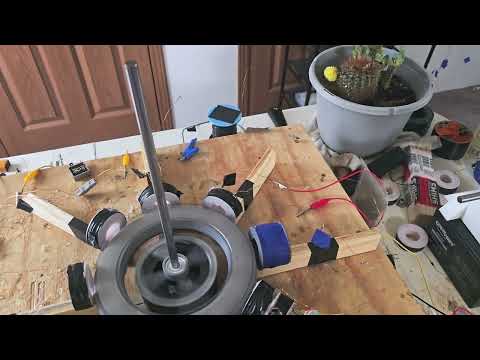
Amp Funnel Coil: Pulse Motor Labs EP:1
Eight-magnet eight-coil pulse motor lab — amp funnel coil wiring, pickup coils, and give-and-take battery measurements.
 Long-form
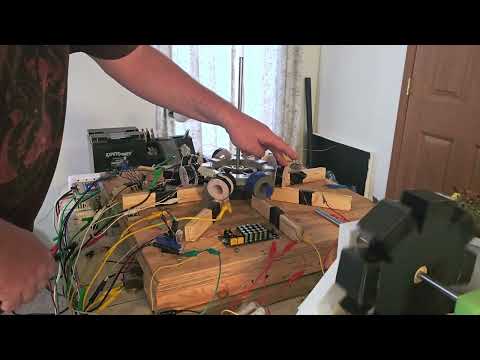
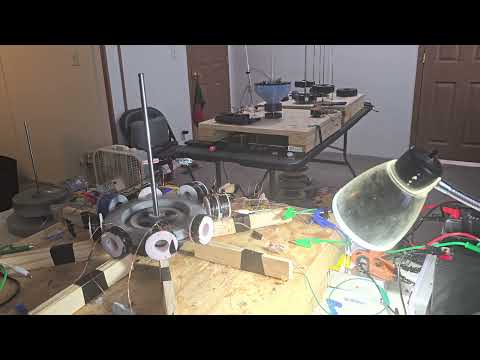
8-Magnet Pulse Motor + Induction Coils (Bedini-Style Charge)
Eight-magnet pulse motor at 12V with series induction coils.
 Long-form
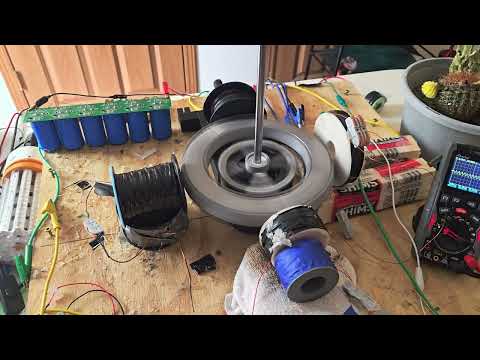
8 Neo Cube Magnet Pulse Motor Hits 1300 RPM — Amp Funnel Coil Power Test
I tested an amp funnel coil on a generator setup with eight neo cube magnets.
One path · free first
Watch free → subscribe → optional membership
Notes stay free. The full experiment lives on YouTube. Membership is optional when you want Discord and exclusives — not required to learn.
Watch full-length on YouTube
Open the complete bench run — full audio and runtime. Free path that keeps the workshop online.
- 2
Subscribe free + turn on alerts
Hit Subscribe, then the 🔔 bell so you catch the next experiment.
Subscribe free + 🔔 - 3
Optional: join for $2.99/mo
Members-only videos, Discord, and live shoutouts — cancel anytime.
Join $2.99/mo
Longer sessions · ad-supported free library
Not done yet? Queue the next long-form run
Queue up the next long-form bench run on YouTube — longer sessions keep the workshop free for everyone.
- 1▶ Watch full on YouTube
Start: Shocking Truth About Pulse Motors
Notes & transcript on site - 2▶ Watch full on YouTube
M.P.H.Jr Pulse Motor Labs EP:1 Just scratching the surface
Notes & transcript on site - 3▶ Watch full on YouTube
8 Neo Cube Magnet Pulse Motor Hits 1300 RPM — Amp Funnel Coil Power Test
Notes & transcript on site - 4▶ Watch full on YouTube
Name change, plans for the future, Motor generator start of something cool 😎
Notes & transcript on site