Experiments·Transcript-backed
the second coil of bahamut: Dabbling with Different Coils —
the second coil of bahamut — Testing a few different coils on my pulse motor build. Saw wild magnetic jumps, quick heat buildup at 12 volts, and what ac…
Long-form · Full audio · Best on YouTube
Watch the complete video: the second coil of bahamut: Dabbling with Different Coils —
Watch the full long-form video on YouTube — that's where the full bench audio, runtime, and experiments live.
Preview embed · full runtime is better on YouTube
Prefer the full player? Better audio, runtime, and next-video queue on YouTube.
▶ Open full on YouTubeSee it on the bench · full runtime on YouTube
What to watch for
- ▸One coil reacted violently to 12 volts on a ferrite magnet but heated up very quickly.
- ▸A double coil with lots of turns stayed cooler once the loop issue was fixed.
- ▸Proper floating position was needed for the magnet to jump cleanly.
- ▸More turns can reduce heat while still giving usable magnetic pull.
- ▸Reed switches and proper bearings are next for the full pulse motor.
Watch the full long-form video on YouTube — that's where the full bench audio, runtime, and experiments live.
Experiment notes (read while you watch)
Notes support the video — for the full-length run with complete bench audio, stay on YouTube.
Quick bench test of several homemade coils on a pulse motor setup using 12 volts. One coil gave a violent magnetic jump but got scorching hot fast. Another with more turns stayed cooler and still produced strong response once positioned right. Papa Bale shares what he saw and what he'll change before adding reed switches.
Key takeaways
- One coil reacted violently to 12 volts on a ferrite magnet but heated up very quickly.
- A double coil with lots of turns stayed cooler once the loop issue was fixed.
- Proper floating position was needed for the magnet to jump cleanly.
- More turns can reduce heat while still giving usable magnetic pull.
- Reed switches and proper bearings are next for the full pulse motor.
Short and messy bench session testing whatever coils I had lying around. 12 volts straight to each one while sitting on a ferrite magnet. Some jumped like crazy, some got hot fast, and one needed a little coaxing. Nothing fancy, just real numbers from what I measured by hand.
Bench notes: First coil hit 12 volts and the magnet response was almost violent. Temperature climbed so fast I pulled the power. Second coil (double wound) ran cooler after I sorted the sticking loop. More turns seemed to help with heat while keeping the magnetic kick. Ready to wind a proper one now that I saw what works.
Support the channel if these pulse motor experiments help you. Every little bit lets me buy more wire and magnets.
From the spoken experiment
The following notes stay close to what was said in the video about the second coil of bahamut:
> okay here we are into a short demonstration of that coil right there we're going to see how it reacts to having 12 volts and through it 12 volts of current resting on top of that ferrite for ferrite magnet but anyway let's throw the switch see what happens foreign look at that response it's like almost it's almost a violent response very volatile let's see oh it's hot it's really hot yeah okay we're gonna do the same demonstration foreign with this one little double right here and we'll see what happens it's going to be the same thing but we're going to see if it's as warm and there's this thing that I made and I don't think it's gonna work that's a lot of wire too we've got this little Loop that's sticking out I think that's what's doing it the current won't go through the whole thing and again it is a big spoon of wire so maybe we'll plug that into and we'll see what happens all right…
Builder checklist
- Confirm trigger/sensor timing before chasing higher voltage
- Watch heat on coils and transistors during longer runs
- Record voltage and behavior at each change (one variable at a time)
Related on this site
Related on this site
- How to Wind Coils for a Pulse Motor (Step by Step) — Directly supports winding advice after seeing which coils performed best
- Best Wire Gauge for Pulse Motor Coils (AWG Guide) — Helps choose gauge after heat differences observed at 12 volts
- I Finally Got My Pulse Motor Running (Reed Switch) — Follow-up video the creator references at the end of this test
- DIY Low Cost Pulse Motor Build with 16AWG Coil — Similar low-cost coil approach shown in related video
---
*Generated from video transcript (hash `069909958c5c…`).*
Full transcript (1,724 chars · en)
okay here we are into a short demonstration of that coil right there we're going to see how it reacts to having 12 volts and through it 12 volts of current resting on top of that ferrite for ferrite magnet but anyway let's throw the switch see what happens foreign look at that response it's like almost it's almost a violent response very volatile let's see oh it's hot it's really hot yeah okay we're gonna do the same demonstration foreign with this one little double right here and we'll see what happens it's going to be the same thing but we're going to see if it's as warm and there's this thing that I made and I don't think it's gonna work that's a lot of wire too we've got this little Loop that's sticking out I think that's what's doing it the current won't go through the whole thing and again it is a big spoon of wire so maybe we'll plug that into and we'll see what happens all right gonna throw the switch look at that all right now I got it Down in the Hole let's see what happens now oh it's stuck down there it's got to be kind of floating to jump thank you beautiful so we're going to nail it down and that is not as hot okay all right I probably I'm gonna have to make this wire right for experimentation all right until anything cool is going to happen foreign magnetic maybe it is working well I think that's pretty cool and cut the power maybe it was working just but with that many turns we should be able to use you know this to light it up all right thank you very much that was a cool experiment and I just um I hope my pulse Motor Works when I get the Reed switches and the discs with the 5 8 the hole in the center so I can use the bearings should be good all right thank you have a nice night
Keep watching · longer sessions
More long-form bench runs
Queue up the next long-form bench run on YouTube — longer sessions keep the workshop free for everyone.
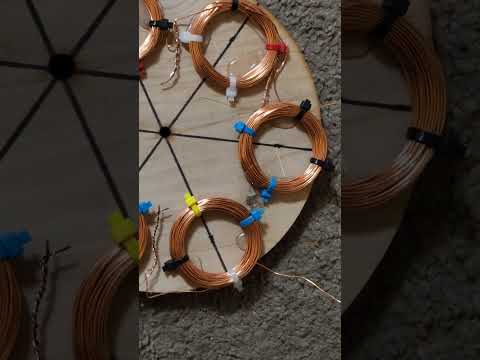 Long-form
Levitation & Electricity — Coil Demonstration
Magnetic levitation combined with electrical coil operation — exploring the relationship between the two.
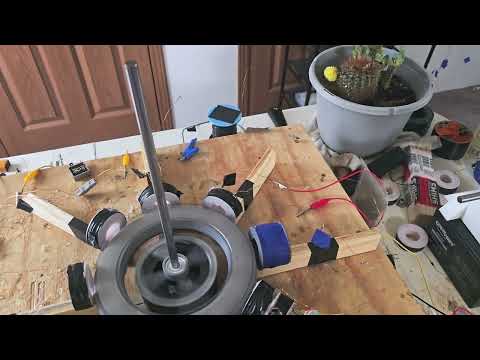 Long-form
Amp Funnel Coil: Pulse Motor Labs EP:1
Eight-magnet eight-coil pulse motor lab — amp funnel coil wiring, pickup coils, and give-and-take battery measurements.
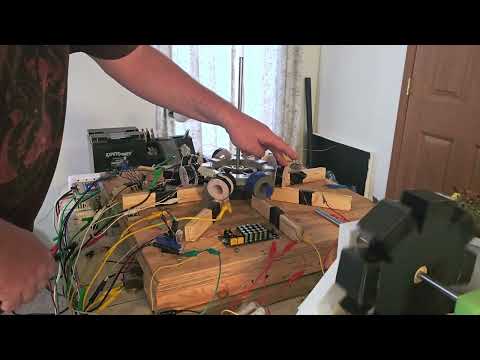
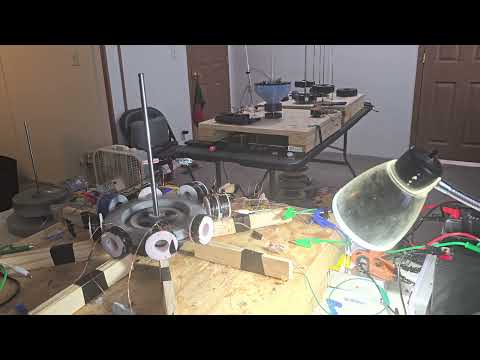 Long-form
8-Magnet Pulse Motor + Induction Coils (Bedini-Style Charge)
Eight-magnet pulse motor at 12V with series induction coils.
One path · free first
Watch free → subscribe → optional membership
Notes stay free. The full experiment lives on YouTube. Membership is optional when you want Discord and exclusives — not required to learn.
Watch full-length on YouTube
Open the complete bench run — full audio and runtime. Free path that keeps the workshop online.
- 2
Subscribe free + turn on alerts
Hit Subscribe, then the 🔔 bell so you catch the next experiment.
Subscribe free + 🔔 - 3
Optional: join for $2.99/mo
Members-only videos, Discord, and live shoutouts — cancel anytime.
Join $2.99/mo
Longer sessions · ad-supported free library
Not done yet? Queue the next long-form run
Queue up the next long-form bench run on YouTube — longer sessions keep the workshop free for everyone.
- 1▶ Watch full on YouTube
Start: Shocking Truth About Pulse Motors
Notes & transcript on site - 2▶ Watch full on YouTube
M.P.H.Jr Pulse Motor Labs EP:1 Just scratching the surface
Notes & transcript on site - 3▶ Watch full on YouTube
8 Neo Cube Magnet Pulse Motor Hits 1300 RPM — Amp Funnel Coil Power Test
Notes & transcript on site - 4▶ Watch full on YouTube
Name change, plans for the future, Motor generator start of something cool 😎
Notes & transcript on site