Experiments·Transcript-backed
Coil Inside Pulse Motor: Trifecta Wave Coil on Stator Adds Speed
Watch Papa Bale add a trifecta wave coil inside the set circuit on the stator of his pulse motor. See it run on just 2.16 volts, hear the squeak, and learn how the inner coil affects speed and flywheel action.
Long-form · Full audio · Best on YouTube
Watch the complete video: Coil Inside Pulse Motor: Trifecta Wave Coil on Stator Adds Speed
Watch the full long-form video on YouTube — that's where the full bench audio, runtime, and experiments live.
Preview embed · full runtime is better on YouTube
Prefer the full player? Better audio, runtime, and next-video queue on YouTube.
▶ Open full on YouTubeJump to the discussion · full video on YouTube
Hear it on the bench
Each link opens “Coil Inside Pulse Motor: Trifecta Wave Coil on Stator Adds Speed” on YouTube at the first time that topic comes up in the captions. Stay on YouTube for the complete runtime.
See it on the bench · full runtime on YouTube
What to watch for
- ▸Two separate trigger coils (set and offset) trigger three power coils; the trigger coil can sit inside the main coil and still function.
- ▸Trifecta wave coil wired in series on the stator runs the pulse motor at 2.16 volts with audible squeaking that confirms it's triggering.
- ▸The smaller coil with 2222 turns produces the squeak and helps ramp up speed once the big coil gets the rotor moving fast enough.
- ▸Rotor with nine magnets at 40° separation gives better flywheel performance than the toroid-magnet version, coasting 40-50 minutes after shutdown.
- ▸All coils wound counterclockwise; 100 ohm 5% resistors and TIP142 transistors on the breadboard complete the circuit.
- ▸Idea of daisy-chaining coils so each charges the next could extend runtime without extra input power.
Watch the full long-form video on YouTube — that's where the full bench audio, runtime, and experiments live.
Experiment notes (read while you watch)
Notes support the video — for the full-length run with complete bench audio, stay on YouTube.
I added a trifecta wave coil inside the set circuit on the stator of my pulse motor and it really woke things up. Running on as little as 2.16 volts, both motors spin with a distinct squeak from the trigger coil inside. The bigger rotor shows strong flywheel action that keeps spinning for 40-50 minutes after power is cut.
Key takeaways
- Two separate trigger coils (set and offset) trigger three power coils; the trigger coil can sit inside the main coil and still function.
- Trifecta wave coil wired in series on the stator runs the pulse motor at 2.16 volts with audible squeaking that confirms it's triggering.
- The smaller coil with 2222 turns produces the squeak and helps ramp up speed once the big coil gets the rotor moving fast enough.
- Rotor with nine magnets at 40° separation gives better flywheel performance than the toroid-magnet version, coasting 40-50 minutes after shutdown.
- All coils wound counterclockwise; 100 ohm 5% resistors and TIP142 transistors on the breadboard complete the circuit.
- Idea of daisy-chaining coils so each charges the next could extend runtime without extra input power.
Short bench session where I dropped a trifecta wave coil inside the set circuit on the stator. You can hear the squeak at 2.16 V and watch both pulse motors take off. The little 2222-turn coil really brings the speed once the big one gets it going. Rotor flywheel effect is impressive — still turning 40-50 minutes later. All measurements straight from the bench, no fancy scope readings today.
Related on this site
- Pulse Motor Rotor Design: Magnets, Materials and Balance — Directly matches the nine-magnet 40° rotor and flywheel discussion in the transcript
- Best Wire Gauge for Pulse Motor Coils (AWG Guide) — Transcript covers running out of 18 gauge and considering 14 gauge for next trifecta coil
- How to Wind Coils for a Pulse Motor (Step by Step) — All coils described as counterclockwise and the trifecta wave coil details match winding topics
- Which Transistor for Your Pulse Motor? (2N3055, TIP31, and More) — Transcript specifically uses TIP142 transistors on the breadboard
- Understanding Back EMF in Pulse Motors — The idea of coils charging each other without extra power relates to back EMF and recovery concepts
---
*Generated from video transcript (hash `b8d9179d6ea4…`).*
Full transcript (4,879 chars · en)
hello ladies and gentlemen it's Papa Bale and welcome to the channel um what we're looking at here is a pulse motor um we've got two trigger coils here that are separate from the coils they're triggering we got three coils being triggered by these two uh trigger you only need two you need set and offset that's it for trigger coils now you can run your trigger coil inside your coil like I'm doing here um and if you get it right it'll make a little squeaky noise with the more volt you put into it all right so what I'm going to do is I'm going to turn this up very low um you're going to go up and we're going to turn it down a little bit and we'll go 250 huh keeps going down 216 we're going to give this a little whirl we're going to see if it'll goow with uh you know 216 here we go I hear a little squeaking in these so I know it's working y it it it's caught it's working at two both pulse motors are running on 2.16 Volts I'm going to break down the the connections real quick uh this coil is a triactor coil it's wound let me see all my all my coils currently are counterclockwise um and the series circuit is completed with this uh connector power goes in here connected to the to the tip 142 which is a transistor in the breadboard here in order for this to work well all those have to be functioning they blow out periodically and I'm I'm using a 100 ohm resistor with 500 5% tolerance these are resistors I'm using so they just blow out occasionally they do see cuz you can tell once you take the bad one out and put a new one in that works you just know and I did a little bit of art on the back of this pulse motor rotor I think it looks pretty sweet that's all oil paint so it's it's got a dry still and uh this rotor has got magnificent flywheel capabilities I'm I'm talking like 40 50 minutes after stopping the motor it's still going like not the same speed of course it's going to slow down but it's still going and uh huh I wonder if I should try that like having a CO coil set up so that they're connected to one another so that like the first one charges the second one charges the third one so on and so forth without actually putting any power into it I believe that'll make it spin longer and won't make it last forever cuz it just doesn't happen not yet anyway but it will go for longer than without that um um coil spread and your stator so this is 2.16 volts let's turn it up a little bit you can hear that now 8.61 volts that's hard to tell where this big one's got everything working or not I think it does oh yeah wow that's so cool might hook up the little one again just to see how fast we can get it going 8.61 all right we're going to spin this one again cuz it's not increasing in speed see it's the big one it it's only got like so many turns in it now the little one's got 2222 turns in it and that's the one making all the squeaking but when that one gets this thing going fast enough to trigger that one then you start seeing some serious look at how fast that bad boy is going that's amazing awesome I'm going to cut it back just cuz it's resting on a coupler that is so cool that that is cool and I'm telling you right now this one has better flywheel capabilities than this one even with a toid magnet on it I have no idea why but it's just I think it's the nine magnet um 40° of Separation that actually does it that is freaking cool man that is freaking cool so a friend of mine we've been working together online for a little while a couple friends they've been teaching me the ropes here I've only been doing this for about a year but it's it's pretty awesome so I'm taken to it pretty well I mean when things aren't working right it's kind of discouraging but so far it's been a pretty good ride um yeah and a point but it's okay this is this is fantastic having this big one spin like that so cool now if I put a toroid magnet on the bottom of that one instead of having it rest on that coupler uh it has to be dead center or it's going to shake the table like man and that little Celtic cross right there is mean well balanced powerful and fast so cool so cool but I'm out of U 18 gauge wire now this empty spool here is my 18 gauge so I'm not going to be able to run any more uh Trifecta coils with the 18 gauge right now I'm I have 14 gauge though maybe run one make one with the 14 gauge it's not a lot of it but it's in more than the 18 that I have all right um so I'm going to switch that rotor around and yeah man we're going to check it out all right thank you very much peace out have a good day please subscribe bye now and the end game is yet to be determined I mean I'm just figuring all this stuff out I don't have a goal not really and I know that's dangerous doing that with with this kind of stuff because it can get pricey I I'll determine what my goals will be soon um and I'll let you know all right peace out
Keep watching · longer sessions
More long-form bench runs
Queue up the next long-form bench run on YouTube — longer sessions keep the workshop free for everyone.
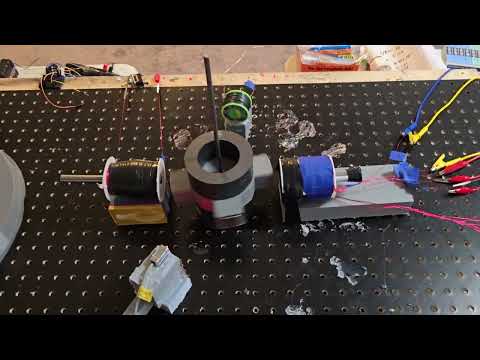 Long-form
Pancake Bifilar Coil Build for Pulse Motor Generator
First pancake bifilar coil on the pulse motor: 28 and 26 AWG, electrical tape, iron filing core, and why the hall effect replaces a…
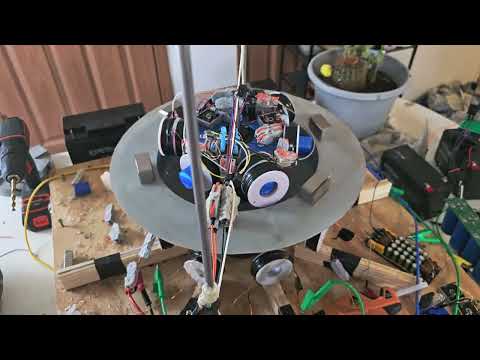 Long-form
Turbo Drive Concept for Counter Rotator
Putting a drive coil on a counter-rotator: 2.5V start, capacitor-fed LEDs, mutual inductance on the bench.
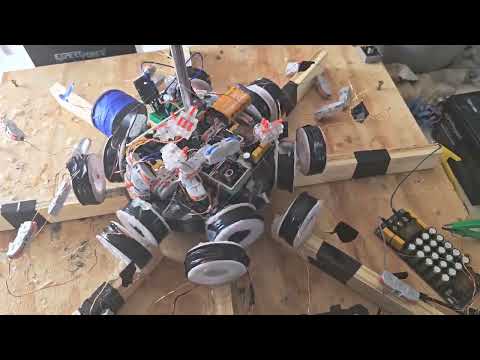 Long-form
Coil Passes in My Pulse Motor Sandbox (Magnet Induction Test)
6-magnet rotor vs 8 bifilar stator coils: coil passes from 400 Hz down to 100 Hz at 12–30 V, north/south fields, under 130 mA.
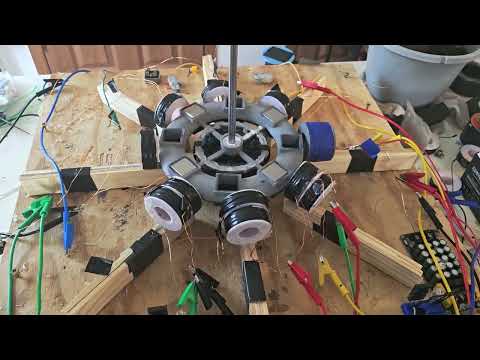 Long-form
2 circuits running a third room still for some growth/expansion.
Papa Bale here with a messy bench update.
One path · free first
Watch free → subscribe → optional membership
Notes stay free. The full experiment lives on YouTube. Membership is optional when you want Discord and exclusives — not required to learn.
- 2
Subscribe free + turn on alerts
Hit Subscribe, then the 🔔 bell so you catch the next experiment.
Subscribe free + 🔔 - 3
Optional: join for $2.99/mo
Members-only videos, Discord, and live shoutouts — cancel anytime.
Join $2.99/mo
Longer sessions · ad-supported free library
Not done yet? Queue the next long-form run
Queue up the next long-form bench run on YouTube — longer sessions keep the workshop free for everyone.
- 1▶ Watch full on YouTube
Start: Shocking Truth About Pulse Motors
Notes & transcript on site - 2▶ Watch full on YouTube
2 circuits running a third room still for some growth/expansion.
Notes & transcript on site - 3▶ Watch full on YouTube
M.P.H.'s pulse motor labs EP:2 Skin deep
Notes & transcript on site - 4▶ Watch full on YouTube
Bifilar Pancake Coil Build for Pulse Motor Generator
Notes & transcript on site