Experiments·Transcript-backed
Pancake Bifilar Coil Build for Pulse Motor Generator
Watch me build my first pancake bifilar coil using 28 and 26 gauge wire with electrical tape. I test it on the pulse motor, swap to hall effect again, and discuss how much wire a 100 foot pancake coil needs. Real bench results only.
Long-form · Full audio · Best on YouTube
Watch the complete video: Pancake Bifilar Coil Build for Pulse Motor Generator
Watch the full long-form video on YouTube — that's where the full bench audio, runtime, and experiments live.
Preview embed · full runtime is better on YouTube
Prefer the full player? Better audio, runtime, and next-video queue on YouTube.
▶ Open full on YouTubeJump to the discussion · full video on YouTube
Hear it on the bench
Each link opens “Pancake Bifilar Coil Build for Pulse Motor Generator” on YouTube at the first time that topic comes up in the captions. Stay on YouTube for the complete runtime.
See it on the bench · full runtime on YouTube
What to watch for
- ▸First pancake bifilar coil attempt is held together with electrical tape and isn't perfectly uniform
- ▸Wiring uses one 28 gauge strand alone plus 26 gauge strands configured as one single, two in series, then three in series
- ▸Switch gets hot and sticks, causing amps to rise and the motor to poop out before it really gets going
- ▸Iron filing core in the coil is likely causing extra drag and higher amp draw
- ▸Testing resistors up to 22 ohms but all are only 0.5 watt rated
- ▸Plans to switch back to hall effect sensor to replace the problematic mechanical switch
Watch the full long-form video on YouTube — that's where the full bench audio, runtime, and experiments live.
Experiment notes (read while you watch)
Notes support the video — for the full-length run with complete bench audio, stay on YouTube.
Papa Bale builds his first pancake bifilar coil on the bench while working on pulse motor electricity generation. The coil uses 26 gauge strands in series plus a single 28 gauge strand, held together with electrical tape. He tests it live, deals with a sticking switch and iron filing core, then decides to hook up the hall effect again.
Key takeaways
- First pancake bifilar coil attempt is held together with electrical tape and isn't perfectly uniform
- Wiring uses one 28 gauge strand alone plus 26 gauge strands configured as one single, two in series, then three in series
- Switch gets hot and sticks, causing amps to rise and the motor to poop out before it really gets going
- Iron filing core in the coil is likely causing extra drag and higher amp draw
- Testing resistors up to 22 ohms but all are only 0.5 watt rated
- Plans to switch back to hall effect sensor to replace the problematic mechanical switch
In this bench session I'm juggling two projects at once: generating electricity with the pulse motor and finishing my very first pancake bifilar coil. The coil isn't uniform because I don't have a great workspace, but it's solid enough for testing. I used only electrical tape to hold everything—no fancy winding jig this time.
The spool had about 100 feet of wire. I wasn't sure if I needed a full 100 foot pancake coil though, so I asked viewers what length they recommend—I'm guessing 50 feet might be plenty. Live on camera the lights came on right away when I fired it up. The wiring is one 28 gauge strand by itself, then the 26 gauge strands go one single file, two in series, then three in series for all six strands.
We saw the switch get hot fast. When the switch sticks the amps climb and the whole thing bogs down. There's a lot of iron filing core in the coil which is probably slowing the rotor and pulling more current. I was testing different resistors and landed on 22 ohms but they're all half-watt parts so they're getting stressed. The blinking LED was neat but the motor poops out right when it should accelerate. That's why I'm going back to the hall effect again to replace the mechanical switch.
Overall it's messy DIY but the coil lit the light and proved the concept even if the switch is the weak link.
Related on this site
- How to Wind Coils for a Pulse Motor (Step by Step) — Directly supports the pancake bifilar coil winding discussion and first-build lessons
- Using a Hall Effect Sensor in Your Pulse Motor Build — Matches the decision to hook the hall effect again after switch problems
- Best Wire Gauge for Pulse Motor Coils (AWG Guide) — Compares the 26 gauge and 28 gauge strands used in the bifilar layout
- I Finally Got My Pulse Motor Running (Reed Switch) — Related earlier pulse motor trigger success that contrasts with the current switch trouble
---
*Generated from video transcript (hash `5b3dcd967244…`).*
Full transcript (2,576 chars · en)
hello ladies and gentlemen this is Papa Bale and welcome to the channel currently I'm working on two things uh I'm working on the generation of electricity with this pulse motor and I'm working on a pancake bif filer coil it's not particularly uniform I don't have a really good spot to work on this type of thing but uh it's pretty solid and I'm not using anything but electrical tape I don't know if that's a good idea or not I don't think it really matters at this point this is my first one so yeah we're gonna we're going to finish this we're going to see if it works and if it doesn't we can just untape it start over again um there is a 100 feet I believe in the spool I don't know if I need a 100 foot pancake coil though so if somebody could uh I'm thinking 50 ft is going to be about good enough but if somebody could let me know in a comment or something that would be great like what how long how much wire should be in there so I'm going to turn this on a little bit let me discuss how I how I W um wired this all right so we got 128 gauge strand that one's hooked up by itself and then the 26 gauge strands go as wow the lights already on ladies and gentlemen already dude wow cool all right um so it goes one two three for the 26 gaug strands so you get one single file then two in series and then three in series and that's all six strands right there so this is one two three uh we just uh yeah there we go we got the teeth [Music] back see when the the switches get hot the switch gets hot like it just [Music] did there it goes and then the amps you can tell because the amps will go up yeah that's a problem with the switch and once it gets like this it it's pretty much done you got to throw it out but if we can get one good connection here I'll show you that the one 2 three is the way to go oh yeah we got iron filing um core that's probably what's going on with the amps that kind of sucks and we're up to I'm trying I'm testing out resistors to see which ones will work best and so far we're up to uh 22 ohms but they're all 05 Watts there's a lot of core in here too so I mean there's a lot slowing this baby down yep we already got light that's neat I think the the electric look at that it's so like it's blinking so [Music] much yeah that that's stupid that it just it poops out once you you get to the point where it's going to get going and this switch starts sticking so I think I'm going to hook up the hall effect again for uh and we're going to see if we can't go from there all right thank you very much peace out have a good night bye now
Keep watching · longer sessions
More long-form bench runs
Queue up the next long-form bench run on YouTube — longer sessions keep the workshop free for everyone.
 Long-form
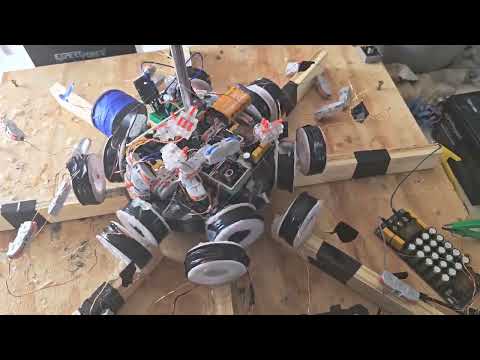
Coil Passes in My Pulse Motor Sandbox (Magnet Induction Test)
6-magnet rotor vs 8 bifilar stator coils: coil passes from 400 Hz down to 100 Hz at 12–30 V, north/south fields, under 130 mA.
 Long-form
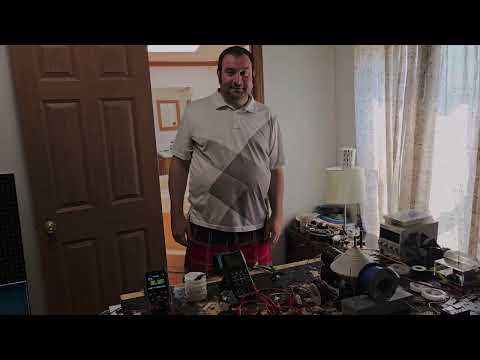
Dual Bifilar Coil: Self-Running Energy Experiment
Dual bifilar coil with a pickup coil at 38–39V DC, then another coil under it to test residual spin.
 Long-form
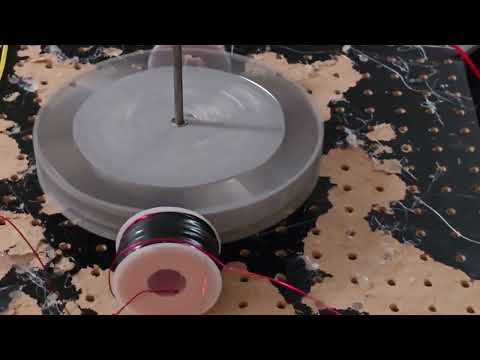
Pulse Motor Mayhem: 4-Magnet Rotor Bifilar Test
Four magnets on the rotor, 20/30 AWG bifilar coils, held at 12V DC.
 Long-form
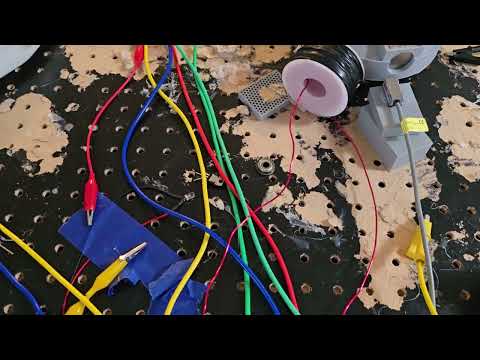
SSG pulse motor with 1000-turn bifilar coils
Three Bedini-style coils chained so one negative spike fires the next.
One path · free first
Watch free → subscribe → optional membership
Notes stay free. The full experiment lives on YouTube. Membership is optional when you want Discord and exclusives — not required to learn.
- 2
Subscribe free + turn on alerts
Hit Subscribe, then the 🔔 bell so you catch the next experiment.
Subscribe free + 🔔 - 3
Optional: join for $2.99/mo
Members-only videos, Discord, and live shoutouts — cancel anytime.
Join $2.99/mo
Longer sessions · ad-supported free library
Not done yet? Queue the next long-form run
Queue up the next long-form bench run on YouTube — longer sessions keep the workshop free for everyone.
- 1▶ Watch full on YouTube
Start: Shocking Truth About Pulse Motors
Notes & transcript on site - 2▶ Watch full on YouTube
2 circuits running a third room still for some growth/expansion.
Notes & transcript on site - 3▶ Watch full on YouTube
M.P.H.'s pulse motor labs EP:2 Skin deep
Notes & transcript on site - 4▶ Watch full on YouTube
Bifilar Pancake Coil Build for Pulse Motor Generator
Notes & transcript on site