Experiments·Transcript-backed
Next Coil Basically – SSG Circuitry, Coil Spiking & 1000-Turn Bi-Filar Coils
Watch me chain three Bedini-style coils together so the negative spikes from one fire the next. I test a reed switch, try to make new rotor, chase better coil performance and get the coil hooked up right. Real bench readings and what actually worked.
Long-form · Full audio · Best on YouTube
Watch the complete video: Next Coil Basically – SSG Circuitry, Coil Spiking & 1000-Turn Bi-Filar Coils
Watch the full long-form video on YouTube — that's where the full bench audio, runtime, and experiments live.
Preview embed · full runtime is better on YouTube
Prefer the full player? Better audio, runtime, and next-video queue on YouTube.
▶ Open full on YouTubeJump to the discussion · full video on YouTube
Hear it on the bench
Each link opens “Next Coil Basically – SSG Circuitry, Coil Spiking & 1000-Turn Bi-Filar Coils” on YouTube at the first time that topic comes up in the captions. Stay on YouTube for the complete runtime.
- ▶ Watch at 0:39next coil basicallyprimary
“…bang to this scho girl school the next coil basically is I I took it and put it…”
- ▶ Watch at 6:49make new rotorlong-tail
“…I might have to make a new rotor I mean it's a beautiful rotor but…”
- ▶ Watch at 6:49new rotor meanlong-tail
“…I might have to make a new rotor I mean it's a beautiful rotor but…”
- ▶ Watch at 2:45better coillong-tail
“…volts got to get a better coil for…”
- ▶ Watch at 6:46coil hookedlong-tail
“…get a trigger coil hooked up on this one…”
See it on the bench · full runtime on YouTube
What to watch for
- ▸Chaining coils lets the negative spike from one coil fire the next in series
- ▸Lights illuminate when SG circuits are disconnected from the supply and fed only by spikes
- ▸Reed switch on the final coil makes the lights flash in sync with rotation
- ▸Current rotor fails to reliably trigger at higher speeds, prompting rotor or coil changes
- ▸Adding a 32-gauge strand to future coils for dedicated generation while keeping 30 for trigger
- ▸RPM climbed from 550 to 655 after routing the last coil back to the power distribution block
Watch the full long-form video on YouTube — that's where the full bench audio, runtime, and experiments live.
Experiment notes (read while you watch)
Notes support the video — for the full-length run with complete bench audio, stay on YouTube.
Papa Bale chains three 1000-turn bi-filar coils (26 AWG drive, 30 AWG trigger) into one pulse motor using School-Girl (SG) connections. Negative spikes from each coil power the next instead of the supply. Reed switch tests, RPM climbs to 655, lights flash, and later plans for an extra 32 AWG generation strand.
Key takeaways
- Chaining coils lets the negative spike from one coil fire the next in series
- Lights illuminate when SG circuits are disconnected from the supply and fed only by spikes
- Reed switch on the final coil makes the lights flash in sync with rotation
- Current rotor fails to reliably trigger at higher speeds, prompting rotor or coil changes
- Adding a 32-gauge strand to future coils for dedicated generation while keeping 30 for trigger
- RPM climbed from 550 to 655 after routing the last coil back to the power distribution block
Short bench session chaining three Bedini-style coils so each negative spike feeds the next. Got the motor spinning, lights flashing, and hit 655 RPM before planning the next coil basically with an extra generation strand.
Related on this site
- Pulse Motor Rotor Design: Magnets, Materials and Balance — Directly supports the 'make new rotor' and timing discussion
- Bedini Motor & SSG Circuit Guide (Beginner Bedini Explained) — Explains the school-girl connections used on each coil
- How to Wind Coils for a Pulse Motor (Step by Step) — Relevant to rolling the next set with added 32-gauge strand
- Best Wire Gauge for Pulse Motor Coils (AWG Guide) — Discusses why 26/30/32 gauges were chosen for drive, trigger and generation
- Understanding Back EMF in Pulse Motors — The negative spikes being routed from one coil to the next
---
*Generated from video transcript (hash `9574797c2bc7…`).*
Full transcript (3,336 chars · en)
hello ladies and gentlemen what's up it's Papa Bale and welcome to the channel what we're looking at here is three coils bini style coils we have uh one drive and one trigger strand in each one of these coils 30 for the trigger 26 for the drive and we have a school girl um SG uh connection to each one of these transistors but this is how it goes It goes school girl then it connects from there this diod right here bang to this scho girl school the next coil basically is I I took it and put it all into the same motor I don't know um what the benefit or lack thereof would be but it works works really well in my mind I gotten up to a th000 RPMs uh but that was before I hooked up all three school girl circuits SG circuits but uh yeah let's take a look at how it works so so the third one the third transistor which is that one we were looking at down here it goes from The Collector of this transistor down to this diode right here follow that red line and it goes all the way back here to the positive of the power supply and so when when it's connected like that the lights don't run they they so here let's start it from a slow stop we'll work on that that's obviously not right give it to 12 volts got to get a better coil for that all right here we go so when you what it does here is it generates the negative spikes that are generated are now thrown into the next coil and that's the only thing that's powering them does that make sense so instead of being connected to the power supply they're connected to each other and series kind of going like that might have to put a MAG lab on there to make it run even better all right so I'm going to disconnect uh the school Grill circuits from over here the SG see the difference and our lights are all illuminated that's great now what I'm going to do is I'm going to plug the red one in to the read switch over here let's see what happens be right back all right the end of the bini circuit three is plugged into the re switch right there e and now look at the lights hope we can only get that to spin right see we get them spinning both like this that'll go extremely well you see though the lights Flash like that that's great that's fantastic man but I want to get a trigger coil hooked up on this one I might have to make a new rotor I mean it's a beautiful rotor but it's just not working uh it's not firing the trigger all right let's get another reading on that 550 yeah so I think the best bet and we're going to find this out right now is running this back into the power distribution block there we go now let's get a reading 560 643 655 awesome that'll continue to increase in speed very cool I like the circuit a lot and when it's plugged back into itself basically all the lights go off and it continues to run which is awesome I would however like it to uh run a trigger a whole assembly over here just be enough should be enough I don't understand what's the hold up on this side but I'm going to roll some more coils except this time I'm adding an extra strand in I'm 32 gauge strand they're all going to have 32 30 and 26 so one of them is going to be just there for Generation purposes and since 30 works really good for a trigger on this rotor I think 32 will be for Generation that'll be fun heck yeah well peace out have a good day please subscribe bye now
Keep watching · longer sessions
More long-form bench runs
Queue up the next long-form bench run on YouTube — longer sessions keep the workshop free for everyone.
 Long-form
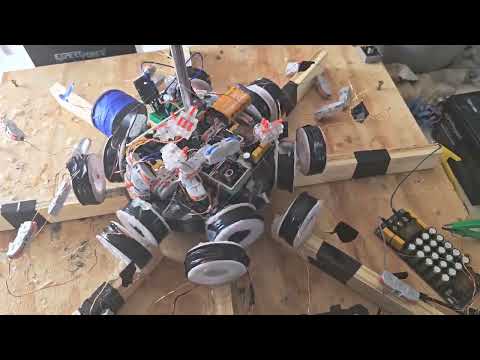
Coil Passes in My Pulse Motor Sandbox (Magnet Induction Test)
6-magnet rotor vs 8 bifilar stator coils: coil passes from 400 Hz down to 100 Hz at 12–30 V, north/south fields, under 130 mA.
 Long-form
Dual Bifilar Coil: Self-Running Energy Experiment
Dual bifilar coil with a pickup coil at 38–39V DC, then another coil under it to test residual spin.
 Long-form
Double SSG SSG GEN Closed Single Loop
Closed-loop double SSG on one battery — bifilar coils, pot tweak, live meter readings.
 Long-form
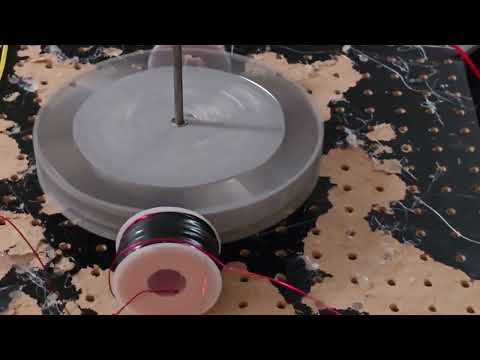
Pulse Motor Mayhem: 4-Magnet Rotor Bifilar Test
Four magnets on the rotor, 20/30 AWG bifilar coils, held at 12V DC.
One path · free first
Watch free → subscribe → optional membership
Notes stay free. The full experiment lives on YouTube. Membership is optional when you want Discord and exclusives — not required to learn.
- 2
Subscribe free + turn on alerts
Hit Subscribe, then the 🔔 bell so you catch the next experiment.
Subscribe free + 🔔 - 3
Optional: join for $2.99/mo
Members-only videos, Discord, and live shoutouts — cancel anytime.
Join $2.99/mo
Longer sessions · ad-supported free library
Not done yet? Queue the next long-form run
Queue up the next long-form bench run on YouTube — longer sessions keep the workshop free for everyone.
- 1▶ Watch full on YouTube
Start: Shocking Truth About Pulse Motors
Notes & transcript on site - 2▶ Watch full on YouTube
2 circuits running a third room still for some growth/expansion.
Notes & transcript on site - 3▶ Watch full on YouTube
M.P.H.'s pulse motor labs EP:2 Skin deep
Notes & transcript on site - 4▶ Watch full on YouTube
Bifilar Pancake Coil Build for Pulse Motor Generator
Notes & transcript on site