Experiments·
Double SSG SSG GEN Closed Single Loop
Watch Papa Bale run a double SSG setup in a closed single loop with one battery. Real bench measurements, coil turns, potentiometer tweaks, and what the output actually looked like on the meter.
Long-form · Full audio · Best on YouTube
Watch the complete video: Double SSG SSG GEN Closed Single Loop
Watch the full long-form video on YouTube — that's where the full bench audio, runtime, and experiments live.
See it on the bench · full runtime on YouTube
What to watch for
- ▸Closed single-loop system uses only one battery for both drive and charge
- ▸Output of first SSG feeds the input of the second SSG
- ▸Coils are bifilar 20+32 gauge (660 turns) and 20+22 gauge (730 turns)
- ▸Trigger coil is half length of the main coil
- ▸Potentiometer adjusted from 900 Ω down to 800 Ω to get rotation
- ▸Multimeter showed output voltage roughly 15-20 V higher than input under load
Watch the full long-form video on YouTube — that's where the full bench audio, runtime, and experiments live.
Experiment notes
Papa Bale tests a closed-loop double SSG circuit running from a single battery. One SSG drives the next, with capacitor banks in between, bifilar coils of different turns, and live multimeter readings on the output while the rotor spins.
Key takeaways
- Closed single-loop system uses only one battery for both drive and charge
- Output of first SSG feeds the input of the second SSG
- Coils are bifilar 20+32 gauge (660 turns) and 20+22 gauge (730 turns)
- Trigger coil is half length of the main coil
- Potentiometer adjusted from 900 Ω down to 800 Ω to get rotation
- Multimeter showed output voltage roughly 15-20 V higher than input under load
In this bench session I hooked two SSG circuits in series inside a closed single loop so the output of one drives the next while everything returns to the same starting battery. The rotor picked up speed after I dropped the potentiometer from 900 ohms to 800 ohms and we watched the voltage on the output side climb. Barefoot measurements, a quick safety cut when hooking the meter, and honest talk about the slight voltage drop on the main battery round out the test. Real DIY pulse motor numbers, no hype.
Related on this site
- Bedini Motor & SSG Circuit Guide (Beginner Bedini Explained) — Directly referenced in the transcript as the SSG circuits being used
- Best Wire Gauge for Pulse Motor Coils (AWG Guide) — Transcript gives exact wire gauges and turn counts for both coils
- Can a Pulse Motor Charge Batteries? What Experiments Show — The whole test is about running and charging from a single battery in closed loop
---
*Generated from video transcript (hash `dd3eba7956fd…`).*
Full transcript
Hey, what's up everybody? It's Papa Bale. Welcome to the channel. It popped, but that's just the capacitor. The lights. There was a little bit of room for it to Right. Okay. I think blue one is already hooked up. Yeah, that's hooked up now. Now I just need to gather where I'm where I'm at. I think >> this one is the power >> input and this one. Okay. So what this circuit is is this circuit is hooked up to this coil, but the output of this circuit is hooked up to the input of that circuit and that circuit is hooked up to this coil on the side. So >> So what would you call that? >> Uh well, it's a closed loop system because there's only one battery involved. >> Mhm. But, uh, I'm just going to let it go because I think it's getting faster or you think I should spin it. I think uh I think it's all good. >> Okay. >> Yeah, I think it might be getting faster. >> So, I got a potentiometer on here and right now it's on about 900 ohms. >> 900 ohms. That might be a little too many ohms for it to get going like this, but I'm going to let it go. It looks like it's going >> too much. >> I think it's going. >> It's got too much. >> Let me Should I turn down the ohms? >> No, I don't know if it's going. >> 12.01. I don't know if it's going. I can't really really tell. >> I think so. I I can tell now. I feel like it's going >> at like one RPM. >> Yeah. >> More per >> per turn. Yep. >> Couple of seconds. >> All right. I'm going to turn it. >> All right. All right. That was funny. >> I'm going to reduce the ohms. There you can hear it now >> and that's only 800 ohms. >> But the circuit um you know starts at this battery and it goes into the SSG which is connected to this coil and that's 660 turns of 20 gauge and 32 gauge by filer style. See, I have both of those 830 circuits connected in series and hooked into one circuit. So, they're nice and long. And then this one is 730 turns of 20 and 22 gauge hooked in series with it. Uh the trigger though isn't as long as the one in this coil. It's half the length of the coil. So, 730 turns instead of 1460 turns. Okay, so the circuit keep on getting off track here. The circuit goes from here to the SSG and then the output of the SSG is connected to that SSG input. So the output of this one is driving that one and then the output of that one is charging this battery. And in between each one of these there's a cap bank. Um, so the energy flows completely back to this battery without having any backlash or but it does spend uh has a little bit bigger spending cuz it started at 12.01 I think. But it is now running two circuits. And uh yeah, let me let me try something. I'm going to hook up one of the multimeters to the output of this SSG. Oh, thank you. And I'm doing this bare feet. >> Actually, you know, before I do anything like that, >> I'm going to cut the power. Yes, sir. I'm I'm brave, but I'm not that I'm not stupid. Not that great. That's a nice rip on there, man. It's going pretty quick for it being a closed circuit and doing two two circuits and the battery just one battery. I think it's I think it's great. All right. Multimeter clips. There it is. Um, okay. And there's there's our output. Let me turn it back on real quick. Be right back. There. Plain and simple. What do we got coming out of there? >> Huh? >> Damn it. Okay, there we go. So that's about it's about 20 more 15 20 more >> and then this is what's coming out of this output which is a lot more than it was before because before I had both circuits going through this coil but now I have that coil in series going through that one and that one going through another one. So, we're getting better readings here. But this one, I'm pretty sure is going down. Oh, no. Yeah. Okay, it is. My bad. All right. Nice. Sweet. So, thank you very much. Peace out. Have a wonderful night. Please subscribe, hit the notification bell, and peace out.
Keep watching · longer sessions
More long-form bench runs
Queue up the next long-form bench run on YouTube — longer sessions keep the workshop free for everyone.
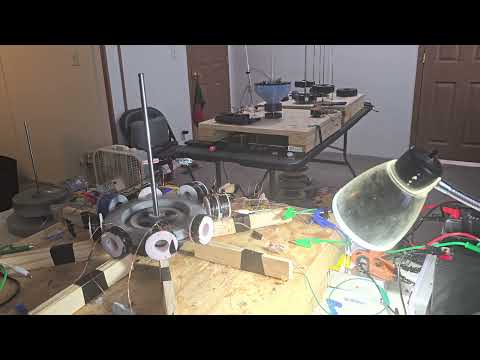 Long-form
8-Magnet Pulse Motor + Induction Coils (Bedini-Style Charge)
Eight-magnet pulse motor at 12V with series induction coils.
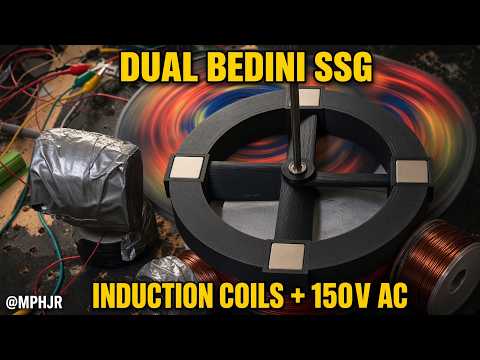 Long-form
Bedini SSG With First Induction Coil and Big Coil Waveform
Watch me run a Bedini SSG with the first induction coil placed under the drive coil and wired in series to the big coil.
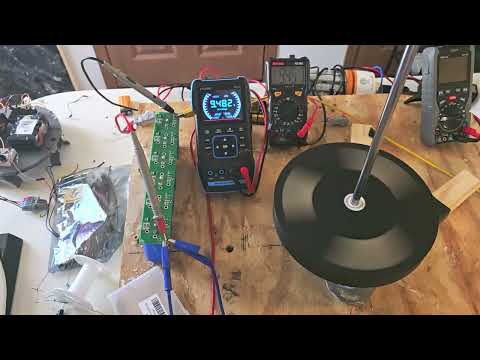 Long-form
Bedini Output Onto Coil: Running Standard Bedini Experiments
Bedini output hooked onto the coil with cap banks — standard Bedini bench experiment, real results.
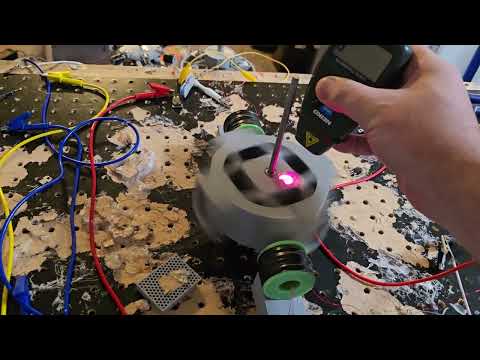 Long-form
Two Bedini Circuits Running a 9-Mag Rotor and 4-Mag Rotor at 600 RPMs
Two Bedini circuits on a pulse motor: 9-magnet rotor and 4-magnet Celtic cross, both around 600 RPM.
One path · free first
Watch free → subscribe → optional membership
Notes stay free. The full experiment lives on YouTube. Membership is optional when you want Discord and exclusives — not required to learn.
- 2
Subscribe free + turn on alerts
Hit Subscribe, then the 🔔 bell so you catch the next experiment.
Subscribe free + 🔔