Experiments·
Bedini SSG With First Induction Coil and Big Coil Waveform
Watch me run a Bedini SSG with the first induction coil placed under the drive coil and wired in series to the big coil. See the combined waveform on th…
Long-form · Full audio · Best on YouTube
Watch the complete video: Bedini SSG With First Induction Coil and Big Coil Waveform
Watch the full long-form video on YouTube — that's where the full bench audio, runtime, and experiments live.
See it on the bench · full runtime on YouTube
What to watch for
- ▸First induction coil placed directly under the drive coil and wired in series to the big coil
- ▸Tiny nudge on the rotor gave an immediate 10 V reading from the induction sequence
- ▸Scope shows the big coil producing the main slope while the bottom coil adds fuzzy high-frequency content on top
- ▸Running Bedini SSG and power supply simultaneously through the same coil helps rather than interferes
- ▸Starting with the Bedini circuit first then adding the power supply lets the rotor build speed and hold higher RPM after cutting the supply
- ▸Oscilloscope captured spikes reaching 200 V range even after power was cut
Watch the full long-form video on YouTube — that's where the full bench audio, runtime, and experiments live.
Experiment notes
In this bench session I fired up the Bedini SSG circuit using a first induction coil sitting underneath the drive coil and wired in series with a big 32-gauge coil. A tiny nudge produced 10 volts. We watched the combined waveform on the scope, added a second drive strand, and saw the motor speed up while pulling from both a battery setup and a power supply at the same time.
Key takeaways
- First induction coil placed directly under the drive coil and wired in series to the big coil
- Tiny nudge on the rotor gave an immediate 10 V reading from the induction sequence
- Scope shows the big coil producing the main slope while the bottom coil adds fuzzy high-frequency content on top
- Running Bedini SSG and power supply simultaneously through the same coil helps rather than interferes
- Starting with the Bedini circuit first then adding the power supply lets the rotor build speed and hold higher RPM after cutting the supply
- Oscilloscope captured spikes reaching 200 V range even after power was cut
I turned on the multimeter and gave the rotor the smallest nudge — instantly saw 10 volts. That set the tone for the whole bench session. The first induction coil sits right underneath the drive coil and feeds into the Bedini SSG circuit along with the big coil. On the scope you can clearly see the sloping wave from the big coil and the fuzzy high-frequency stuff layered on top from the bottom coil. When I switched on the second 20-gauge drive strand the whole thing sped up dramatically while still pulling only a couple of volts and milliamps. Even running the power supply at 8 V and 600+ mA the Bedini side kept helping it along. Cutting power left residual spikes that looked like 200 V tornadoes on the scope. Pretty neat to watch the two coils work together instead of fighting.
From the spoken experiment
The following notes stay close to what was said in the video about bedini ssg:
> Hello, ladies and gentlemen. What's up? It's Papa Bill, and welcome to the channel. All right, let me turn on the the multimeter over here. And I'll explain the induction sequence real quick. All right, sweet. So, that just that little tiny nudge right there gave it 10 volts. That's awesome. All right, so our first induction coil is underneath uh the drive coil. And it's is hooked in series to this nice-sized 32-gauge coil. It's 1.5 lb uh of 32. All right, and so it's going to get What I'm saying is the wave that's going to come off the big coil and the wave that's going to come off the the bottom coil over here are going to combine. But, there you can see the most definitely that they're like on top of one another. And what's what, you know? All right, so let me turn on All right, so this is the SSG circuit with the primary and charge batteries. >> Huh. Hmm, I'm going to see if we can f…
Builder checklist
- Confirm trigger/sensor timing before chasing higher voltage
- Watch heat on coils and transistors during longer runs
- Record voltage and behavior at each change (one variable at a time)
Related on this site
Related on this site
- Bedini Motor & SSG Circuit Guide (Beginner Bedini Explained) — Directly matches the Bedini SSG circuit used in the experiment
- Reading Oscilloscope Output on a Pulse Motor — Explains how to interpret the big coil slope and fuzzy induction shown on scope
- Best Wire Gauge for Pulse Motor Coils (AWG Guide) — Discusses the 32-gauge big coil and added higher-gauge wire in the same coil
- How to Build a Pulse Motor: Parts, Coil Placement & First S — Covers coil placement of the first induction coil under the drive coil
- I Finally Got My Pulse Motor Running (Reed Switch) — Related successful pulse motor build with different triggering
---
*Generated from video transcript (hash `bf278cb89ab4…`).*
Full transcript
Hello, ladies and gentlemen. What's up? It's Papa Bill, and welcome to the channel. All right, let me turn on the the multimeter over here. And I'll explain the induction sequence real quick. All right, sweet. So, that just that little tiny nudge right there gave it 10 volts. That's awesome. All right, so our first induction coil is underneath uh the drive coil. And it's is hooked in series to this nice-sized 32-gauge coil. It's 1.5 lb uh of 32. All right, and so it's going to get What I'm saying is the wave that's going to come off the big coil and the wave that's going to come off the the bottom coil over here are going to combine. But, there you can see the most definitely that they're like on top of one another. And what's what, you know? All right, so let me turn on All right, so this is the SSG circuit with the primary and charge batteries. >> Huh. Hmm, I'm going to see if we can figure out what the problem is. There we go. You can hear the difference. So, this is the Bedini SSG. And this is what we're currently getting off of the induction sequence from the running that motor with these two induction coils. Are they the best induction coils? I don't really know. I I just put a bunch of wire in the same coil of a like a higher gauge. And you get it you get more voltage. All right. Now, see [snorts] we're getting 35 36 volts. I'm going to turn on the oscilloscope now. See, look at that wicked wave. Like the the sloping is the big coil. And all that fuzzy business in between like on the on the top and the sloping down. That's the that's the induction from the coil underneath. Now, I'm going to turn on the second drive. Which is the 20 gauge strand. This is a the 18 gauge strand. >> [clears throat] >> Now, this is in my from my understanding constantly getting faster. Cuz of the way it's set up. All right, but here we go. You hear it kicking right there. We're only at 2.8 volts. 3.5 .02 milli- milliamps. >> That is amazing. Super duper fast. And it still kicked in because that just it helped the Bedini circuit out. And now it's engaged at a faster faster pace. So cool. Let's just run the power supply for a second. We're going to look at that oscilloscope as well. With just the power supply. We'll go up to 8 volts cuz we're already pulling 600 milliamps, 650. Look at that. Wow. And this is freaking going insanely fast right now. But I'll cut everything. And this is with the This is it with it, you know, off. I'd say that's still in between uh looks like 200 volts and something. >> That's that's unfortunate. It looks like it might have been like a like a tornado oriented thing. Here, let's try this. There it goes, kind of. Wow. Okay, that's the blip from wherever it's coming from. I think it's coming from the little coil on the bottom. Cool, we're focused right on it. And then that's sloping is the big coil. It feels like more voltage, but it's uh you know, the more subtle. And it's uh inclined. That is so neat. See, look at it now. Wow, dude. That is cool. About 4 4.5 volts. And the cactus is still doing well for not having direct sunlight. You know, I give it like uh small like Dixie cup of water every day. So, that and the ambient ambient light. But, see this growth wouldn't even occurred cuz I had it in the other room, same kind of situation. And the growth wasn't happening. Uh but I I put two piezos in there as as speakers and ran uh 4 kHz through it. And then it started to grow. >> [clears throat] >> And I even put iron filings on there, iron powder. And it it's growing through in very small amount. I mean, like two pinches. Not even like full pinches. But, uh I was just seeing like through like the frequency if there's any alchemic uh properties it could be attuned to the cactus from the rust. So, I don't know uh even what I'm saying really. But, I've always like had an image of like growth of some kind of plant um over iron large iron deposit. And over many many like generations of trees they incorporated uh not really iron into the tree, but the property of iron. Like it's magnetic material. I don't know. Anyway, it it uh the the new growth here is phenomenal. And I don't think it would have ever taken place without the experimentation. My opinion. Uh I could be totally wrong. It could be that uh the roots were dirty and they got washed off. So the water and then the intake was was better. You know, it could be something just that simple, but I gave you the timeline, basically. 10 days of high frequency or four four kilo kilohertz. Uh 12 hours a day. Uh no direct sunlight. And like a half of Dixie cup of water every day. And even at that small amount I got a little bit of water on the table. Huh, so I had to put a towel under there. Anyway, thank you very much, ladies and gentlemen. I don't know exactly what we're going to call this. Uh See, one of these strands is Bedini. The gold strand is Bedini. Like through and through SSG. Charge battery, primary battery. All the stuff, except the potentiometer. I don't have one of those. So, maybe not everything you would want, but I have one dedicated trigger strand. >> [cough] [clears throat] >> And the 20 V 20 Excuse me, 20 gauge is hooked up to power supply. So, yeah. >> [clears throat] >> That's awesome. I can be running Bedini and the power supply at the same time through the same coil, really. And not have them interfere with one another. If anything, they help each other out tremendously. Especially if you start it with the Bedini first, and you let it build up a bit, then you turn on the power supply, and then you you then it will speed up like a lot. Then you can cut the power supply, and you're going to not drop all the way back down to where you were before, cuz the Bedini is is always creeping up. If you do it right, you know, it's supposed to increase in speed pretty constantly. And I don't know like what uh cuz you can tell you can see it's not a bike wheel with 21 magnets on it. It's got three magnets on it. And if I measure between on a arc each magnet, it's going to fall within parameters. Or very, very close. I'm thinking in between each one there is going to be 3 and 1/2 to 4 in. Maybe more. Maybe more. Can't really tell right now. Like from here to here including the arc. So, you know, you got to bust out your trig skills. Anyway, roughly you know, 3 3.75 in of space of space between each magnet. Which I I say that's good enough. You know, if not too too far away. >> [laughter] [clears throat] >> Awesome. So, yeah, the 120 definitely working well. Uh I'm loving the coil that I'm working with. Uh I'm I'm liking the the Bedini SSG. Uh I'm liking the induction series that I got running with the SSG. So, like the coil underneath there and that big coil right there. If I go like this we've got a Look at that. About 12 12 V to start. To start, you know, and when you spin it, naturally it's going to slow down from the moment. I don't know what moment's called, but it stops, you know, being having velocity. That might be it. See, it stops having velocity and increasing, and then it steadily slows down. Because it's wrapped around the pole. You know, like if it wasn't, it would the first thing it hit, it'd probably stop. So, I think that's awesome. And you see like this right here, this parad- it's paradoxical cuz it's at 10 V. It's been like that for a little while. There's no maglev on this thing. All right. Thank you very much. Peace out. Bye now.
Keep watching · longer sessions
More long-form bench runs
Queue up the next long-form bench run on YouTube — longer sessions keep the workshop free for everyone.
 Long-form
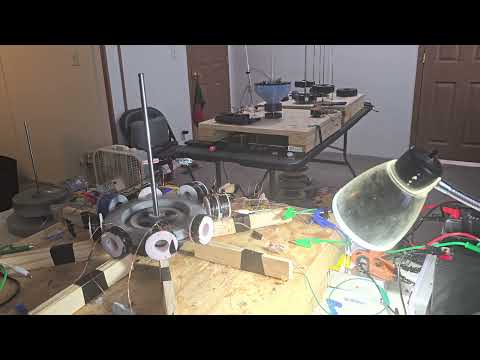
8-Magnet Pulse Motor + Induction Coils (Bedini-Style Charge)
Eight-magnet pulse motor at 12V with series induction coils.
 Long-form
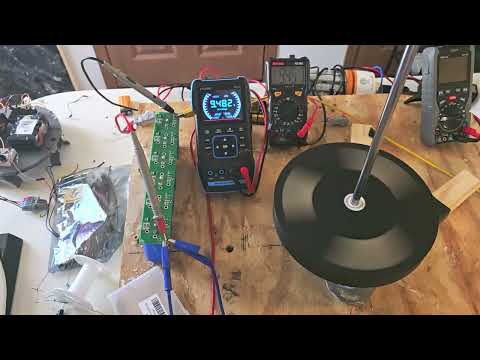
Bedini Output Onto Coil: Running Standard Bedini Experiments
Bedini output hooked onto the coil with cap banks — standard Bedini bench experiment, real results.
 Long-form
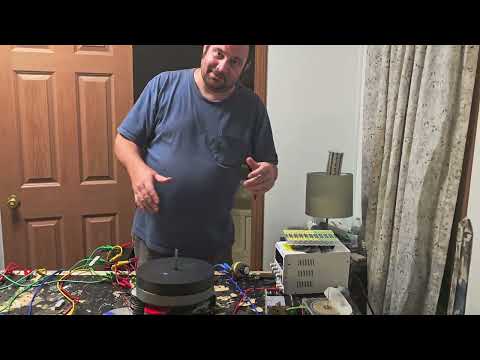
Double SSG SSG GEN Closed Single Loop
Closed-loop double SSG on one battery — bifilar coils, pot tweak, live meter readings.
 Long-form
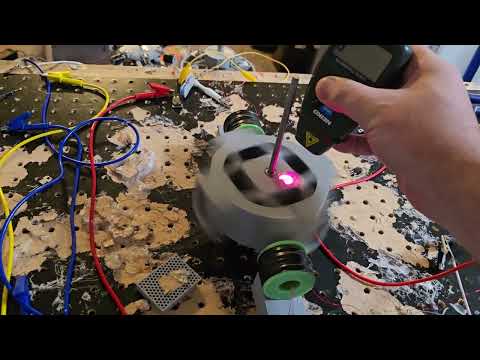
Two Bedini Circuits Running a 9-Mag Rotor and 4-Mag Rotor at 600 RPMs
Two Bedini circuits on a pulse motor: 9-magnet rotor and 4-magnet Celtic cross, both around 600 RPM.
One path · free first
Watch free → subscribe → optional membership
Notes stay free. The full experiment lives on YouTube. Membership is optional when you want Discord and exclusives — not required to learn.
- 2
Subscribe free + turn on alerts
Hit Subscribe, then the 🔔 bell so you catch the next experiment.
Subscribe free + 🔔