Experiments·
one generator coil: Generator Coil Drive: Why It Loaded the
one generator coil — I tested many different ways to get gen coil to drive the main drive coil on my pulse motor generator. From grounding experiments t…
Long-form · Full audio · Best on YouTube
Watch the complete video: one generator coil: Generator Coil Drive: Why It Loaded the
Watch the full long-form video on YouTube — that's where the full bench audio, runtime, and experiments live.
See it on the bench · full runtime on YouTube
What to watch for
- ▸One gen coil producing 50-58 V DC immediately loaded the rotor and dropped speed once initial power was sucked out.
- ▸Grounding the gen coil turned it into a load; without a complete circuit it wouldn't generate steady voltage.
- ▸Adding three gen coils at 120° and tightening the air gap got us to 650 RPM and 58 V but still drew power instead of driving the main coil.
- ▸Swapping a gen coil to a drive coil (22/32 gauge, single strand) caused the rotor to slow and stop generating.
- ▸Hall effect sensor stayed powered; removing drive power stalled the rotor every time.
- ▸No configuration recycled the energy without loading the rotor.
Watch the full long-form video on YouTube — that's where the full bench audio, runtime, and experiments live.
Experiment notes
In this bench session I hooked a generator coil up to try powering the drive side of the pulse motor. We saw voltages from 25 V up to 58 V but every time the gen coil became a load it killed the speed. I tried grounding, capacitance, multiple coils at 120 degrees, changing air gaps, and even swapping gen coils to drive coils. Self-running never happened.
Key takeaways
- One gen coil producing 50-58 V DC immediately loaded the rotor and dropped speed once initial power was sucked out.
- Grounding the gen coil turned it into a load; without a complete circuit it wouldn't generate steady voltage.
- Adding three gen coils at 120° and tightening the air gap got us to 650 RPM and 58 V but still drew power instead of driving the main coil.
- Swapping a gen coil to a drive coil (22/32 gauge, single strand) caused the rotor to slow and stop generating.
- Hall effect sensor stayed powered; removing drive power stalled the rotor every time.
- No configuration recycled the energy without loading the rotor.
Short bench log from the 3 March 2024 build. Started with one gen coil making 60 V open-circuit. Clipped it to the drive side after grounding and watched the multimeter. At low speed we saw 25 V pickup, but connecting it sucked the saturation out of the coil and speed dropped to almost nothing. Tried keeping the hall sensor powered at 5 V while turning the main power down. Voltage climbed to 50 V then collapsed. Added capacitance? Still no. The coil instantly became a load. Later tests with three same-size gen coils at 120° spacing, closer air gap, and a new terminal block setup reached 650 RPM drawing 2.1 A and producing 58 V, yet the moment the gen coil circuit closed it robbed torque. Even tried using a gen coil as a drive coil — one strand, one transistor — and the rotor braked hard. Hall sensor blinked, trigger coil checked out, but no self-perpetuating motion. Real measurements only, no magic.
From the spoken experiment
The following notes stay close to what was said in the video about one generator coil:
> hello ladies and gentlemen what's up this is Papa Bale welcome to the channel so I had this crazy idea since we got one generator coil hooked up and it generates 60 volts of DC electricity then we take this black clip right here which is hooked to that coil you know actually we got to ground it so it'll work so I'm going to do that real fast I'll be right back and we'll see what's up when I get back all right be right back all right it's grounded and I'm back we're going to spin this just to see if our multimeter is still clocking some juice it is great that's great got to hold that down for a second all right they leveled out [Music] we got some some pickup there all right we're getting going here we got 25 volts in the coil picking up pretty well okay we're going to go up cuz we're we're at a shaky spot I get going a little faster all right now the question is should I just remove the…
Builder checklist
- Confirm trigger/sensor timing before chasing higher voltage
- Watch heat on coils and transistors during longer runs
- Record voltage and behavior at each change (one variable at a time)
Related on this site
Related on this site
- How to Maximize RPM on Your Pulse Motor — Directly relates to the 650 RPM test and air-gap changes described in the transcript
- Understanding Back EMF in Pulse Motors — The saturation being sucked out of the coil and load behavior matches back-EMF discussion
- Pulse Motor vs Bedini Motor: What's the Difference? — Video mentions Bedini-style ideas and why self-running is unlikely
- Using a Hall Effect Sensor in Your Pulse Motor Build — Transcript repeatedly checks and powers the hall sensor during tests
- How to Wind Coils for a Pulse Motor (Step by Step) — Mentions 50-turn coils, 22/32 gauge, same-size gen coils, and lead length problems
---
*Generated from video transcript (hash `9229320b0a91…`).*
Full transcript
hello ladies and gentlemen what's up this is Papa Bale welcome to the channel so I had this crazy idea since we got one generator coil hooked up and it generates 60 volts of DC electricity then we take this black clip right here which is hooked to that coil you know actually we got to ground it so it'll work so I'm going to do that real fast I'll be right back and we'll see what's up when I get back all right be right back all right it's grounded and I'm back we're going to spin this just to see if our multimeter is still clocking some juice it is great that's great got to hold that down for a second all right they leveled out [Music] we got some some pickup there all right we're getting going here we got 25 volts in the coil picking up pretty well okay we're going to go up cuz we're we're at a shaky spot I get going a little faster all right now the question is should I just remove the clip or should I turn off the power first think I'm going to turn the power off oh no I don't think I can I really don't know what's going to happen here because if I put it in there without the aid of the hall sensor it's just going to stall out so I think I have to leave the power on cuz it's powering the hall effect sensor but the other six strands that are hooked to the power distributor yeah so this is going to be maybe I'll turn it back up yeah I think I can turn it back up that's what I'm going to do it has to be about 5 volts to be on I'm going to turn it down generating 50 volts oh wow what's going on is it looks like it's increasing in speed and stuff no not really but maybe that was a decrease cuz this says zero now I think uh yeah it sucked it right out of there maybe we need some capacitance I don't know if this is actually going to work the way I wanted to now I mean probably won't it was just an idea you know I didn't really have any idea how it was going to work but but uh see if we turn it down yeah it's got a strong draw so as soon as that initial blast is gone all the power gets either sucked out of the the saturation gets sucked out of the coil that's what I see happening here and then uh it's not going it'll immediately lose speed and it's not going fast enough to generate I mean it gets about one volt steady not really steady but and I'm not sure about that Hall of effect sensor so this might be a good time to test the trigger coil see if it's working make sure that's hooked up right yeah it is see and now it's the hall effect sensor is blinking not sure I really like that that'll stop shaking once it gets going fast enough I don't want it to just pop out though I [Music] wonder h i wonder e see I don't I don't see any difference when I apply that 15 to 20 volts of DC to this I don't I don't see that increase in the speed or the torque or anything that's what I mean by motor ready this will power a light or something like that but it's not going to I don't understand why it's not is what I mean so somebody could explain that to me see this is a load now I guess that's why it is Ah that's what it is the coil then becomes a load so that's not what I want that's really not what I'm looking for so is there a way to harness that energy without I think it's when you ground it that it really becomes a problem because then you grounding the energy and I think that turns it into a load when you complete the circuit there's got to be a way to like Jerry rig the circuit to make it think it's complete but that energy gets recycled and reused now let me put this on there now 15 .3 I'm thinking that maybe maybe this particular circuit can't not draw power from the generator we'll see about another circuit we'll see about the next circuit we're going to do three three generator coils two more coils same size same dimensions we're going to put them in a 120° circuit so one here one there and one there I might have to redo the drive circuit anyway because I don't think I made the ends of the 50 turn coils long enough to put any other coils around this thing way too close using the terminal blocks the lines are just not long enough this is okay I can fix that I guarantee this thing isn't going like 300 RPMs right now but uh yeah I switched a few things uh again I removed the core changed the air gap so it's like really close now all these coils are really close I'm getting this thing up to uh 650 RPMs [Music] now and that that's not all the way up that's just 20.1 2.1 amps we are generating now 58 and it only going to be 58 volts if it keeps going at that speed and it just doesn't do that so I wonder like if we could store that energy somehow drve like as needed or is a turbo boost or is whatever but yeah this is truly amazing in my mind not what I've accomplished which is a lot despite what anybody else thinks man I didn't go to college for the stuff I want to be an accountant okay and I [ __ ] hate it kind of so that was my bad not the smartest person in the world know that cost me 100 Grand that my dad cost me 100 Grand so some It's A Hard Knock light sometimes now let's get another [Music] test so 550 overshot it by 100 I wonder if there's any way to get more out of this than that maybe I might try hooking up the generator coils as Drive coils see what happens 22,32 gauge but it's only one strand so it'll only be one transistor and I'm dying to see what'll happen we'll even run as soon as it starts slowing down it stops generating voltage and as soon as you plug it in it puts a load on the rotor so self self perpetuating motion from a thing like this is highly unlikely uh as is never going to happen ain't never G to happen so I don't need to hear any more about it do I I don't know I don't know we'll see and yeah I don't know I'm wondering if it's going to put a load on the rotor I wonder if there's any way to bypass the load of the generator coils when they get drawn upon like a way to hook up the circuitry so that it's tricked into thinking there's a ground there and the energy just flows through it really I'm I'm seriously talking about tricking electricity man that's what I'm talking about you got to trick it you got to coax it into thinking it belongs somewhere that it doesn't and then everything will be okay no seriously I know it sounds really like what is he talking about but that's what half these things do that's what they do you know like that diode right there it changes the AC into DC I know there's something in there that makes it happen and it also directs the flow so it's all going that way it goes in this one and out these two and it doesn't go back the other way see therefore you that thing right there tricks the electricity into thinking there's actually a direction that is supposed to be flowing in when when it's AC is just oscillating back and forth not really moving anywhere and all this drive circuit is AC there's no diodes on the drive circuit because I'm using terminal blocks where the diodes would be all right well thank you very much peace out have a good day please subscribe please like leave a comment and share with your friends I'm I'm itching to know more about what's going on here uh I'm probably going to redo the 250s like I said and change them into the 666 like this one and then you know these are 2,000 or 22,000 turns 22,000 turns and I think the dimensions are a little big for my magnets uh I think the reach of the magnet goes to right about there so the saturation of this coil is very unlikely or take extra amount of time to fully saturate what I'm wondering is if I can't get a similar amount of turns into a coil bobing that size because that's right about exactly where I believe the reach is okay thank you very much peace out bye now
Keep watching · longer sessions
More long-form bench runs
Queue up the next long-form bench run on YouTube — longer sessions keep the workshop free for everyone.
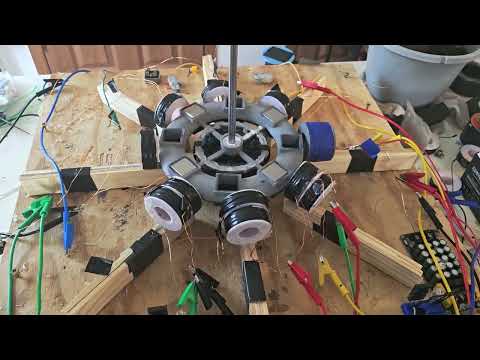 Long-form
2 circuits running a third room still for some growth/expansion.
Papa Bale here with a messy bench update.
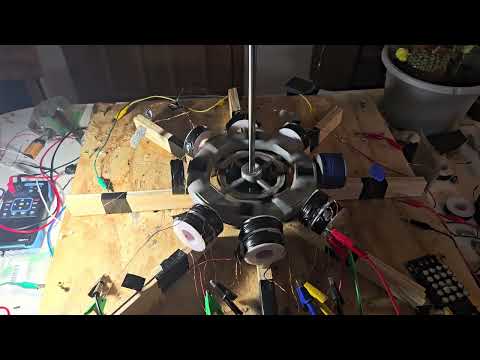 Long-form
M.P.H.'s pulse motor labs EP:2 Skin deep
I fire up two circuits at once, chase meter spikes, and retell the day a three magnet rotor one literally exploded at speed.
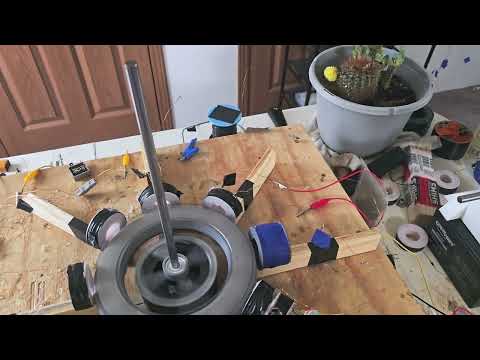 Long-form
Amp Funnel Coil: Pulse Motor Labs EP:1
Eight-magnet eight-coil pulse motor lab — amp funnel coil wiring, pickup coils, and give-and-take battery measurements.
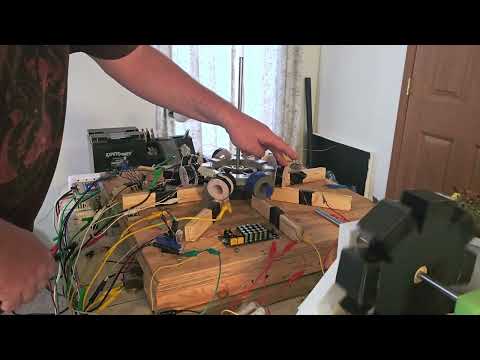 Long-form
MPH pulse motor lab
Real bench time with motor rotor magnets on a pulse motor rotor.
One path · free first
Watch free → subscribe → optional membership
Notes stay free. The full experiment lives on YouTube. Membership is optional when you want Discord and exclusives — not required to learn.
- 2
Subscribe free + turn on alerts
Hit Subscribe, then the 🔔 bell so you catch the next experiment.
Subscribe free + 🔔