Experiments·Transcript-backed
Quarter Inch Poles & Quarter Inch Holes
Watch me test ferrite donut magnets on quarter-inch poles with quarter-inch holes. See how these big magnet discs create near-perfect levitation and faint magnetic friction you can barely feel.
Long-form · Full audio · Best on YouTube
Watch the complete video: Quarter Inch Poles & Quarter Inch Holes
Watch the full long-form video on YouTube — that's where the full bench audio, runtime, and experiments live.
Preview embed · full runtime is better on YouTube
Prefer the full player? Better audio, runtime, and next-video queue on YouTube.
▶ Open full on YouTubeJump to the discussion · full video on YouTube
Hear it on the bench
Each link opens “Quarter Inch Poles & Quarter Inch Holes” on YouTube at the first time that topic comes up in the captions. Stay on YouTube for the complete runtime.
See it on the bench · full runtime on YouTube
What to watch for
- ▸Ferrite donut magnets stacked with all north poles facing the same way hide the south poles and create almost perfect levitation on the shaft.
- ▸Quarter inch poles fit perfectly into quarter inch holes in the wooden discs allowing very free spinning with only faint magnetic presence felt.
- ▸The big magnet discs can be flipped to create north-south repulsion or attraction for different cyclotron configurations.
- ▸Graphite powder is used as lubricant on the shafts and gets everywhere.
- ▸Future tests may include a vacuum chamber to see if the heavy magnets can achieve any floating behavior.
Watch the full long-form video on YouTube — that's where the full bench audio, runtime, and experiments live.
Experiment notes (read while you watch)
Notes support the video — for the full-length run with complete bench audio, stay on YouTube.
Papa Bale experiments with ferrite donut magnets arranged as big magnet discs on quarter-inch poles. The setup creates near levitation with very faint magnetic drag that eventually stops the spin. He discusses using them in a future cyclotron-style pulse motor and considers adding a vacuum chamber.
Key takeaways
- Ferrite donut magnets stacked with all north poles facing the same way hide the south poles and create almost perfect levitation on the shaft.
- Quarter inch poles fit perfectly into quarter inch holes in the wooden discs allowing very free spinning with only faint magnetic presence felt.
- The big magnet discs can be flipped to create north-south repulsion or attraction for different cyclotron configurations.
- Graphite powder is used as lubricant on the shafts and gets everywhere.
- Future tests may include a vacuum chamber to see if the heavy magnets can achieve any floating behavior.
In this bench session I play with ferrite donut magnets mounted on wooden discs. The quarter-inch poles slide perfectly into the magnet holes and the whole thing spins almost like it's oiled. I talk through how these big magnet arrangements could work in a cyclotron setup and what the magnet image looks like in my head for the rotor.
Related on this site
- Pulse Motor Rotor Design: Magnets, Materials and Balance — Discusses magnet arrangement and rotor materials that match the ferrite donut magnet and big magnet discussion
- Magnetic Levitation with Six Donut Magnets — Similar levitation experiment using donut magnets on a pole
- Donut Magnets — Outside Poles & Motion — Directly related to using donut magnets and observing their motion on poles
---
*Generated from video transcript (hash `c482f2387073…`).*
Full transcript (4,550 chars · en)
Okay so [Music] um I know I started out every single video with okay so I don't know why um looking at this and we're gonna we're gonna sense the format for a cyclotron to say North on the bottom south on the top and then a disc in the middle or something in the Middle with either North and south on it like half and half or north and neutral South and neutral all I know is that it's like half the disc or half whatever you want to spin is one or the other you usually want the bottom to push up the top to push down or to lift up based on what you're doing and I think it's going to be push up and lift up and then I got to make a special disc and I got to decide whether I want to go Magnum Magnet or more like what's going on here so let me explain these discs just a little bit more here um what I did is I put them all facing the same way on each side so this is all North all this is north and they're so close together that it um it doesn't you might think it would force out the South more predominantly but it doesn't it hides the South so you got an almost perfect levitation I mean you can feel the magnets pass but it's so faint and I mean like this is an eight inch I I explain this a lot too that these are not levitating magnet on Magnum it's not like there's something underneath or on top of this directly see it spins like it's been greased up and oiled up and you know but it'll stop too because there's that faint self presence but I mean it's faint so it it'll always eventually stop but in this format it can be overcome for a while I mean anyone can be overcome forever but it's the least amount of energy you need to put in if you know you have to put energy in if you know you have to have a charge to make it work then uh you would Implement that charge as needed you've built a system where you could like hit a button or press a gas pedal some people like to keep the foot on the gas the whole time that's cool too I don't have a problem with that just stay in the fast lane then and if somebody wants to go cruising in the fast lane like cruise control in the fast lane you lay on that horn until they got like that took their eardrums pop is that stupid okay moving on so if you can image in your head these discs are big magnets with the North and the South Side so I can use these existing discs for the North and the South top and bottom of the cyclotron but I got to make that special disc for the center I think I'm going to go eight inches just make another eight incher since I only have two eight inches that are complete and that's cool or if we're going to go not manga magnet which another eight would definitely be but say eight on top eight on bottom and six is in the middle that might be interesting you wouldn't be able to see it very well but so like real quick they can be flip-flopped anyway to make a certain scenario work yes if you put them on north south facing each other they will pull together and it will be difficult to get them apart but they come apart so that's good news I just kind of got into using the ferrite donut magnets uh I'm gonna give you the specs real quick of each disc what makes them special um not necessarily special as in nobody else can get it but special as in the piece of the puzzle that fits with another piece of a puzzle and we got uh let's see a quarter inch Pole and each one of these wooden discs here have a quarter inch hole so we got quarter inch poles for quarter inch holes that's right I mean they're three feet long but a quarter inch in diameter you know what that's a perfect fit so don't complain and that's what another thing which allows them to spin so freely but a strange thing it's a pardon me we're walking through here is that for these discs this we use graphite powder lubricant stuff gets all over everything all right oh next thing I'm going to try along with my logic setup in my pulsing is a vacuum I got my pump I got my plate and my like and so you can see everything that's going on you don't have to look through the top you can look through the sides as well which makes it pretty cool and uh that should be interesting see if we can get any of this stuff to float I don't think we will because the magnets are just too heavy but that would be interesting if it happens I mean if it because it's not zero gravity it's just zero error what it should be zero gravity though right well not zero gravity but uh artificially I don't know I don't know what to expect but it'll be fun to find out all right thank you very much peace out
Keep watching · longer sessions
More long-form bench runs
Queue up the next long-form bench run on YouTube — longer sessions keep the workshop free for everyone.
 Long-form
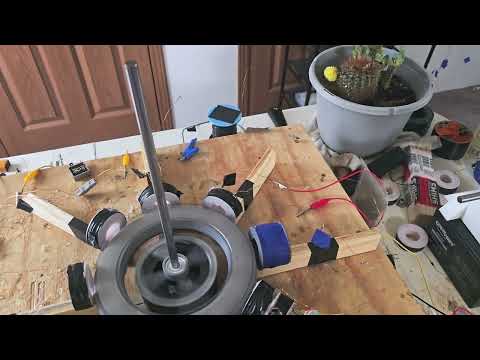
Amp Funnel Coil: Pulse Motor Labs EP:1
Eight-magnet eight-coil pulse motor lab — amp funnel coil wiring, pickup coils, and give-and-take battery measurements.
 Long-form
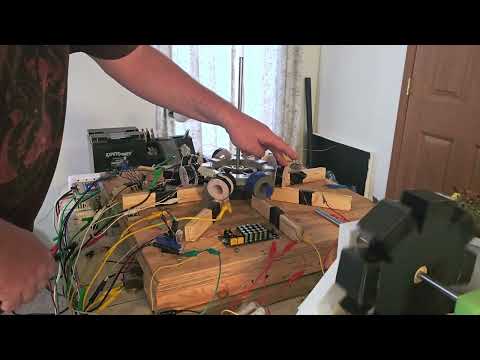
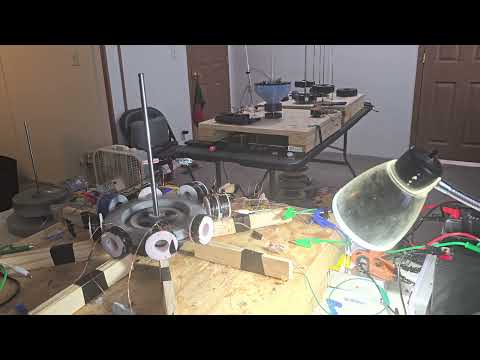
8-Magnet Pulse Motor + Induction Coils (Bedini-Style Charge)
Eight-magnet pulse motor at 12V with series induction coils.
 Long-form
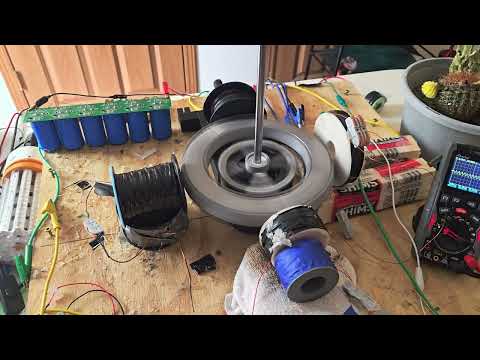
8 Neo Cube Magnet Pulse Motor Hits 1300 RPM — Amp Funnel Coil Power Test
I tested an amp funnel coil on a generator setup with eight neo cube magnets.
One path · free first
Watch free → subscribe → optional membership
Notes stay free. The full experiment lives on YouTube. Membership is optional when you want Discord and exclusives — not required to learn.
Watch full-length on YouTube
Open the complete bench run — full audio and runtime. Free path that keeps the workshop online.
- 2
Subscribe free + turn on alerts
Hit Subscribe, then the 🔔 bell so you catch the next experiment.
Subscribe free + 🔔 - 3
Optional: join for $2.99/mo
Members-only videos, Discord, and live shoutouts — cancel anytime.
Join $2.99/mo
Longer sessions · ad-supported free library
Not done yet? Queue the next long-form run
Queue up the next long-form bench run on YouTube — longer sessions keep the workshop free for everyone.
- 1▶ Watch full on YouTube
Start: Shocking Truth About Pulse Motors
Notes & transcript on site - 2▶ Watch full on YouTube
M.P.H.Jr Pulse Motor Labs EP:1 Just scratching the surface
Notes & transcript on site - 3▶ Watch full on YouTube
8 Neo Cube Magnet Pulse Motor Hits 1300 RPM — Amp Funnel Coil Power Test
Notes & transcript on site - 4▶ Watch full on YouTube
Name change, plans for the future, Motor generator start of something cool 😎
Notes & transcript on site