Levitation·Transcript-backed
shaker aimant permanent: Magnetic Levitation with Six Donut
shaker aimant permanent — Watch me spin a magnetic disc using six donut magnets around a central pole. See the bar magnet magnetic field in action with …
Long-form · Full audio · Best on YouTube
Watch the complete video: shaker aimant permanent: Magnetic Levitation with Six Donut
Watch the full long-form video on YouTube — that's where the full bench audio, runtime, and experiments live.
Preview embed · full runtime is better on YouTube
Prefer the full player? Better audio, runtime, and next-video queue on YouTube.
▶ Open full on YouTubeJump to the discussion · full video on YouTube
Hear it on the bench
Each link opens “shaker aimant permanent: Magnetic Levitation with Six Donut ” on YouTube at the first time that topic comes up in the captions. Stay on YouTube for the complete runtime.
See it on the bench · full runtime on YouTube
What to watch for
- ▸Six donut magnets around a middle pole lift an 8-inch disc with a spinning top disc pulled downward for balance.
- ▸A quick finger whip starts the spin and it runs roughly four minutes before slowing.
- ▸Adding more magnets generally slows things down; the levitating ones are the key.
- ▸Closer magnet spacing tricks the fields so one side dominates and creates stable levitation.
- ▸Bigger 9-inch discs should reduce edge-only contact and increase power but may add wobble.
Watch the full long-form video on YouTube — that's where the full bench audio, runtime, and experiments live.
Experiment notes (read while you watch)
Notes support the video — for the full-length run with complete bench audio, stay on YouTube.
Papa Bale tests a levitation setup with six donut magnets around a central pole lifting an 8-inch disc while a top disc spins. A simple finger whip starts it and it runs for about four minutes. He talks about the push-pull balance, friction from rectangle magnets, and plans for bigger 9-inch discs.
Key takeaways
- Six donut magnets around a middle pole lift an 8-inch disc with a spinning top disc pulled downward for balance.
- A quick finger whip starts the spin and it runs roughly four minutes before slowing.
- Adding more magnets generally slows things down; the levitating ones are the key.
- Closer magnet spacing tricks the fields so one side dominates and creates stable levitation.
- Bigger 9-inch discs should reduce edge-only contact and increase power but may add wobble.
Short test of permanent magnet levitation using donut magnets around a pole. The bar magnet magnetic field creates a push-pull balance that keeps the disc floating and spinning for about four minutes after a simple finger flick. Some rattle from the rectangle magnets touching the round ones but it stays up on the very edge. Plans for larger discs coming soon.
From the spoken experiment
The following notes stay close to what was said in the video about shaker aimant permanent:
> all right so this is a little different than what I've been doing because we got the six donut magnets surrounding that middle Pole and it is lifting up this eight inch disc and this one on top of it is spinning and the one on top of it is being pulled down by the magnets that's how that works so I'm going to give it a little spin we're gonna we're gonna clock when I start here for hopefully 40 seconds oh yeah that's a lot that's a nice rattle right there and I'm taking that it's the round magnets clashing with this with the straight ones rectangle magnets sometimes they generate some friction I just think it's awesome how these I mean some of them are a little bit underneath and I Can't Get Right Above It Or I think I'll screw my phone up but just the very edge and it's lifting this up and there's kind of a counteraction going on with the disc above it so these just these magnets right…
Builder checklist
- Confirm trigger/sensor timing before chasing higher voltage
- Watch heat on coils and transistors during longer runs
- Record voltage and behavior at each change (one variable at a time)
Related on this site
Related on this site
- Magnetic Levitation on a Pole – Experiment 1: Push, Pull & Balance — Similar push-pull levitation test using a pole and magnets
- 7+ Minutes of Motion: Magnetic Disc Spinning With Just a Wrist Flick — Another finger-flick magnetic disc spin with longer runtime
- Donut Magnets — Outside Poles & Motion — Directly related donut magnet experiment showing pole behavior
- Pulse Motor Rotor Design: Magnets, Materials and Balance — Covers magnet placement and balance which applies to this levitation setup
---
*Generated from video transcript (hash `3b2bf46a843e…`).*
Full transcript (3,609 chars · en)
all right so this is a little different than what I've been doing because we got the six donut magnets surrounding that middle Pole and it is lifting up this eight inch disc and this one on top of it is spinning and the one on top of it is being pulled down by the magnets that's how that works so I'm going to give it a little spin we're gonna we're gonna clock when I start here for hopefully 40 seconds oh yeah that's a lot that's a nice rattle right there and I'm taking that it's the round magnets clashing with this with the straight ones rectangle magnets sometimes they generate some friction I just think it's awesome how these I mean some of them are a little bit underneath and I Can't Get Right Above It Or I think I'll screw my phone up but just the very edge and it's lifting this up and there's kind of a counteraction going on with the disc above it so these just these magnets right here on this disc are lifting that disc and these big circle ones are pulling down on the top disk so that's a an effect that I've been trying to get for a long time in several different attempts have failed like this disc right here with the circle magnets on it was it one of those uh you know attempts but this is good I'm not thinking we're going to get very a long time here but you know just that little whip and I thought it was really cool I should show you that instead of having him propped up pushing in I'm going to put just push up I actually have a nine inch some nine inch discs coming that'll give it a little an extra half inch maybe out to here around the whole desk and that is that there's going to be some power right there because instead of it being just on the edge it'll be over the actual face of the magnet which now I think we're going to get a lot of wobble like this and wobble wobble but I also think a nine inch disc can levitate a six inch disc and a six inch canomitate a three inch now we're gonna see if that's that's accurate and that would make six the most powerful one because it's it can go two four six eight or three six nine it's interchangeable in the two um patterns so three minutes but you know so far all added magnets have slowed down [Music] um the rate the distance however you want to measure it um it it hinders rather than helps so the only magnets you really need are the levitating ones but I'm going to keep experimenting just to see if that's not true uh four minutes four minutes and that was just with the whip with my finger like that that's awesome well thanks for checking this out and I'm going to keep them coming um I'll try to be more objective uh not without passion but without a opinionate and being opinionated I don't I don't need to be opinionated so I'm gonna stop doing that I'm gonna try to have a like data you know uh just stuff to back up what I'm saying a lot of it's done with feeling though you know I don't I didn't the way I figured out how to make it levitate was you just put the magnets close enough together and it tricks all the magnets into thinking there's only one side of the coin even though the other side is right there and they just can't feel it you know what I'm saying you get it close enough together though and it's going to clamp on because it's still there it's just you know it only goes up say that much and then the the other field goes up higher just I've stumbled upon that I knew there was two like fields to maybe field intensities like always I always knew that I just didn't know um what I know now so yeah it's about a four minute spin with how I you know did it and uh yeah thank you peace out
Keep watching · longer sessions
More long-form bench runs
Queue up the next long-form bench run on YouTube — longer sessions keep the workshop free for everyone.
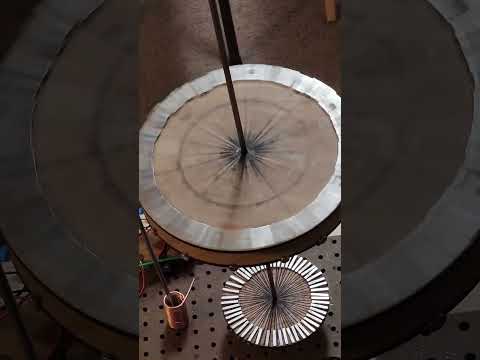 Long-form
7+ Minutes of Motion: Magnetic Disc Spinning With Just a Wrist Flick
A 3-disc levitation stack spins for 7 minutes 32 seconds from one wrist flick — and 30 minutes with a fan.
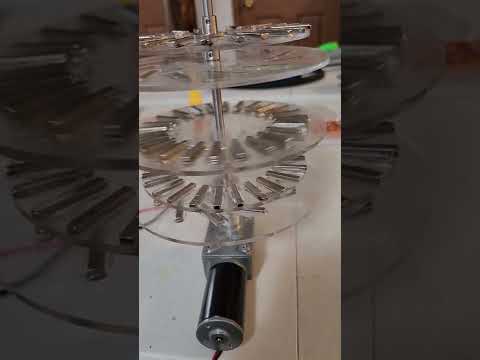 Long-form
Magnetic Levitation on a Pole – Experiment 1: Push, Pull & Balance
Papa Bale spends hours testing magnetic levitation on a pole with interchangeable discs.
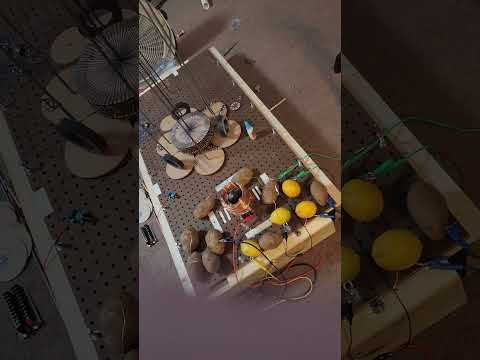 Long-form
Donut Magnets — Outside Poles & Motion
Three opposing donut magnets on outside poles under a floating 8-inch disc — longer spin, visible push kicks, and balance lessons from…
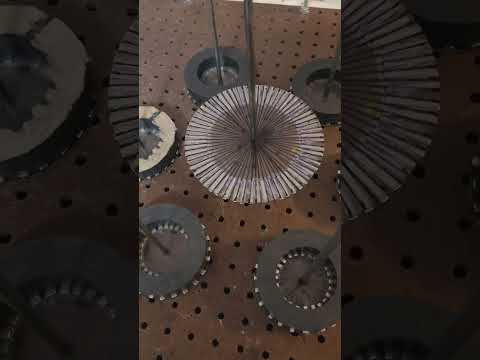 Long-form
Understanding Magnetic Friction in Pulse Motors
Four friction sources explored with micro-voltage generation — levitation versus bearing performance.
One path · free first
Watch free → subscribe → optional membership
Notes stay free. The full experiment lives on YouTube. Membership is optional when you want Discord and exclusives — not required to learn.
- 2
Subscribe free + turn on alerts
Hit Subscribe, then the 🔔 bell so you catch the next experiment.
Subscribe free + 🔔 - 3
Optional: join for $2.99/mo
Members-only videos, Discord, and live shoutouts — cancel anytime.
Join $2.99/mo
Longer sessions · ad-supported free library
Not done yet? Queue the next long-form run
Queue up the next long-form bench run on YouTube — longer sessions keep the workshop free for everyone.
- 1▶ Watch full on YouTube
Start: Shocking Truth About Pulse Motors
Notes & transcript on site - 2▶ Watch full on YouTube
M.P.H.Jr Pulse Motor Labs EP:1 Just scratching the surface
Notes & transcript on site - 3▶ Watch full on YouTube
8 Neo Cube Magnet Pulse Motor Hits 1300 RPM — Amp Funnel Coil Power Test
Notes & transcript on site - 4▶ Watch full on YouTube
Name change, plans for the future, Motor generator start of something cool 😎
Notes & transcript on site