Levitation·Transcript-backed
Donut Magnets — Outside Poles & Motion
Bench test: three opposing donut magnets on outside poles under an 8-inch floating disc. One flick, 1:45 of spin, visible push kicks — what worked and what wobbled.
Long-form · Full audio · Best on YouTube
Watch the complete video: Donut Magnets — Outside Poles & Motion
Watch the full long-form video on YouTube — that's where the full bench audio, runtime, and experiments live.
Preview embed · full runtime is better on YouTube
Prefer the full player? Better audio, runtime, and next-video queue on YouTube.
▶ Open full on YouTubeJump to the discussion · full video on YouTube
Hear it on the bench
Each link opens “Donut Magnets — Outside Poles & Motion” on YouTube at the first time that topic comes up in the captions. Stay on YouTube for the complete runtime.
See it on the bench · full runtime on YouTube
What to watch for
- ▸Three opposing donut magnets on the outer edge create push kicks that extend spin time well beyond a normal flick.
- ▸A single off-center rectangular magnet made the disc wobbly but still showed clear acceleration near each ring magnet.
- ▸Stationary setups cannot achieve perpetual motion; continuous input or careful use of gravity is still required.
- ▸Adding more donut magnets in an alternating pattern may smooth motion between push points.
- ▸Balance is critical — even a small offset changes how the push feels and how long the disc keeps moving.
Watch the full long-form video on YouTube — that's where the full bench audio, runtime, and experiments live.
Experiment notes (read while you watch)
Notes support the video — for the full-length run with complete bench audio, stay on YouTube.
Bench session: one 8-inch disc floating on another with three powerful donut magnets on the outer edge, all opposing so they push instead of pull. A single finger flick produced long spin times and visible acceleration bumps when the rotor magnet passed each stator ring.
Key takeaways
- Three opposing donut magnets on the outer edge create push kicks that extend spin time well beyond a normal flick.
- A single off-center rectangular magnet made the disc wobbly but still showed clear acceleration near each ring magnet.
- Stationary setups cannot achieve perpetual motion; continuous input or careful use of gravity is still required.
- Adding more donut magnets in an alternating pattern may smooth motion between push points.
- Balance is critical — even a small offset changes how the push feels and how long the disc keeps moving.
Short bench test using donut magnets on outside poles. One flick produced over a minute of motion with visible magnetic push bumps. Balance and gravity both played roles in how long it kept spinning. More magnets ordered for the next round.
Related on this site
- 7+ Minutes of Motion: Magnetic Disc Spinning With Just a Wrist Flick — Similar long spin magnetic disc experiment with minimal input
- Magnetic Levitation with Six Donut Magnets — Directly related donut magnet levitation and balance test
- Understanding Magnetic Friction in Pulse Motors — Explains the friction and slowdown observed in this test
- Pulse Motor Rotor Design: Magnets, Materials and Balance — Covers the balance issues I ran into with the off-center magnet
---
*Generated from video transcript (hash `ffe213769f5f…`).*
Full transcript (2,602 chars · en)
all right we got a an eight inch disc right here floating on top of another eight inch disc as you can see got nothing in between them and we got these three donut magnets on the outside they're powerful and they're both they're all opposing further pushing they're not pulling towards the magnet they're pushing away in regards to this disc now I will just give it a little nudge it's not going to go for very long but it'll go longer than it was supposed to I guess now you can't tell me at this point from what I what I did that there's not some kind of help going on here foreign get three more and use the rest of the poles maybe do something clever like two one two one two one right I don't know when we started doing this but it's uh one minute and 45 seconds into the video foreign these big old ring magnets with these are something more powerful and then like shut them off when it looks like it's slowing things down foreign that was just from this little tiny flick of my finger it's awesome something's happening but as for a perpetual motion not with this not with anything that's that's stationary can't be stationary and therefore it can't be free I mean I'm trying to use gravity some ways like putting a smaller disc underneath the larger one putting anything underneath a disc is using gravity to whether you're using it to your advantage or not is remaining to be seen but you can use it to your advantage oh I forgot something and I was going to put one of these bigger rectangle magnets on this disc and then give it a spin that was a little bit bigger spin wow that's really wobbly terrible spin it might be that it's off balance but that doesn't weigh that much but it is a little off balanced because I didn't put the other one on the other side wow does that look like it's picking up pace I I don't know sometimes it looks like it's going faster you can see that that Uber push come when it reaches the magnets on the outside that little magnet it's like no sweat for it to push to the next magnet this this might be it folks no eventually it's going to get too slow and I won't be able to push past it we got to call it off balance because it is it's just one magnet on one side of the disc that there's a slight balanceness there it's only very small though or maybe it's negated due to the fact this is magnet on magnet there it goes it's starting to slow down now I can see how having three more of these things could be beneficial from the donut rings boom that was awesome all right so I'll go order three more of these Donuts hmm all right thank you have a nice night
Keep watching · longer sessions
More long-form bench runs
Queue up the next long-form bench run on YouTube — longer sessions keep the workshop free for everyone.
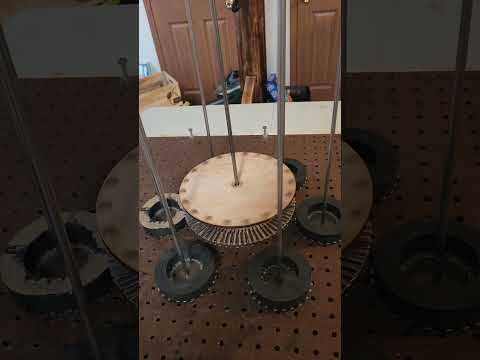 Long-form
Magnetic Levitation with Six Donut Magnets
Six donut magnets create unique levitation with 40+ second spins using push-pull magnetic forces.
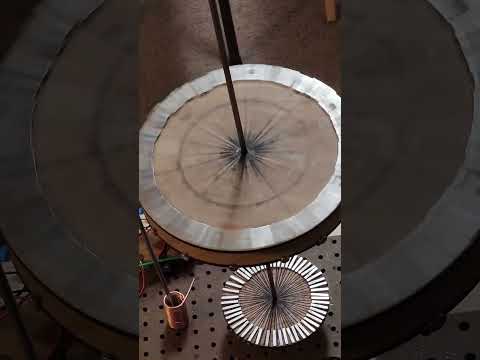 Long-form
7+ Minutes of Motion: Magnetic Disc Spinning With Just a Wrist Flick
A 3-disc levitation stack spins for 7 minutes 32 seconds from one wrist flick — and 30 minutes with a fan.
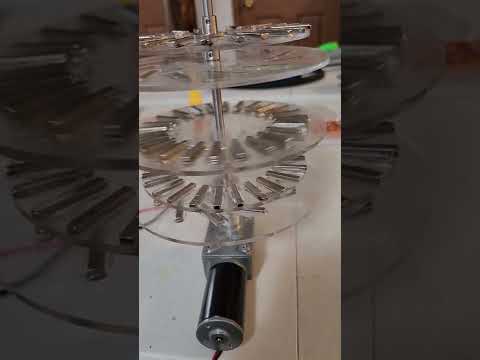 Long-form
Magnetic Levitation on a Pole – Experiment 1: Push, Pull & Balance
Papa Bale spends hours testing magnetic levitation on a pole with interchangeable discs.
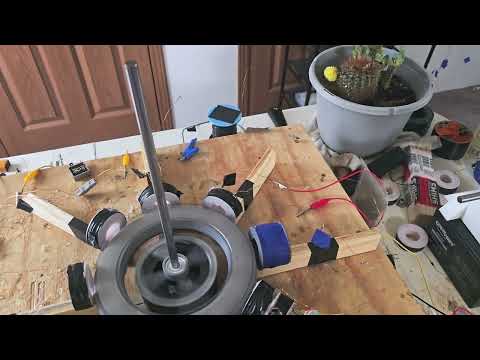 Long-form
Amp Funnel Coil: Pulse Motor Labs EP:1
Eight-magnet eight-coil pulse motor lab — amp funnel coil wiring, pickup coils, and give-and-take battery measurements.
One path · free first
Watch free → subscribe → optional membership
Notes stay free. The full experiment lives on YouTube. Membership is optional when you want Discord and exclusives — not required to learn.
Watch full-length on YouTube
Open the complete bench run — full audio and runtime. Free path that keeps the workshop online.
- 2
Subscribe free + turn on alerts
Hit Subscribe, then the 🔔 bell so you catch the next experiment.
Subscribe free + 🔔 - 3
Optional: join for $2.99/mo
Members-only videos, Discord, and live shoutouts — cancel anytime.
Join $2.99/mo
Longer sessions · ad-supported free library
Not done yet? Queue the next long-form run
Queue up the next long-form bench run on YouTube — longer sessions keep the workshop free for everyone.
- 1▶ Watch full on YouTube
Start: Shocking Truth About Pulse Motors
Notes & transcript on site - 2▶ Watch full on YouTube
M.P.H.Jr Pulse Motor Labs EP:1 Just scratching the surface
Notes & transcript on site - 3▶ Watch full on YouTube
8 Neo Cube Magnet Pulse Motor Hits 1300 RPM — Amp Funnel Coil Power Test
Notes & transcript on site - 4▶ Watch full on YouTube
Name change, plans for the future, Motor generator start of something cool 😎
Notes & transcript on site