Experiments·
Papa Likes SSG Using It to Run His 4 Magnet 180-Degree Pulse Motor with Reverse Triggers
Watch me test an SSG circuit with external trigger coils on my 4 magnet 180-degree pulse motor. From 5V startup to 12V stable run, see the double whammy effect and what needs fixing next.
Long-form · Full audio · Best on YouTube
Watch the complete video: Papa Likes SSG Using It to Run His 4 Magnet 180-Degree Pulse Motor with Reverse Triggers
Watch the full long-form video on YouTube — that's where the full bench audio, runtime, and experiments live.
See it on the bench · full runtime on YouTube
What to watch for
- ▸External trigger coils on the SG setup give lower amp draw and higher speed without taking extra rotor slots.
- ▸All magnets facing north currently; flipping them to create more clamp on the shaft should improve stability.
- ▸Hogen lights (100-120V bulbs) start glowing around 12V and seem to function in place of neons.
- ▸The 180-degree double whammy gives a nice kick but the top toroid magnet needs prying off and recentering.
- ▸At 6V with 0.1A it runs, at 12V it stays fairly stable despite the uneven table surface.
Watch the full long-form video on YouTube — that's where the full bench audio, runtime, and experiments live.
Experiment notes
I hooked up two Bedini SG style coils at 180 degrees on my 4-magnet rotor and swapped the trigger wires so each external trigger coil fires the opposite drive coil. At 5 volts it starts instantly with very low amp draw. The Hogen lights act as resistors until around 12 volts where they begin to glow. The top magnet isn't perfectly centered and the table dips in the middle, but the double pulse at 180 degrees feels strong.
Key takeaways
- External trigger coils on the SG setup give lower amp draw and higher speed without taking extra rotor slots.
- All magnets facing north currently; flipping them to create more clamp on the shaft should improve stability.
- Hogen lights (100-120V bulbs) start glowing around 12V and seem to function in place of neons.
- The 180-degree double whammy gives a nice kick but the top toroid magnet needs prying off and recentering.
- At 6V with 0.1A it runs, at 12V it stays fairly stable despite the uneven table surface.
In this bench session I fired up the 4 magnet 180-degree pulse motor using an SSG circuit with the triggers swapped. The external trigger coils keep the amp draw low while still delivering a solid double hit every rotation. I measured 0.1A at 5.66V on startup and watched it climb to around 2A at 9-12V once the Hogen lights began conducting. The top magnet toroid is off-center and the whole table dips in the middle, so balance is the next mission. Flipping all magnets from north to create a stronger south-north clamp should help lock the rotor better. Overall a fun test that proves the swapped-trigger idea works.
Related on this site
- Bedini Motor & SSG Circuit Guide (Beginner Bedini Explained) — Explains the SSG circuit used with the swapped external triggers in this build
- Pulse Motor Rotor Design: Magnets, Materials and Balance — Covers magnet orientation and balancing issues mentioned with the 4-magnet rotor and top toroid
- Best Wire Gauge for Pulse Motor Coils (AWG Guide) — Discusses the 20-gauge and 30-gauge coils used for triggers and drive in this test
- I Finally Got My Pulse Motor Running (Reed Switch) — Another successful pulse motor run for comparison with this SSG 180-degree version
---
*Generated from video transcript (hash `f3c9aa90cdb5…`).*
Full transcript
hello ladies and gentlemen this is Papa Bale and welcome to the channel uh I saw some pretty cool stuff today on the overunity research Channel check it out over Unity research Channel all one word very cool um it was a SG bini motor uh I have my two SGS hooked up right here uh with at 180° I see me previously I had one here and then one at 45 it went boom boom and like if I had two more over on 180 might have been pretty cool but this is 180 uh with the two bini coils 20 gauge and 30 gauge all right all the magnets are facing north these are all facing north the neodymium in here it's on a magl I just have a feeling that the magl way it is currently is what's holding it back like this this toid isn't perfectly centered kind of see it I mean yeah like a lot I might pry that one off now what that's interesting about this setup is that the trigger coil which is right here trigger strand this trigger strand is triggering this coil and this trigger strand is triggering this coil so I just SWA the inputs right there and right here all right so now I'm going to turn it on 5 volts all right we are currently 0.1 5.66 volts in .1 amps in all right now the amp draw is going to be significantly lower because these are external trigger coils uh I thought there might be an issue with the electrification than being inside Drive coils but it doesn't appear to be so this is awesome so you get the benefit of an external trigger Which is less amps and more speed without having to actually take an extra slot on the on the rotor on the Stater wherever so this is nine 3 uh 9.39 and 2 amps in now those hens these are H hogen lights instead of uh neon and I don't believe they're even active yet at 9 volts I do believe they're functioning as resistors currently but them being Hollens I don't believe they're on yet we're going to see if we can't get a reaction from this real quick there we go there's a little light there it's getting hot anyway 11.4 see how it's pink yeah it's working it's working good that's that's great that's all I wanted to see I'm going turn it all the way off and we're going to look and you see that pink is gone it's gone all right so it's working that's all I really wanted to see that the SG was functioning with the trigger coils the way they were or the way they are right now and that's that's awesome that is awesome I think that's great I think we do need to work with the stability of this thing before we get it going any faster though and I just think that having the magnets facing north right now is actually more of a hindrance and it is of a boon just because I'd have to you know I don't even know if swapping all these magnets would make a difference I think it would so you put the ones on the table reverse them and you reverse the two that are on the rotor and it should clamp down even farther like so right that's what we want we want a little bit more of a nipple on the Sha there man that's that's hard cuz when I when I put it all together they were south facing and it worked really well and it won't work just to flip it over that that won't work I didn't build it that way besides it wouldn't work anyway because yeah they they have to flip over but I have to pry them off and flip them over like you can't just flip the rotor and have it work that would be interesting though be pretty fun anyway that that's what that is we'll do five volts real quick six six and a half get it started instantaneously it starts and I love the double the double whammy that we got going with the 180 trigger uh and drive that's pretty fun now I'm thinking one thing that I can do is just extend the shaft up a little wice so that we get more shaft and then I want to I literally want to pry that top magnet off cuz as you can see how unstable that is well I mean it's pretty pretty close but it can be better can definitely be better and then we can hook up all different kinds of coils man all different kinds now see what I want to do kind of is hook up this rotor down here that one on the ground with the square magnets and everything that'll be fun and here I'm working on setting up the motor there's the shaft just got to glue something basically to the shaft and then so sweet that'll be and that'll be spinning like the Dickens and we'll just use it solely as a generator and because we don't need any power in it really except for the four or five the maximum of 12 volts that we put into it I might need one of these flanges on the bottom now what's really going on here there bugging me is you can pretty much see it just from right there but this whole table is dipping in the center so none of this surface is full flat okay none of it's flat and rebuilding this thing is just not something that I'm want to do right now I'm going to continue to experiment uh with that bias that the table is not flat and then one day I'll get around to switching everything out and making it work but really man there is there is nothing else there is only the next mission right now there is and taking care of my kids and that's about about it there's not much else to do hopefully I can succeed at at least one of those tasks so that's a 20 gauge two 20 gauge triggers with 666 turns in them it's pretty slow this is 6 volts in .1 amps I think it'll move a lot smoother once we get that toid off the top I know that sounds weird but but if we do the six see I want to do the six magnet one instead of just the four and see what we get off of it see like right now it's at 10 volts in it's starting to shake 12 Vols seems pretty stable the hogen light turns on so cool so cool oh man it works and the neon lights probably would have turned on those are like 100 120 volt uh hogen light bulbs instead of the 90 volt neon bulbs and I don't know if they function the same way but they are working at around 12 volts just they turn on around 12 at their dimmest so I'd say it's being used to its utmost potential actually and I don't even know how I did it but I was working with my wood rotor and I actually had these lights hooked up to the circuit and they were bright they were bright I don't even know how I was generating such an amount it's probably using one of these yeah and like this bulb right here I can easily make this one light up but uh 100 to 277 AC 60 50 to 60 hertz 100 Watts this is real this is real it takes a minimum of 100 volts to light this thing and it has the equivalent of a, 000 watt um LED it's 100 watt LED but it has the equivalent of 1,000 wat light bulb very cool I think it's great it's it's really only 100 watt LED but 100 volts to 277 volts at 50 to 60 hertz it's what to get to full illumination so I do have two circuits that I bought from K energy and I'm going to hook those up as soon as I make sure that this isn't going to like blow up in my face I'm run it with these for a couple minutes couple experiments and then I'll feel better hooking those up considering they're hooked up reverse of the way that I hook them up I go coil first and then the transistor after the fact and the ones that I bought are transistor First Circuit first and then coil last um and I don't know if it's exactly like that it's kind of just intricately placed so it's just part of it it's not really the way that it's built it's the beginning and the end so it's circular in nature anyway if you don't understand that in a few days or so I will show you exactly what I'm talking about there are more than one ways to hook up a transistor to your to your pulse motor and one way is to hook this up first so the power goes in this way through that and then out to your power supply which would be those connections right there or you can go coil first which I've done you screw the coil connects into the power and then the power just gets distributed through the coil first that might be what my sluggishness is having it go through the coil first it's probably why the energy that's getting in my transistor is a little funky all right well thank you very much peace out have a good night Please Subscribe bye now
Keep watching · longer sessions
More long-form bench runs
Queue up the next long-form bench run on YouTube — longer sessions keep the workshop free for everyone.
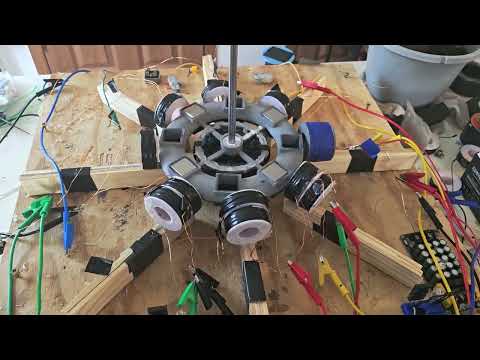 Long-form
2 circuits running a third room still for some growth/expansion.
Papa Bale here with a messy bench update.
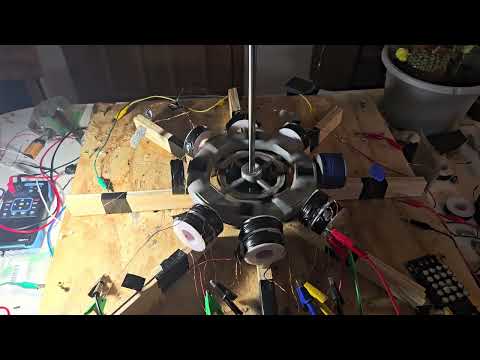 Long-form
M.P.H.'s pulse motor labs EP:2 Skin deep
I fire up two circuits at once, chase meter spikes, and retell the day a three magnet rotor one literally exploded at speed.
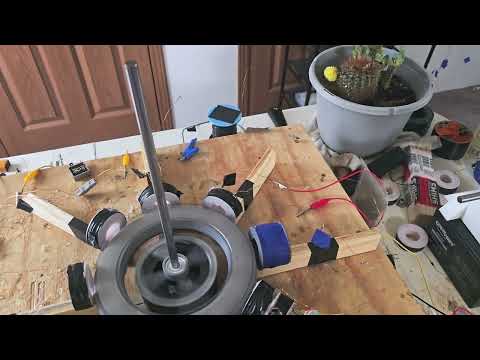 Long-form
Amp Funnel Coil: Pulse Motor Labs EP:1
Eight-magnet eight-coil pulse motor lab — amp funnel coil wiring, pickup coils, and give-and-take battery measurements.
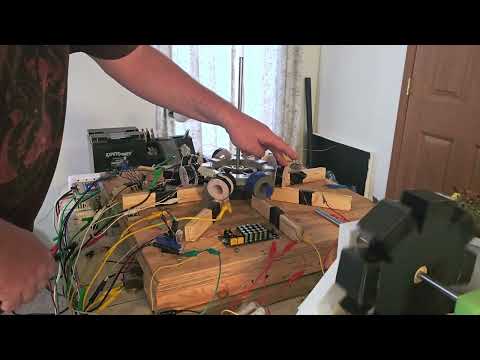 Long-form
MPH pulse motor lab
Real bench time with motor rotor magnets on a pulse motor rotor.
One path · free first
Watch free → subscribe → optional membership
Notes stay free. The full experiment lives on YouTube. Membership is optional when you want Discord and exclusives — not required to learn.
- 2
Subscribe free + turn on alerts
Hit Subscribe, then the 🔔 bell so you catch the next experiment.
Subscribe free + 🔔