Experiments·
electromagnetic coils the rotor: Papa Bale's Reverse Gyro
Watch Papa Bale's reverse gyro build with magnets outside pulse, rotor permanent magnets, and electromagnetic coils on the rotor. First spin at 35V, ree…
Long-form · Full audio · Best on YouTube
Watch the complete video: electromagnetic coils the rotor: Papa Bale's Reverse Gyro
Watch the full long-form video on YouTube — that's where the full bench audio, runtime, and experiments live.
See it on the bench · full runtime on YouTube
What to watch for
- ▸Magnets outside pulse setup creates visible gyro effect with counter-rotation
- ▸Bifilar coils wired 2630-2630-2630 drive plus trigger strands, no separate hall effect controller needed
- ▸Reed switch glued in place gives reliable timing up to 35 volts
- ▸Positive center contact and outer negative ring improved brush reliability
- ▸Three 120° spaced rotor permanent magnets and three inner coils produce strong first-run performance
Watch the full long-form video on YouTube — that's where the full bench audio, runtime, and experiments live.
Experiment notes
First run of a reverse gyro pulse motor build. Coils sit inside, rotor permanent magnets spin on the outside. Reed switch timing, 24-35V power supply tests, and unexpected gyro direction changes make this ugly-but-effective motor a winner.
Key takeaways
- Magnets outside pulse setup creates visible gyro effect with counter-rotation
- Bifilar coils wired 2630-2630-2630 drive plus trigger strands, no separate hall effect controller needed
- Reed switch glued in place gives reliable timing up to 35 volts
- Positive center contact and outer negative ring improved brush reliability
- Three 120° spaced rotor permanent magnets and three inner coils produce strong first-run performance
Papa Bale tests a reverse gyro pulse motor using a simple reed switch instead of a dedicated hall effect controller. The build features three bifilar coils in the center and three large magnets on the spinning rotor. At 24 V it starts instantly and reaches higher speeds at 35 V. The gyro effect is obvious as the top spins one way while the rotor goes the other. A quick wiring change to center-positive and outer-negative rings improves contact. Everything was thrown together in one day yet runs smoother than previous motors. Credit given to Noah and Peter for the hall effect 2.0 inspiration even though this version uses a reed switch.
From the spoken experiment
The following notes stay close to what was said in the video about electromagnetic coils the rotor:
> hey ladies and gentlemen what's up it's Papa Bale welcome to the channel what we're looking at here is uh reverse gyro or that's what I like to call it because the magnets are going to be on the outside and the coils the electromagnetic coils will be on the inside okay so what we have here is uh three B filer bini coils um we're not using the trigger switches though we I wrapped the trigger switches trigger strands into the drive so it goes 2630 2630 2630 bam so go power supply read switch 2630 2630 2630 and then a dump to the ground all right all right so do we want to see what it's like we can all imagine what it's going to be like but I just think this is really cool so it'll be spinning this way and we'll see if it just starts up give me just a second see if I can do do this with one hand so this is what's going to go on top it's going to go right on top of that it's got three very l…
Builder checklist
- Confirm trigger/sensor timing before chasing higher voltage
- Watch heat on coils and transistors during longer runs
- Record voltage and behavior at each change (one variable at a time)
Related on this site
Related on this site
- Using a Hall Effect Sensor in Your Pulse Motor Build — Directly referenced in the transcript as inspiration from Noah and Peter even though this build uses a reed switch
- Pulse Motor Rotor Design: Magnets, Materials and Balance — Covers the 120° magnet spacing and outside magnet placement shown in the video
- I Finally Got My Pulse Motor Running (Reed Switch) — Similar reed switch timing approach and first-run success story
---
*Generated from video transcript (hash `5602e958f0b4…`).*
Full transcript
hey ladies and gentlemen what's up it's Papa Bale welcome to the channel what we're looking at here is uh reverse gyro or that's what I like to call it because the magnets are going to be on the outside and the coils the electromagnetic coils will be on the inside okay so what we have here is uh three B filer bini coils um we're not using the trigger switches though we I wrapped the trigger switches trigger strands into the drive so it goes 2630 2630 2630 bam so go power supply read switch 2630 2630 2630 and then a dump to the ground all right all right so do we want to see what it's like we can all imagine what it's going to be like but I just think this is really cool so it'll be spinning this way and we'll see if it just starts up give me just a second see if I can do do this with one hand so this is what's going to go on top it's going to go right on top of that it's got three very large magnets in it and then that flange which is right there holds the whole thing in the right position because you can clamp it down all right so with no further Ado we'll turn it all the way up see I told you the rotor was going to spin that way right and I tried to spin the whole thing that way and it stopped it and started spinning it the other way so that's sweet so this is like [Music] 24 24 [Music] volts it's hard to see that it's gaming but it's definitely [Music] gyro top is going that way and the Gyro's going and the Ro's going that way that's awesome so cool and I just I put this together today basically how goes but because of the way I uh distribute the power through this thing it's definitely limited on how fast it can go but I don't mind see that's the thing I don't mind I'm not a need I don't have a Need for Speed I mean it's probably going to end up going a little faster but but it's cool got the triangle the 120° rotor with the and coils in the 120 degree magnets it's already going faster than my other one now I wonder I wonder if I were to hook the leads up to the other power supply what would happen all right let's do that we're going to put some more power into this and see if we can't get something it's going pretty well I mean I'm not complaining about how fast it's going I just know I have options so I'm going to exercise them all right let's see yeah there's 35 that's awesome I mean this is got to be the ugliest pulse motor I've ever made but it's pretty cool definitely all right I mean work it's working very well I'm going to turn it up a little bit more hell yeah look at that thing fly that is awesome that is so cool [Music] wow I mean I think it's so awesome the one thing that I made it's probably an improvement is uh the positive contact is now the center one and the negative is the outside ring of copper cuz uh I just I see that the the middle one is constant and there's some some dips in the in the the outer one but I think that for the most part they're remaining contact 100% And that's the best way to do it with the read switch all right so I'm going to cut it the power I'm going to lift this up and I'm going to just show you this is what's spinning and it spins this way I kind of guessed that one I guessed it right I put the read switch the read switch is glued in all right so that is going to spin counterclockwise that'll rest on the flange and W bam look at that right off the bat and don't even have to think about it so cool and it's a three magnet three coil apparatus gyroscope two contacts for it's kind of like a commutator I wouldn't necessarily call it a commutator cuz it's not attached to the shaft it's just three uh two contact Rings one positive one negative and then because the bowls on the top instead of the bottom you can let the wire hang down and touch the contact plates pretty [Music] simple that is so neat here we go [Music] now it's not moving very fast but I think it looks cool [Music] wow so neat and it performs I think this is great for a first run you know this is awesome so we got coils in the middle Magnus on the outside we're going to we're going to give credit to Noah and Peter hall effect 2.0 man this is it Magnus on the outside coils in the middle gyro effect peace out ladies and gentlemen have a good night please subscribe hit the like button peace out
Keep watching · longer sessions
More long-form bench runs
Queue up the next long-form bench run on YouTube — longer sessions keep the workshop free for everyone.
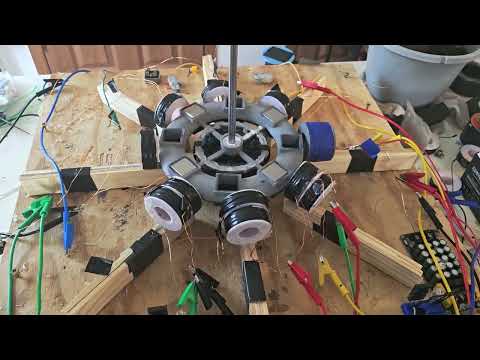 Long-form
2 circuits running a third room still for some growth/expansion.
Papa Bale here with a messy bench update.
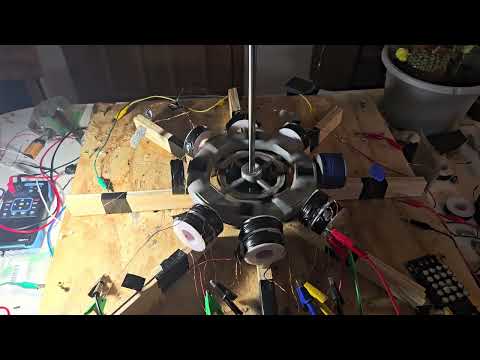 Long-form
M.P.H.'s pulse motor labs EP:2 Skin deep
I fire up two circuits at once, chase meter spikes, and retell the day a three magnet rotor one literally exploded at speed.
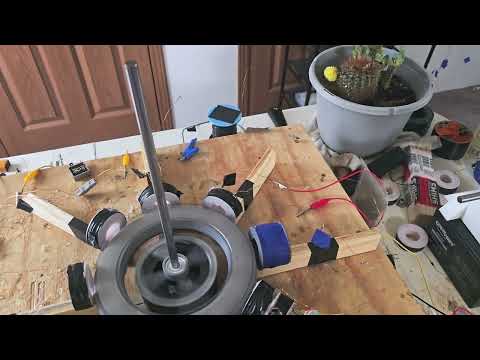 Long-form
Amp Funnel Coil: Pulse Motor Labs EP:1
Eight-magnet eight-coil pulse motor lab — amp funnel coil wiring, pickup coils, and give-and-take battery measurements.
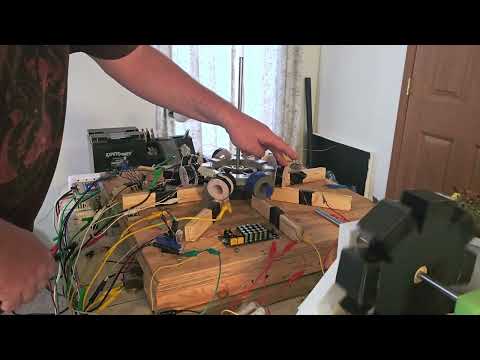 Long-form
MPH pulse motor lab
Real bench time with motor rotor magnets on a pulse motor rotor.
One path · free first
Watch free → subscribe → optional membership
Notes stay free. The full experiment lives on YouTube. Membership is optional when you want Discord and exclusives — not required to learn.
- 2
Subscribe free + turn on alerts
Hit Subscribe, then the 🔔 bell so you catch the next experiment.
Subscribe free + 🔔