Experiments·Transcript-backed
The tome of the self runner AC/DC
The tome of the self runner AC/DC
Long-form · Full audio · Best on YouTube
Watch the complete video: The tome of the self runner AC/DC
Watch the full long-form video on YouTube — that's where the full bench audio, runtime, and experiments live.
Preview embed · full runtime is better on YouTube
Prefer the full player? Better audio, runtime, and next-video queue on YouTube.
▶ Open full on YouTubeExperiment notes (read while you watch)
Notes support the video — for the full-length run with complete bench audio, stay on YouTube.
From the video (spoken content)
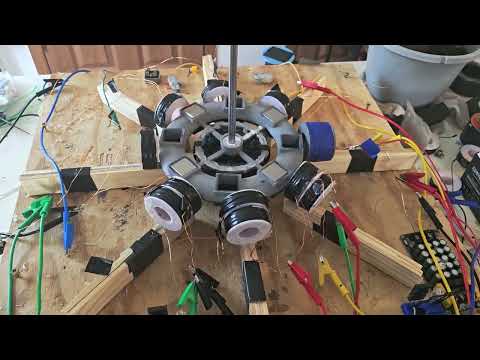
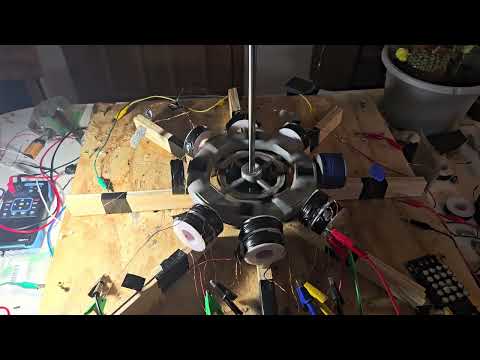
> Hello ladies and gentlemen. My topic is probably going to be and welcome to the channel. All right. I think this is good. I'm going to get my self-running >> [clears throat] >> pulse motor. Let me just explain how much capacitance it has for motion and whatever it's going to do. It has two uh super caps at 10 farad and in series, it's 10 volts 10 farad or 11 volts. And then it has a 10-volt DC cap uh like 2200 microfarad. And then it goes down to the reed switch. So, let's spin this up and see what we can do. I'm going to spin it both ways. So, this is running clockwise. Now, this being timed…
Full transcript notes
This page is grounded in the automatic captions for this video (7,540 characters, language: en, source: package).
A richer blog rewrite (Papa Bale DIY voice + SEO package) is generated only after the full transcript is processed by the content engine — never from the title alone.
Watch and listen
The embed above is the source of truth. Measurements and claims on this site should match what Papa Bale actually says in the video.
Full transcript (7,540 chars · en)
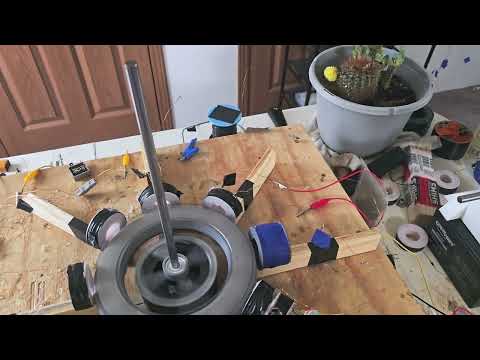
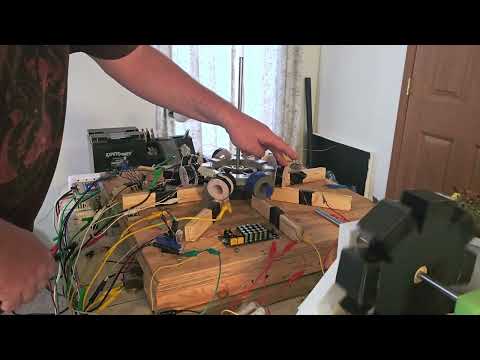
Hello ladies and gentlemen. My topic is probably going to be and welcome to the channel. All right. I think this is good. I'm going to get my self-running >> [clears throat] >> pulse motor. Let me just explain how much capacitance it has for motion and whatever it's going to do. It has two uh super caps at 10 farad and in series, it's 10 volts 10 farad or 11 volts. And then it has a 10-volt DC cap uh like 2200 microfarad. And then it goes down to the reed switch. So, let's spin this up and see what we can do. I'm going to spin it both ways. So, this is running clockwise. Now, this being timed by a reed switch, so one way is going to work better than the other way. Well, let me do this high and then lower. And I like I like it. I mean, there's some wind blowing and you know, a little bit of slack and no problem. It's going to get stifling, but it's you know, like uncomfortable. I'm currently sitting in a position where there's no wind. So, I'll have to fix that. Now, this is clockwise. I'm going to call it clockwise in a second. I was getting confused. I don't know why I am. It's because it's windy going that fast. I just can't focus on the direction that it's going. So, let's see here. Counter-clockwise. So, this is six individual coils dumping all their induction energy into the bridge rectifier. And the bridge rectifier has a DC output. And whatever DC is gathered is going to goes into the cap bank system. So, it's two super caps and then 10-V DC cap. 22 microfarad. 1800. Now, I don't know, but I feel like I can get better motion if I got rid of the super caps. What do you guys think? Super cap. This this You know what? We're not going to get rid of all of it. We're just going to get rid of this one. And I know that these things build up because I touched it to my aluminum plate and discharged. Now, something that doesn't have any juice in it isn't going to discharge. So, now we have a 25 V 4700 4700 micro in there in place of one of the super caps. It didn't look like it helped much. Maybe I got to get rid of the other super cap. We can do that. We can spin the other way first. >> Yeah, I think we're going to get rid of the super cap. I mean they're they're good if you I mean not so good. Put this underneath the tape so it don't go flying. All right, so now we got the 25 V 4700 micro and the 10 V 2200 micro. No super caps. Looking at it, I feel like it's already spinning way better. Way better. Now I have a 400 V uh uh I'm not sure exactly how much farad it has. I can't put it on there anyway without a solder. This bad boy right here is uh 400 V 1000 microfarad. This is a shocker right here. Look at that, man. It is still spinning magnificently. I'm going to take a seat. Now, one thing for sure that I know is that the AC side has 580 ohms of resistance. >> [snorts] >> And the AC side has 580 ohms of resistance. So, I'm guessing both sides are feeling the same amount of resistance. We'll see. We have figured it if you're traveling, you can stop on a micron. Right? But you can't land on a micron because your craft or whatever is larger than a micron. So, it has to be in a range. A lot of this stuff is is range acceptable. Because just because of the way physical stuff works. What's up? >> What's up? >> All right. So, yeah, we're going to start in the bed. You got any more >> Did you guys um Look at that. >> Kind of, I guess. >> Just I was going to say you're going to have someone film. >> Yeah. Yeah, I'm going to I'm going to be doing doing that. >> Let me know if you want me to test anything before we start. Perfect. You feel good? >> I feel good. I mean, if they're might be a special kind of acid you can do in that. >> No. >> We can just do whatever at the beginning. >> Yeah, that would work. >> Yeah. Nice >> Fish flies. >> No, all over you? >> I did. I had two on my hat, one on my shirt. They came in with me. >> I had a bunch on me, too. >> They just come in. They just ride. >> All right. So, let me explain exactly the components real quick on this. And that's we got a bridge rectifier. And let me see here. We have on the DC side 150 DC side It's complicated. The DC side has 512 ohms without any resistance. And we jacked it up to 1 580. And then the AC side only had 400 ohms. We jacked that up to 580 as well using several smaller resistors. So, we have a 22 for the AC side, we have a 150 ohm resistor, a 20 ohm 2 ohm resistor. That's uh that'll make 572. We're still eight short, so we put 4.7 ohm and a 3.3 ohm to make it 580. And then we can do 512 + 68 which is 580. So, I was just trying to make it so the resistance was the same on both sides. And I'm going to give it like a lock top. Now, let me explain how the magnets are. We got second. So, these three are south facing out and then these three are north facing out. So, it's like split in half. Um uh horizontal and vertically. I mean, this would be a vertical split. Anyway, it's like if this is the same north, south. [snorts] Now, what I can do here is change the magnets around. For example, let me make sure. I'm going to go all south out. All south out. And people keep telling me, you know, your magnets are going to lose you know, power. Yeah. No. Yeah. Okay, this is all south out. This is all north and in. So, this is I would consider this to be the north. And I'm I'm willing to wager this this way if the reed switch is you know, going that I'm going to go all south and and if it spins better than the reed switch goes for south, um the reed switch is just to the left of the coil. No, to the right. No, to the left. All right. Yeah, man. This is going to be great. All right. So, I think it's a good thing. Uh It does run itself, but it's also designed I believe the way it's designed to answer the question transcending anything other than the 10 minutes. And I don't even remember how I got that now. But it slows down from this speed to a like kind of speed. And when it does that, it lasts for 5 to 7 minutes. I mean, these are just several of the experiments that I've done. I spent a lot of time on the seeing how how far it will go. So, I actually let it run for till it stops. Yeah. Wow. This is great. Look at that Look at that spin. Wow, it's still like moving it kind of fast. And I think that's because we switched the magnets from half and half to all the same. Okay, this apparatus is also a bridge rectifier. But, uh for this experiment, the regular bridge rectifier, the full wave bridge rectifier, works a lot better. Works a lot better. All right, I'm just, you know, making this video to catalog all the I want to say experiments, but it's all the you know, learning that I've done. So, this is great. This is great that it's spinning like this, that it's spinning like this. This is great. So, we got the 25 V 4,700 micro in there, and then we also have the bridge rectifier, read switch, and 10 and 2200 microfarad. And I got some 687 V stuff laying around. This right here is powerful. 400 V 1000 uh microfarad. Very powerful. The thing is, unless you're producing 400 V, I don't think you really need an imprint on there, but I might be mistaken. Anything any kind of electricity can be put in that cathode cap. You can just stack it. The thing is is that I think it needs to be like 400 V cuz this isn't going to stack much at 1000 microfarad. I don't think it's going to stack at all when you get up there and it just pop. You can discharge it. That's so cool. Well, anyway, thank you very much. Peace out. Have a wonderful day. Please subscribe. by now.
Keep watching · longer sessions
More long-form bench runs
Queue up the next long-form bench run on YouTube — longer sessions keep the workshop free for everyone.
 Long-form
Amp Funnel Coil: Pulse Motor Labs EP:1
Eight-magnet eight-coil pulse motor lab — amp funnel coil wiring, pickup coils, and give-and-take battery measurements.
One path · free first
Watch free → subscribe → optional membership
Notes stay free. The full experiment lives on YouTube. Membership is optional when you want Discord and exclusives — not required to learn.
- 2
Subscribe free + turn on alerts
Hit Subscribe, then the 🔔 bell so you catch the next experiment.
Subscribe free + 🔔 - 3
Optional: join for $2.99/mo
Members-only videos, Discord, and live shoutouts — cancel anytime.
Join $2.99/mo
Longer sessions · ad-supported free library
Not done yet? Queue the next long-form run
Queue up the next long-form bench run on YouTube — longer sessions keep the workshop free for everyone.
- 1▶ Watch full on YouTube
Start: Shocking Truth About Pulse Motors
Notes & transcript on site - 2▶ Watch full on YouTube
M.P.H.Jr Pulse Motor Labs EP:1 Just scratching the surface
Notes & transcript on site - 3▶ Watch full on YouTube
8 Neo Cube Magnet Pulse Motor Hits 1300 RPM — Amp Funnel Coil Power Test
Notes & transcript on site - 4▶ Watch full on YouTube
Name change, plans for the future, Motor generator start of something cool 😎
Notes & transcript on site