Experiments·Transcript-backed
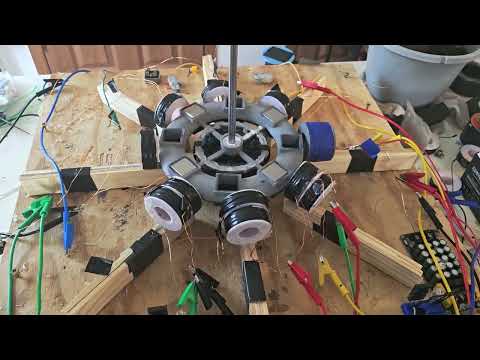
The Final Build for the self runner come check it out!
The Final Build for the self runner come check it out!
Long-form · Full audio · Best on YouTube
Watch the complete video: The Final Build for the self runner come check it out!
Watch the full long-form video on YouTube — that's where the full bench audio, runtime, and experiments live.
Preview embed · full runtime is better on YouTube
Prefer the full player? Better audio, runtime, and next-video queue on YouTube.
▶ Open full on YouTubeExperiment notes (read while you watch)
Notes support the video — for the full-length run with complete bench audio, stay on YouTube.
From the video (spoken content)
> Hey, ladies and gentlemen, what's up? It's Papa Bale and welcome to the channel. This is our self-runner. This is how we do it. And I believe that this actually happens to be the best build I've done out of all 36 uh different rewirings and various connections. So, we got our solar panels here in parallel. So, they're all doing uh current. We've got our uh Well, it adds up to 50 V and 900 and 9,400 uh micro Farad. Okay. With all that being said, good or not, um that's on virtually one side of the bridge rectifier. Okay. So, all the coils basically have uh are all uh connected to the AC side or…
Full transcript notes
This page is grounded in the automatic captions for this video (7,056 characters, language: en, source: package).
A richer blog rewrite (Papa Bale DIY voice + SEO package) is generated only after the full transcript is processed by the content engine — never from the title alone.
Watch and listen
The embed above is the source of truth. Measurements and claims on this site should match what Papa Bale actually says in the video.
Full transcript (7,056 chars · en)
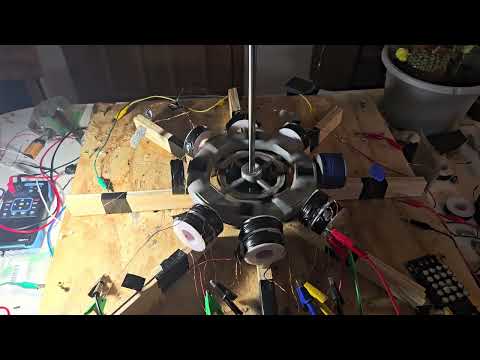
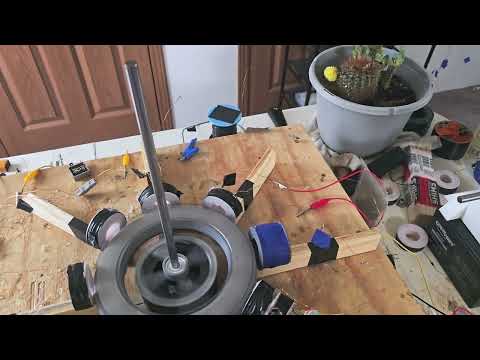
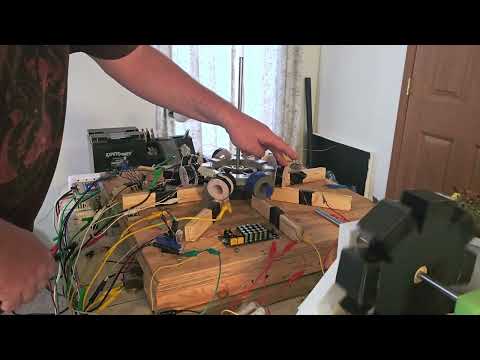
Hey, ladies and gentlemen, what's up? It's Papa Bale and welcome to the channel. This is our self-runner. This is how we do it. And I believe that this actually happens to be the best build I've done out of all 36 uh different rewirings and various connections. So, we got our solar panels here in parallel. So, they're all doing uh current. We've got our uh Well, it adds up to 50 V and 900 and 9,400 uh micro Farad. Okay. With all that being said, good or not, um that's on virtually one side of the bridge rectifier. Okay. So, all the coils basically have uh are all uh connected to the AC side or have part of it connected to the AC side. Uh the drive coil is half of a coil at 26 gauge, which actually happens to work run a lot better. >> [clears throat] >> Cuz I think having that 32 gauge coil in the generator side really helps out a lot, actually. Okay. Um okay. Everything that's going into the cap bank gets a diode. Everything that's coming out of the cap bank or being used, such as the reed switch and the drive, doesn't get a diode. Cuz we don't want the energy from the caps to go back on what's filling them up. So, we have that direction be one into the cap bank. All right. So, we're going to spin it uh let's see here. Counter-clockwise? Counter-clockwise. And we're going to kind of time it Yeah, 2:30. We'll say 2:30 is when we started. That was a pretty pretty healthy spin. Should go for a little while. Now, it starts really fast, like way faster than it can sustain, and then it drops into a zone where it continues to spin at a pretty consistent rate. And I I just think that's awesome. So, it's not really a consistent drop. Well, you're dropping all the time, but I mean the rate of your descent uh plateaus occasionally. Now, the reason I'm talking like that about this free energy device right here, I'm just kidding. Um Yeah, I think it uh My personal opinion, this this thing is running itself. So, I would say that is definitely a free concept. Can it do it forever? No. So, there's obviously a cost there. It's probably in friction and it's um you know, it's a hindrance of motion. So, we're at 1 and 1/2 minutes right now. So, I'm going to go over here. We're working on a design for our sculpture and this is basically the the prototype skeletal you know, the idea to bounce our head. See, so you got the disc in the middle. And you got your shafts going around and you got discs going up. And then the last disc is on this pole, which is of course the one that starts down here is going up the other side and will stop on this pole. So, you'll have two on this pole at that point. And this is all going to be magnetically coupled, which is freaking insane. I just want to let you know that right now. It seems like you know, you just put it in the right spot and it should be easy. It's It's not going to be easy. I've already tried to attempt to do this on a larger scale once before. It's not easy. So, anybody that ends up maybe managing to do it without a lot of hard work doesn't mean it's easy. Doesn't mean it's easy for you. It's just you might know a lot more about it than somebody else might. But, um or you might be really lucky like me, you know, not know anything about it and hit it on the first time like pretty much every time you do it. All right, let's let's check up on our uh uh rotor here. Oh, man, we're at 2 minutes and 30 seconds. We're still moving at quite a clip. It's definitely slowing down, though. We're almost at that plateau point that I was talking about. It's going to stay like that for a while. So, when we fill these slots in, the magnetic coupling between this disc and the disc over here should be seamless. So, this goes north-south, north-south, and this is going to be all north. And the one that's going to be over here is going to be all south. So, you're never double dipping on the load in the center here. If you get what I'm saying. If you do it like this is all south, and then the two out here are all north, then both of them are tugging on the rotor at the same time. It's not what you want. It's not what you want. I mean You can say, "Well, that's how you do it." But, that's not what you want, okay? So, you know, screw all that. That's how you do it. I'm telling you how you do it. So, you'll see. You'll see. I I'll I'll I'll make another video when the rest of the magnets get here. It should be pretty awesome. All right. Well, that's cool. Let's check our rotor again. Look at that. Look at that. That's 5 minutes. Is it? 5 minutes or is it 4 minutes? It's at 2:30. That's 5 minutes. More than 5 minutes now. See, so that I think that's pretty awesome. I think the 26 gauge drive strand is working wonders. There's just one. So, every time, you know, it hits And then like uh when I do the 180 circuit it's it's a much I don't even know if it even works because it's it's two 32 gauge coils, which is a lot of wire. And then you got to remember all these coils weigh 5 oz. So, whatever the denomination of turns that I say is in there it's 5 oz. And the length I don't know. I'll do I'll try and get a length calculation. I have a website that has lots of useful tools on it and I might be able to get a tool that will calculate the length based on the turns and the gauge and the axle. So, the what you're wrapping it around you know, that that's that's the key component to uh starting that equation, which allows you to calculate the length based on the amount of turns cuz every every layer you go out your um axle gets thicker, okay? Basically is what happens. So, you got to you got to put in some uh you know, whatever, trigonometry or whatever to equal that out. >> [clears throat] >> So, that you can uh calculate the the distance. Or you can just measure it before you wrap the coil, but all the coils that I do that just wouldn't like it wouldn't work. It it It's not the same as wrapping a rotor coil or doing a tri-filar or something like that with all the different geometries and stuff. Wow. 7 and 1/2 minutes. We're done. That's done. Awesome. That's That's awesome. That is freaking cool right there, man. With the flick of my finger, that thing spun for 7 and 1/2 minutes cuz I have it wired into itself on a reed switch with a the solar panels on there. And they're not that big, not that strong. You know, if they were strong, man, this thing would be moving like the dickens. They're not strong at all. But they do uh I believe it's about 2 volts and maybe 100 milliamps wired in parallel. Might be 60 milliamps in parallel. I'm not exactly sure. But uh I think it's 60 milliamps altogether. Which is cool, man. 60 more milliamps and this thing is uh a godsend. That's what that is. All right. Well, this is the final build and I'm moving on to the sculpture next. And that maybe I'll make a counter rotator in between there. But this is it. This is the This is the thing right here. This is the final build. Spin it the other way real quick. Anyway, thank you very much, ladies and gentlemen. Peace out. Have a wonderful day. Bye now.
Keep watching · longer sessions
More long-form bench runs
Queue up the next long-form bench run on YouTube — longer sessions keep the workshop free for everyone.
 Long-form
Amp Funnel Coil: Pulse Motor Labs EP:1
Eight-magnet eight-coil pulse motor lab — amp funnel coil wiring, pickup coils, and give-and-take battery measurements.
One path · free first
Watch free → subscribe → optional membership
Notes stay free. The full experiment lives on YouTube. Membership is optional when you want Discord and exclusives — not required to learn.
- 2
Subscribe free + turn on alerts
Hit Subscribe, then the 🔔 bell so you catch the next experiment.
Subscribe free + 🔔 - 3
Optional: join for $2.99/mo
Members-only videos, Discord, and live shoutouts — cancel anytime.
Join $2.99/mo
Longer sessions · ad-supported free library
Not done yet? Queue the next long-form run
Queue up the next long-form bench run on YouTube — longer sessions keep the workshop free for everyone.
- 1▶ Watch full on YouTube
Start: Shocking Truth About Pulse Motors
Notes & transcript on site - 2▶ Watch full on YouTube
M.P.H.Jr Pulse Motor Labs EP:1 Just scratching the surface
Notes & transcript on site - 3▶ Watch full on YouTube
8 Neo Cube Magnet Pulse Motor Hits 1300 RPM — Amp Funnel Coil Power Test
Notes & transcript on site - 4▶ Watch full on YouTube
Name change, plans for the future, Motor generator start of something cool 😎
Notes & transcript on site