Experiments·
Simple Circuit Reed Switch Hits 1033 RPM
I fired up a basic pulse motor with a simple circuit reed switch and clocked my six magnet rotor at 1033 RPM. Watch the voltage sweeps, current draw, and the exact point it hit the bell curve on this monopolar setup.
Long-form · Full audio · Best on YouTube
Watch the complete video: Simple Circuit Reed Switch Hits 1033 RPM
Watch the full long-form video on YouTube — that's where the full bench audio, runtime, and experiments live.
See it on the bench · full runtime on YouTube
What to watch for
- ▸Simple circuit reed switch gave smooth operation from 9.2 V at 100 mA all the way to 20+ V
- ▸Six magnet rotor reached 1033 RPM on a 25 V max supply before hitting diminishing returns
- ▸RPM climbed steadily then flattened around 1000; one-volt changes produced audible shifts in speed
- ▸Coil is 666 turns of 20 gauge wired 180° series, monopolar magnet arrangement
- ▸No maglev used; rotor rested on a flange in the bearing groove
- ▸Documented the bell-curve effect where extra voltage gave less and less extra speed
Watch the full long-form video on YouTube — that's where the full bench audio, runtime, and experiments live.
Experiment notes
Back to basics with a reed switch, 666-turn 20-gauge coil in series, and a six-magnet monopolar rotor. I ramped the power supply from 9 V up past 20 V and watched the RPM climb to 1033 before the curve flattened. No maglev, just a bearing on an upside-down flange. Current went from 100 mA to over 3 A at the top end.
Key takeaways
- Simple circuit reed switch gave smooth operation from 9.2 V at 100 mA all the way to 20+ V
- Six magnet rotor reached 1033 RPM on a 25 V max supply before hitting diminishing returns
- RPM climbed steadily then flattened around 1000; one-volt changes produced audible shifts in speed
- Coil is 666 turns of 20 gauge wired 180° series, monopolar magnet arrangement
- No maglev used; rotor rested on a flange in the bearing groove
- Documented the bell-curve effect where extra voltage gave less and less extra speed
Quick bench session today. I wanted to get back to basics so I threw together a simple circuit reed switch driving a 666-turn 20-gauge coil. The rotor carries six magnets in monopolar orientation. No fancy driver, just the reed, a power supply, and the coil. I started at low voltage and kept turning it up while logging RPM with a tac meter. Hit 1033 at just over 20 V. Pretty happy with that on this size rotor. The whole run is in the video if you want to see the voltage sweeps and hear the speed changes.
Related on this site
- Pulse Motor Rotor Design: Magnets, Materials and Balance — Directly supports the six magnet rotor discussion with magnet arrangement and balance details
- How to Maximize RPM on Your Pulse Motor — Complements the 1033 RPM result and bell-curve observation
- I Finally Got My Pulse Motor Running (Reed Switch) — Another reed switch success video that matches the simple circuit approach
---
*Generated from video transcript (hash `abc0691d1341…`).*
Full transcript
hey what's up everybody this is Papa Bale welcome to the channel uh what a day I've had a pretty awesome day I've had some successes and some failures and some off time and some on time uh decided to get back to basics just real simple circuit over here we got a read switch we got a power supply and we've got uh two 100 uh actually there 666 turns of 20 gauge in 180° series uh and there's six magnets on the rotor monopolar I'm going to give it a little bit more so we're drawing 100 milliamps now we're at 9.2 Vols we're at 12.4 volts and still at 100 probably almost 200 milliamps now it's still registering is 100 it's awesome so 15 in 15 DC volts in2 200 milliamps that is awesome that is just whipping it does not have its maglev operational right now so it is actually resting on a upside down flange kind of just fits right in the groove of the bearing so it's pretty cool awesome so this is 16.1 volts and 2 amps wow so it's really weird it's like a double-edged sword I mean you you put in a lot of time and it's really just a documentary for me to look back on a catalog of all the things I've done see how many times I've you know gone back on myself and did this and that over again you know did crazy things the wrong thing over and over again thinking that you're going to get a different result I've done that so this is pretty smooth though got to admit so we're going to cap it in a second Len that frequency change wow 18 volts 18.3 volts point2 amps all right I'm going to get a Tac meter on that hopefully yeah here we go 876 77 76 81 by 880 RPMs 882 all right so I think that six magnets is superb 19 volts 3 amps 909 910 so it's it's eching its way up still but like I said man I mean the Thousand especially For A rad to that size th000 RPMs is about what we're going to get this a 25 volt max power supply and I'm not wor I'm just just standard circuit in out voltage in a little bit less voltage out and the thing moves 20 let's go check it out oh listen to that 9950 here we go change up oh it went down but you can just hear the change there in one volt just to ramp up it's like go a tenth at a time I think we're going to have a zero barrier your moment here we're going to we're trying for a thousand I'm sure pretty sure we get a th but huh do we have to turn it all the way up to get a thousand is my question [Music] no 1009 nice there it is 1,000 RPMs we're not all the way up yet but I don't really close for [Music] all right I think we just reached another Plateau here 10:33 1035 ah nothing special 1035 a little bit more speed very little bit see this is that bell curve now or it's like a it's like a curve on a graph that goes like this and then the More Voltage you put in going this way you get diminishing and then maybe even or you know you get less return and then maybe even diminishing return at the end there so yeah right around right around a thousand I'm cool with that man I'm cool with that um for this it's good I'm I feel like I'm stuck at a thousand but I feel like I put myself at a thousand for a reason I don't consider any of this stuff to be very safe I mean it's fun and all but I mean even that copper right there that's sharp so neat all right well thank you very much ladies and gentlemen peace out have a good night please subscribe bye yeah
Keep watching · longer sessions
More long-form bench runs
Queue up the next long-form bench run on YouTube — longer sessions keep the workshop free for everyone.
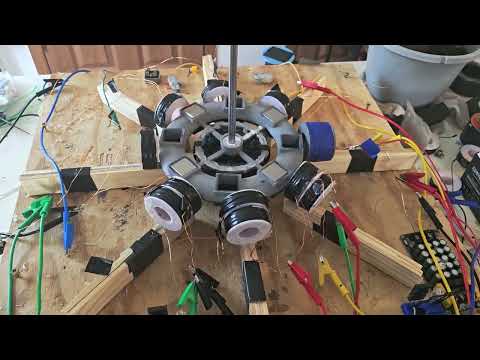 Long-form
2 circuits running a third room still for some growth/expansion.
Papa Bale here with a messy bench update.
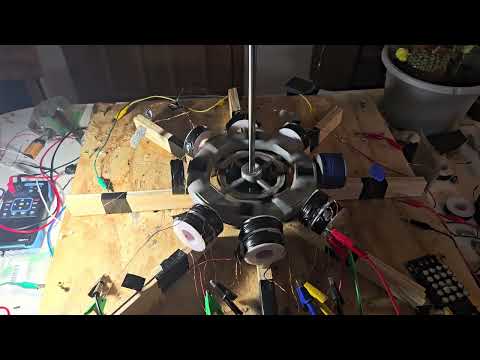 Long-form
M.P.H.'s pulse motor labs EP:2 Skin deep
I fire up two circuits at once, chase meter spikes, and retell the day a three magnet rotor one literally exploded at speed.
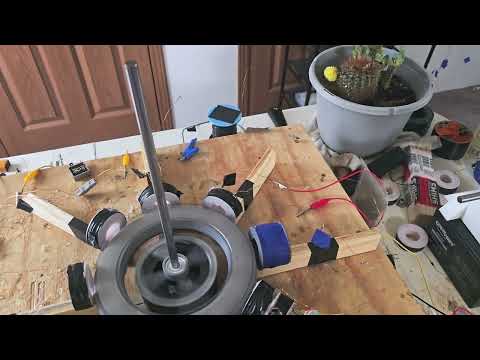 Long-form
Amp Funnel Coil: Pulse Motor Labs EP:1
Eight-magnet eight-coil pulse motor lab — amp funnel coil wiring, pickup coils, and give-and-take battery measurements.
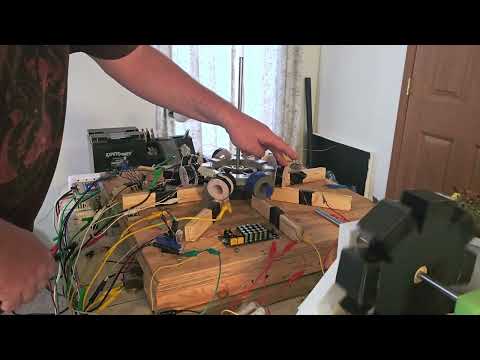 Long-form
MPH pulse motor lab
Real bench time with motor rotor magnets on a pulse motor rotor.
One path · free first
Watch free → subscribe → optional membership
Notes stay free. The full experiment lives on YouTube. Membership is optional when you want Discord and exclusives — not required to learn.
- 2
Subscribe free + turn on alerts
Hit Subscribe, then the 🔔 bell so you catch the next experiment.
Subscribe free + 🔔