Experiments·Transcript-backed
Papa Bale's Pulse Motor: Good Day with Papa Bale
Watch Papa Bale run his pulse motor at up to 1500 RPM with a condenser coil setup. See the mag lev rotor, fabric softener air filter trick, dual circuits, and real back emf recovery results from the bench.
Long-form · Full audio · Best on YouTube
Watch the complete video: Papa Bale's Pulse Motor: Good Day with Papa Bale
Watch the full long-form video on YouTube — that's where the full bench audio, runtime, and experiments live.
Preview embed · full runtime is better on YouTube
Prefer the full player? Better audio, runtime, and next-video queue on YouTube.
▶ Open full on YouTubeJump to the discussion · full video on YouTube
Hear it on the bench
Each link opens “Papa Bale's Pulse Motor: Good Day with Papa Bale” on YouTube at the first time that topic comes up in the captions. Stay on YouTube for the complete runtime.
See it on the bench · full runtime on YouTube
What to watch for
- ▸Dual circuits on one rotor: 31V trigger coil (16ga red) + 24ga/20ga condenser coil delivering up to 1500 RPM
- ▸Mag lev rotor with four neodymium cubes and fabric softener sheets acts as room air filter and freshener
- ▸Signal generator at 105 kHz on second circuit draws 3-5 amps while making the corner light twice as bright
- ▸Back emf recovery visible when circuits combine, with clean voltage spikes captured on the scope
- ▸Rotor pulls smoke and air from several feet away, forcing it down through the scented filter
- ▸Capped at ~1600 RPM without mag lev due to mechanical limits
Watch the full long-form video on YouTube — that's where the full bench audio, runtime, and experiments live.
Experiment notes (read while you watch)
Notes support the video — for the full-length run with complete bench audio, stay on YouTube.
A fun bench session with Papa Bale showing his dual-circuit pulse motor running on a mag lev rotor. The condenser coil setup hits 1250-1500 RPM while pulling filtered air through fabric softener sheets. Dual drive with a signal generator doubles the output light brightness and demonstrates clean back emf recovery on the second circuit.
Key takeaways
- Dual circuits on one rotor: 31V trigger coil (16ga red) + 24ga/20ga condenser coil delivering up to 1500 RPM
- Mag lev rotor with four neodymium cubes and fabric softener sheets acts as room air filter and freshener
- Signal generator at 105 kHz on second circuit draws 3-5 amps while making the corner light twice as bright
- Back emf recovery visible when circuits combine, with clean voltage spikes captured on the scope
- Rotor pulls smoke and air from several feet away, forcing it down through the scented filter
- Capped at ~1600 RPM without mag lev due to mechanical limits
Papa Bale shares a relaxed good-day bench session with his pulse motor. The build uses a condenser coil on one circuit and a trigger coil on another, both driving the same mag-lev rotor. Real measurements show 750-1500 RPM, current draw between 3-5 amps, and clear back emf spikes on the second circuit. The rotor doubles as a bedroom air filter by pulling air through fabric softener sheets.
Related on this site
- Understanding Back EMF in Pulse Motors — Directly supports the dedicated back emf recovery section with matching content from the channel
- How to Maximize RPM on Your Pulse Motor — Viewer can learn how to reach the 1500 RPM numbers shown in the video
- Pulse Motor Rotor Design: Magnets, Materials and Balance — Explains the mag lev rotor with neodymium cubes and fabric softener used here
- I Finally Got My Pulse Motor Running (Reed Switch) — Companion build video showing earlier reed switch version before condenser coil upgrade
---
*Generated from video transcript (hash `238cc479511c…`).*
Full transcript (17,785 chars · en)
Awesome. It's a good day today. Great day today. So, I got it mag. Let me show you that. kind of see it. All right. So, we got circuit number one. Primary circuit is hooked up. Get some tack reading on that. uh 750 RPMs currently. 800. Right. So, it's going pretty fast right now, right? like almost 900 maybe 900 RPMs now. Hello. Hello. How we doing, 1250. Yeah. Wow. Never seen it shake like that. I'm with this rotor. That's awesome. All right. So, let me explain what what's going on here. Hello. Hello. All right. So, we have two circuits here on the same wheel. You've got one with 31 volts and that's this trigger coil, that 16 gauge coil down there, the red coil which is 24 gauge, and this coil which is 20 gauge. And that that's the circuit that uh this this display is attached to. So, and the rotor, which is I think the coolest part, it's got fan blades on it. Oh, yeah. And it's mag left. Um, it's four neodymium cubes. But the the cooler part is it's got this uh fabric softener on it. So all the air is sucked in and forced down through that stuff and it makes the air smell nice and get any like uh larger debris out of the room. I think it's cool. No sir. No, I'm explaining what this is right now. You You either got your sound off or you're not listening. Either Either way, you know, you're not getting my point, which is it's a air filter and an air freshener. Basically, that's what it's doing right now. Anyway, just spin it and it sucks all the air in. I'm going to demonstrate that right real quick. All right. So, turn it on the 31 volt circuit. The light's going to get flashing in a second. Wow. So, it kind of gives you an idea how the energy is flowing through. I say that's really choppy, you know. Yes. Yes. Yes, sir. That's it. Like an automatic for breeze spinathon mobile, dude. It's awesome. A little over 800 RPMs. God, I was I wish I had like some green smoke or something, but I'm going to get some some real smoke here just real quick. I got some some of this. We're going to we're going to watch it. What happens? It's still pretty sturdy, isn't it? Yeah. Still not shaking. Okay. And there's my Utron. I'm going to hook that back up. I'm putting you guys in the tripod real quick so I can use both my hands. I'm going move it up so you can see. Whoa. wasn't full. Take it out real quick and screw that back on. That's a 31 volt mag left. Wow, dude. That's cool. And when I set up the other drive, it you can get it like way up here. Still kind of get half of it when it's up there. But it'll take anything within the vicinity and suck it right through. At least as far as the shaft in all directions really forces it through the fabric softener which filters it. And uh you know makes it smell nice in here. Oh, there you go. Bam. Now I have a signal generator hooked up to the other circuit. So I'm going to run that one real fast. Turn that one off just for good measure. We'll turn the signal generator on. And it doubles the brightness output of the light in the corner. You can't really see it. It's right there in the window. There we go. Wow. I was almost pulling five amps right there for how fast it's going. Yeah, that's 105 kHz coming going through there. And at that speed and this voltage, man, that's that's a tremendous Turn that off. And yeah, we're only drawing three amps with the signal generator on. We're drawing five amps. That's amazing. And that light is so bright, man. It's twice as bright as it is now when we run the single generator. That is a lot of wattage. Looking at my my paos real quick. I think I can see them trying to jump up off the table. They're just being weighed down right now. That's awesome. Where is it? There it is. 1,000 RPMs. When you put them together, you can get like uh 1,500 no problem. Well, actually, I that was before I put the fabric softener sheets on the bottom of this thing. So, I don't know if I can still get that. You know what? Last time I tried, this thing kind of came out here. Okay, let me get you guys off the off the tripod now. I got to plug you in, too. I will respond. Oh man, let me think here. Well, I don't know. It depends on what you mean by the best. You know, you can grow it quickly or you can grow the best. I mean, you you know, you can try and do both. That's my kids. That's right. They're honoral students. What do we want to do about them? I know. Back to the future. I get it. Back to the future, too. Or is that the end of one? I forget. Oh yeah. Uh impulse engines, impulse power. That's what we need uh to get off this rock. Once we're off the rock, then we need warp power. Uh, but I think all those kinds of ships are built in space. No, this is actually I have a really big bedroom and this is just, you know, part of my bedroom. Yeah, that's DC brushless motor right there. Nice. Yeah. Uh DC brushless motor. Uh, and you can see we got some output. That light is hooked to the circuit that's running right now. All right. Oh, man. I want to like do both of these, but I know it's going to go way too fast with the mag lev for the pull. It's going to go way too fast. If I take it off the mag lev, I might be able to do it. uh run both circuits cuz it'll it'll cap out at about 1,600 RPMs uh with without a mag lab. But with a mag lab, we're talking too fast for the pull. So, as if you were here to see the demonstration with the smoke, it it all the way up here, it's like sucking in, you know, it's pulling down from all the way up here. So, I mean, like, as long as we got a a real fan going in the room to circulate the air in the room, this thing will will filter all the air in the room. Pretty sweet, I think. Man, it's just my It's my in It's my bedroom air filter. It's freaking dope. We got uh what is it? Like coastal breeze bounce on there. Something like that. I'm thinking maybe I'll hook the signal generator up to the other circuit, the one that's running right now. Here, let me let me swap that up real quick so we can use it. Or no, wait. You know, you can kind of see that light a little bit better now. All right, let's turn this on and we'll turn on the signal generator. Just kidding. And you know, the faster the thing spins, the faster uh are the the farther the suction is for the for the fan. But let's turn off the signal generator now and see if we can get some more speed. And that may doesn't make sense in my mind. Higher frequency, more speed, right? But this is increasing in speed with so much faster with it off. Oh, I smell something. Let turn that down. It smells like a hot transistor to me. But it's it's really just a MOSFET on this uh I call it a voltage multiplier. So it took that that 55 watts, you know, that we were looking at over here and it and it changes it into uh actually this meter right here will tell us what it what it is when it's on. So, right around 58 volts uh after and that's after running the motor. So, I'm going to take if I unplug the motor, this thing will read 75 volts. This is with the motor plugged in. And we're still getting 56. So, that's that's good. Take a look at this uh meter here. So, it looks like we need some capacitors. Capacitors. Yeah, condensers. Smooth that out a little bit. It's a little choppy. Then you get that little AC uh constant bump from the magnets. It does apply a little bit of energy to the whole thing. the magnet uh generation from passing the it's just it's a flow it's like a flow matrix. So as soon as it's generated it's used like immediately it's just part of how how it runs already I'm pretty sure. Uh now there are different like each one of these coils can have a a BMF collection connection and it's virtually just a a reverse diode connecting the two ends the start and and the end the coil if you have like a trifiler coil you can do three BMF connections you know you can it's awesome really. But you got to think each time you do one of these BEMF connections to collect it that way. You're going to you're going to get you can do it wirelessly, too. And you just wrap a coil. You get it real close to the center of the coil you're collecting from, and you can light an LED that way with the BMF. But you do it this way, you're going to get an effect of the coil. It's going to slow everything down each one you do. And you can say, "No, no, no." And then, you know, you turn the diode the other way and you're shorting the coil. Or you take the diode all the way out algether and you short the coil. You connect the two ends together and you you've got a magnet there like almost a permanent magnet. But I mean there's a way to do it where it's just instantaneous and you get a burst of energy like it happens fast. But uh yeah, the BEMF connection, the reverse diode, uh you can link them together in uh so you can get them all on the same collection train and then you can have them dump into like a capacitor bank or something. But I haven't done any of that cuz I'm I'm not really looking to do that. And I was just testing out the rotor. It is mag left. And uh seeing I was trying for lift, but I'm sure I got the the blades wrong for lift. Uh maybe they need to be a little wider and maybe a little bit less curved. They're very curved. You know, the what I used to make them was the looks like a trapezoid, but it's rounded on the top. Looks like a curb. And then I just hollowed that out with another curb that wasn't as big. And then I stretched it out to fit and it fit quite nice. So that it almost looks like it's supposed to be that way, you know, but I can make these spins any way, anywhere, you know, whatever I want them to do. And uh I'd say if I made them straightened them out and, you know, made it so it wasn't a fan that uh this thing would go 2500 RPMs. I'd be holding it like this going, "Oh my god, how am I gonna turn this off?" You know, like that. But I mean, yeah, that would be funny. And then there's only one way to turn it off when you got it like that, and that's to grab the wheel. Don't stick your hand in the middle. Yeah, I can see the humor in that. But this is what I want to do. I want to take the signal generator and clip it under this one. Boom. Sweet. All right. Now, let's pump 31 volts into this and turn the signal generator on. See if we can get that light to either brighten up or flash a little faster. It turns on. There we go. And 105 kHz. Here we go. Oh, it turned the light off completely. So, we're going to drop it down, I guess. Okay, here we go. We're getting close. Sorry, [Music] one kohertz. [Music] That's awesome. That goes up to 10 kHz. 1 to 10. You get the harmonics. Get that sound wave, that screeching noise. Let's see if we can get the light back on above 105. Maybe we got to go the other way. Maybe it's not going to work with 31 volts. The other side it works pretty good. Yeah. Nope. For some reason, the signal generator does not help this side at all. That's with the 31 volts in. Now, all we can do with that is drop the voltage. Can drop it. But, uh, yeah, I'm going to take this and put it back on the other one. And what you do that you just you're hooking it up to the base of the transistor so that you can pulse it at your at least your frequency is the pulse. All right. Anybody want to try and figure out why the signal generator at 105 kHz does nothing for the one drive and like super duper helps the other one. Not for speed, but for generation purposes. I don't get it. I think it has something to do with how much voltage is going in. But yeah, it's got to have Well, all of it probably factors in [Music] All right, let's get a look at the transistor real quick. It's Toshiba. I can't read it. Can't even see it on that one. No, it Well, it's a Toshiba. It's uh high rating. It's got a high rating. It's not the MJL ones. I have some of those though lying around somewhere. Uh, it comes five and five, five MPNs, 5 PMPS. That's all I got right now. Uh now about the circuit, we've got an attachment. You know, you put the transistor in this little thing right here and it extends how much, you know, area you have to clip on to each leg. I'm going to get that number real quick. I can't read it. If you can read it, there it is. have no idea what you're talking about. Gothic. Not trying to sell it to anybody, so I don't know if it really matters. Yes, sir. That's it. Thank you, Society. It's an air filter. It's a pulse motor air filter. See, these are blades right here. These these suck air in through the filter and out the bottom. And in order to make it spin fast enough, we just turn on the pulse motor. It's really easy. Now, let me explain the pulse motor. All right, we got a trigger coil here and a trigger coil here. These are both hooked up to the base of the transistors. We have two transistors, one here and one here. Okay. Now, let me explain which coils are hooked up to which transistor. This, this, and this. This is a 16 gauge, 24 gauge, and 20 gauge. These are all hooked up in series to this transistor over here. And then this one, the two gray ones and that one adjacent are on the same circuit as well. This one actually has a bifiler situation. This one does not. So this one actually contributes to the drive of the said circuit. And it's two 90° circuits. So, and they don't hit at the same time. So what I'm saying is it goes one, two, right? So when they're on together, they function together. You know what I'm saying? They don't hurt each other because they're not firing on the same ones or at the same time even. Uh now they're all touching each other with their uh fields by most certainly they're close enough to interact with each other. But all that does is put energy into the coils like it shares the energy that's already there. So when a magnet passes the two trigger coils, it will fire off the circuit. It's a lot of blam. There you go, James. That's it. And in a nutshell. Now we have a room. This is like our only added resistance is a light bulb that I have in the circuit. It's 120 volt hologen bulb. Um, let me think if I can. Ah, our voltage multiplier for the for one circuit. I had two of them, but one of them's broken. So, now I only have one of them. I would have put it on the other circuit and we'd have two uh 75V circuits. So what it does is it takes the wattage from the power supply and it breaks it down uh into voltage higher voltage rating. It's not all voltage that's coming out of this thing, but it's it's that's the rating that you can set with the adjuster. the voltage. Top of the morning, Mike, how's it going today? It's a good day. Yes. So, I got this bad boy mag left. I got uh what do you call it? Fabric softener on the bottom of it. Yes, sir. Okay, I'm running that for very long with with both of them for very long with the mag lab on it's going to speeds that the pole cannot handle. Where did I put my There it is. I'm going to try and get a reading before I got to turn it off. And I'm going to put the I'm going to put you guys back in the tripod and need both my hands. All right, second drive. Here we go. Yeah, I think the mag le's too un it's too un sturdy the way it is. I I can get way more than that. Way more than that. I'm going to try something. Maybe it's too high. I think it might be a little high on the coil. And then I'm just going to put it back the way it was cuz I was getting almost 7,000 and it was sturdy, you know, divided by four of course. So there's your your magnet. Let's Let's turn it on and see what happens. No. Are you Are you an idiot? Yeah, that's not right. I think the mag's getting in the way. I mean, it's been it post longer, but I don't think it's smooth right. No. Wait a minute. Try back these up just a little bit. All right. So, the positioning of the coils is how we're going to going to do this. 3,000 750. All right. There. There it goes. I got to turn that off now. Shoot. All right, here we go. I don't know if I'm going to be doing too much more of that. I got to hook this back in here, though. I think I'm going to glue that to what it's on and move what it's on. I think I might need a glue stick. [Music] So, this is like one of the last things I'm going to do before I rearrange everything in here. So cool. I don't think it's going as fast as I want it to. So, now I'm going to do what I started with. I'm going to stack these little bearings up. They move really good. I got like 10 of them. Go. Fits right. Nice. Right in the sweet spot. Kind of. Probably use one or two more of them. The cool thing about this is I don't need to run it like I'm running it. I can use a paper clip to run it. That's to make the rotor move. When I say run it, I mean the rotor is moving without you moving it. Yeah. All right. So this is without mag feel wrong. That magnet might be a little off center there. I have to reattach that. And it also looks like [Music] um I'm going have to cut some stuff. It's okay. This is the first one I'm doing. So, this is like I need to It's not the first time I put uh stuff on the bottom of it. But like the first one I've done with the fan [Music] Come on. All right, let me see if I do this. [Music] That thing gets really hot. So, I got to turn it turn it off before it gets too hot. Now, maybe a resistor of some kind. So, we moved them all into a half an inch away. That's too close. I'll let it run for a minute. All right, I'm I'm getting there. No, see this is this is it, man. I was right about the mag leav in the beginning. It was it was better just for now. It's all right. It's not moving very fast though. All right. Well, that was fun. Taught me a lot. Mag left for the win. Thank you very much, ladies and gentlemen, for tuning in. I really appreciate it. Thank you. And I'm going to do it for about an hour at a time. I'll catch you later. Bye now.
Keep watching · longer sessions
More long-form bench runs
Queue up the next long-form bench run on YouTube — longer sessions keep the workshop free for everyone.
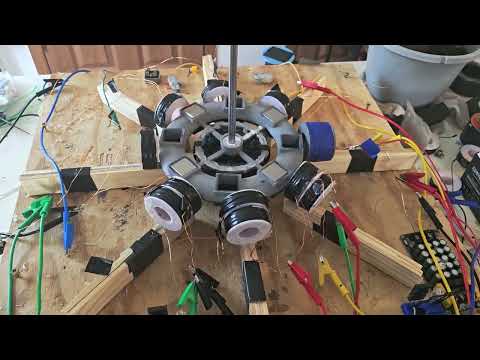 Long-form
2 circuits running a third room still for some growth/expansion.
Papa Bale here with a messy bench update.
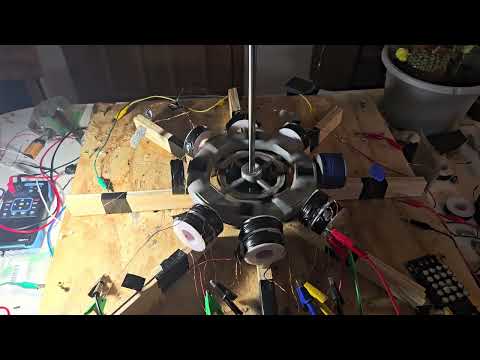 Long-form
M.P.H.'s pulse motor labs EP:2 Skin deep
I fire up two circuits at once, chase meter spikes, and retell the day a three magnet rotor one literally exploded at speed.
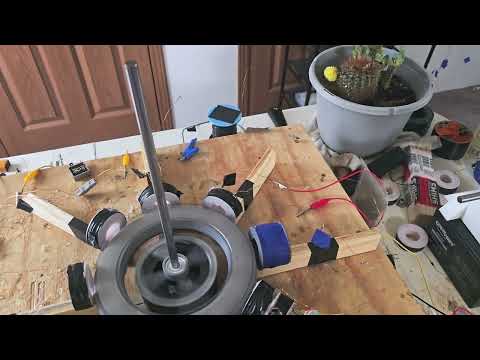 Long-form
Amp Funnel Coil: Pulse Motor Labs EP:1
Eight-magnet eight-coil pulse motor lab — amp funnel coil wiring, pickup coils, and give-and-take battery measurements.
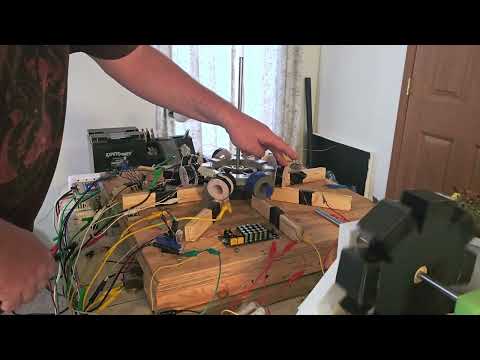 Long-form
MPH pulse motor lab
Real bench time with motor rotor magnets on a pulse motor rotor.
One path · free first
Watch free → subscribe → optional membership
Notes stay free. The full experiment lives on YouTube. Membership is optional when you want Discord and exclusives — not required to learn.
- 2
Subscribe free + turn on alerts
Hit Subscribe, then the 🔔 bell so you catch the next experiment.
Subscribe free + 🔔 - 3
Optional: join for $2.99/mo
Members-only videos, Discord, and live shoutouts — cancel anytime.
Join $2.99/mo
Longer sessions · ad-supported free library
Not done yet? Queue the next long-form run
Queue up the next long-form bench run on YouTube — longer sessions keep the workshop free for everyone.
- 1▶ Watch full on YouTube
Start: Shocking Truth About Pulse Motors
Notes & transcript on site - 2▶ Watch full on YouTube
M.P.H.Jr Pulse Motor Labs EP:1 Just scratching the surface
Notes & transcript on site - 3▶ Watch full on YouTube
8 Neo Cube Magnet Pulse Motor Hits 1300 RPM — Amp Funnel Coil Power Test
Notes & transcript on site - 4▶ Watch full on YouTube
Name change, plans for the future, Motor generator start of something cool 😎
Notes & transcript on site