Experiments·
Solid State Generator with 500 Turn Coil & Trifer Coil
Watch me charge a cap bank using a solid state generator built around a 500 turn coil plus a trifer coil setup. Real bench measurements, PWM frequencies, MOSFET driver, and oscilloscope peaks from 400-900V. Simple DIY build you can replicate.
Long-form · Full audio · Best on YouTube
Watch the complete video: Solid State Generator with 500 Turn Coil & Trifer Coil
Watch the full long-form video on YouTube — that's where the full bench audio, runtime, and experiments live.
See it on the bench · full runtime on YouTube
What to watch for
- ▸15V 0.5A input yields ~28V output into the cap bank under load
- ▸Trifer coil uses mixed 20ga, 22ga and 30-32ga windings on a shared iron core with intentional gap
- ▸PWM + dual MOSFET driver sharpens the pulse; best visible resonance around 100-200Hz
- ▸Scope shows sporadic 400-900V peak-to-peak spikes; higher frequencies clean up the waveform
- ▸Small 4700µF 63V cap charges quickly while the big C-bank fills slowly due to higher capacitance
- ▸Entire build uses simple off-the-shelf parts including leftover copper spool and 3D-printed iron-infused PLA bobbin
Watch the full long-form video on YouTube — that's where the full bench audio, runtime, and experiments live.
Experiment notes
Papa Bale runs a solid state generator built on a trifer coil (bottom 666 turns 20ga + 22/30-32ga strands) plus a top 1500 turn 20ga coil and 11,000 turn 32ga center winding on a gapped iron core. Input ~15V at 0.5A produces ~28V output to a cap bank. PWM at 83-200Hz with dual MOSFET driver creates clean spikes up to 900V peak-to-peak on the scope while slowly charging the C-bank.
Key takeaways
- 15V 0.5A input yields ~28V output into the cap bank under load
- Trifer coil uses mixed 20ga, 22ga and 30-32ga windings on a shared iron core with intentional gap
- PWM + dual MOSFET driver sharpens the pulse; best visible resonance around 100-200Hz
- Scope shows sporadic 400-900V peak-to-peak spikes; higher frequencies clean up the waveform
- Small 4700µF 63V cap charges quickly while the big C-bank fills slowly due to higher capacitance
- Entire build uses simple off-the-shelf parts including leftover copper spool and 3D-printed iron-infused PLA bobbin
Quick bench test of a solid state generator built around a multi-strand trifer coil and additional 500-turn-class windings. Input power, PWM control, MOSFET switching, scope shots and cap charging behavior are all shown live. Measurements stay exactly as spoken on the bench—no invented numbers.
Related on this site
- How to Wind Coils for a Pulse Motor (Step by Step) — Builder needs exact winding details for the 500-turn-class and trifer coil sections
- Best Wire Gauge for Pulse Motor Coils (AWG Guide) — Video uses 20ga, 22ga and 32ga wires; link helps viewers choose gauges
- Reading Oscilloscope Output on a Pulse Motor — Directly matches the live scope shots showing 400-900V spikes
- Understanding Back EMF in Pulse Motors — The spikes and ringing heard in the video are classic back-EMF behavior
---
*Generated from video transcript (hash `201063cdd91b…`).*
Full transcript
hello ladies and gentlemen what's up it's Papa Bale welcome to the channel and what we're doing today is we are using our solid state generator to charge our cat Bank um I'm going to go through what I have on the table in regards to the solid state generator and we'll start with the power in put uh we got about about 15 volts going in and about half an amp and then in that we're generating what's going into the C Bank Plus about 28 volts the that the 28 volts is what's coming out of it with this load on it let's put it that way all right so here I have a trifer coil on the bottom with a 20 22 and 30 gauge or 32 gauge one of those gauges 30 or 32 on the bottom and I have 11,000 turns of 32 in the middle and there's an iron core going through virtually the whole thing but it's got a gap slight Gap in this coil right here it doesn't go all the way through so it doesn't touch so it's not really connected maybe through some magnetic fields it's connected uh via the core uh everything else is working quite nicely um it's a slow charge the way things are but I think it's good um it gives me time to talk and stuff we'll get a probably about 0.005 maybe okay so so the top coil 1,500 turns of 20 gauge so I have the 20 gauge on the bottom at 666 turns I have 20 gauge on the top at 1,500 turns and I have 32 in the middle at 11,000 turns all right so the 22 gauge strand is where we start our generator cycle so we got our 22 gauge hooked up to the coil in the center in series and then all that is hooked up to the cat Bank directly through a diode of course it's right there at my foot but you as you can see you know it it goes it does charge um yeah all right let's go let's go what makes this thing work the way it does and not a different way okay from the power we're going to go to the pwm I believe that's what we're doing yep we're going to the pwm and that's going to set frequency in our duty cycle for our pulse it's going to pulse this okay but it's raw it's really like raw electric it's not refined in any way it doesn't really go fast I don't know exactly what's going on inside of here but this is supposed to time this little bad boy right here which is a dual mosfet uh timer and I use that [Music] to further control the pulse what's going through it what's happening with it so like when I get it down to one hert that blue light pulses okay but I don't want to go down let's go down to 100 100 Herz slowly I keep on going too too long on the button 83 that's good because our voltage is gone up I think this thing resonates at a really low frequency let turn this down to like 10 or something all right sweet I had that like transistor smell in my nose so 100 Hertz you know I think we're going to go back up to well we'll just do 200 you can hear it ringing in the background or I can anyway all right 200 HZ so yeah we went we went like uh whole 0.1 instead of 05 sweet that's cool yeah I don't know if the these little buggers are designed to handle what I'm going to do to them so I bought a bunch of them um yeah I did I did smell like melted something burnt something it's all good all right let's take a look at the wave here wow that's awesome from 600 [Music] to well it's very very sporadic it gets up to like the 900s in the voltage Peak to Peak so there's that little tiny Spike that goes above or maybe even it doesn't go above at all it's all below that's all right so we're going to like slow it down I guess is what we would call it other way other way there it is so that Peak to Peak is awesome like 400 to 600 it looks like yeah see look at the light all right let's look at some higher frequencies real quick it's awesome that's freaking amazing all right there it goes yeah 111 Hertz it's a pretty nice formation right there again solid state generator all the components just it's real simple you can do this with the with the bobin of your last copper roll that's what's on the bottom right here just that that roll of a pound of copper just roll it up on that this one up here I printed it's iron infused pla with an iron core it's iron core on the bottom sticks out the top halfway through the blue one in the middle there so there's that little Gap got the pwm which is uh triggering the MOs fat driver which is giving us a [Music] crisper uh formation here I'm thinking this is looking better than without the mosfets um I can hook it up to this but I don't really have a way to drain it yet so I'm going to have to work on that uh this is kind of like a cat Bank it fills up really really fast um and then our c bank over here we're filling that up it goes really really slow so I don't really understand I mean I get that there's a lot more space quote unquote in this one than there is in this one so maybe they are filling up at the same rate it's just that but this one is way more uh has more capacitance by a long shot um this little black one right here fills up really fast it's a 63 volt 4700 micro real fast so I'm I'm getting a kick out of being able to charge these caps up with on the solid state I don't think I could do that using just the pwm I think I I need these mosfets anyway I I think it's really awesome and I don't I just uh I hooked it up and uh I will draw a picture of this it's probably just a stand I would call it a standard hookup all right so we started the video at 9 9.50 9.70 perfect time to stop thank you very much ladies and gentlemen peace out have a wonderful night by now
Keep watching · longer sessions
More long-form bench runs
Queue up the next long-form bench run on YouTube — longer sessions keep the workshop free for everyone.
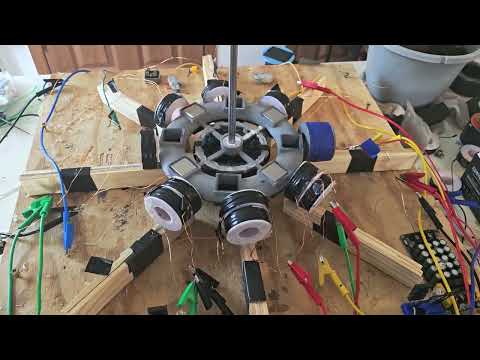 Long-form
2 circuits running a third room still for some growth/expansion.
Papa Bale here with a messy bench update.
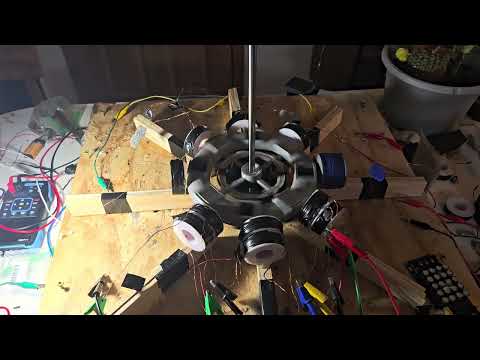 Long-form
M.P.H.'s pulse motor labs EP:2 Skin deep
I fire up two circuits at once, chase meter spikes, and retell the day a three magnet rotor one literally exploded at speed.
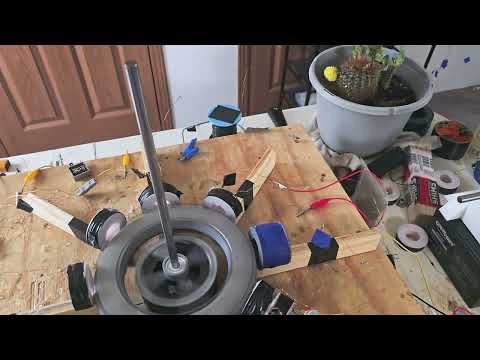 Long-form
Amp Funnel Coil: Pulse Motor Labs EP:1
Eight-magnet eight-coil pulse motor lab — amp funnel coil wiring, pickup coils, and give-and-take battery measurements.
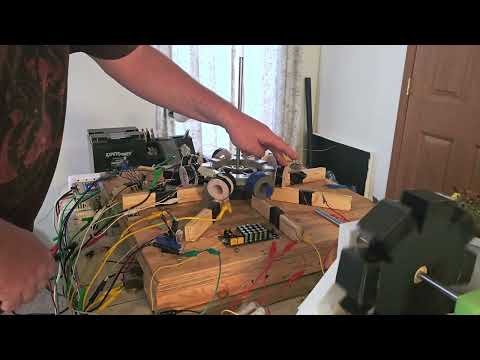 Long-form
MPH pulse motor lab
Real bench time with motor rotor magnets on a pulse motor rotor.
One path · free first
Watch free → subscribe → optional membership
Notes stay free. The full experiment lives on YouTube. The $2.99 Member tier is optional (loyalty badges, emoji, members-only live chats, priority replies, members-only videos, shout-outs) — not required to learn.
- 2
Subscribe free + turn on alerts
Hit Subscribe, then the 🔔 bell so you catch the next experiment.
Subscribe free + 🔔