Experiments·Transcript-backed
Pulse Motor Mayhem Workshop Run
Watch this pulse motor mayhem workshop run where a small North-South magnet rotor hits nearly 3000 RPM and spikes over 12000 volts on 8.8V input. Real bench readings, light load test, and what happened when power was cut.
Long-form · Full audio · Best on YouTube
Watch the complete video: Pulse Motor Mayhem Workshop Run
Watch the full long-form video on YouTube — that's where the full bench audio, runtime, and experiments live.
Preview embed · full runtime is better on YouTube
Prefer the full player? Better audio, runtime, and next-video queue on YouTube.
▶ Open full on YouTubeSee it on the bench · full runtime on YouTube
What to watch for
- ▸Smaller rotor with North-South magnets reached nearly 3000 RPM on low voltage input
- ▸Peak voltages hit over 12,000 V and AC readings around 150 V while running
- ▸Bulb stayed lit for about 30 seconds after power was cut due to stored energy
- ▸Light turned on at roughly 65 V and reached full brightness near 77 V
- ▸Cascading effect suspected between the two drive coils helping speed build
- ▸Idea noted that even smaller rotor with fewer magnets could go faster
Watch the full long-form video on YouTube — that's where the full bench audio, runtime, and experiments live.
Experiment notes (read while you watch)
Notes support the video — for the full-length run with complete bench audio, stay on YouTube.
Papa Bale fires up a compact pulse motor with North-South magnet arrangement on the rotor. On just 8.8–13 V input it reaches almost 3000 RPM, produces peak voltages over 12,000 V, lights a 1000 W-equivalent bulb, and keeps the bulb glowing for ~30 seconds after input power is removed.
Key takeaways
- Smaller rotor with North-South magnets reached nearly 3000 RPM on low voltage input
- Peak voltages hit over 12,000 V and AC readings around 150 V while running
- Bulb stayed lit for about 30 seconds after power was cut due to stored energy
- Light turned on at roughly 65 V and reached full brightness near 77 V
- Cascading effect suspected between the two drive coils helping speed build
- Idea noted that even smaller rotor with fewer magnets could go faster
In this pulse motor mayhem workshop run I show the latest small rotor build spinning up fast and putting out serious voltage. Real multimeter and tach readings straight from the bench, no hype.
Bench notes: North-South magnet arrangement, dual drive coils, 8.8 V input gave 300 V output and almost 3000 RPM. Light load test showed the bulb staying on 30 seconds after power off. Peak voltage memory hit over 12,000 V before I killed the supply. Everything stayed together but I did check fasteners after a high-rev run.
The motor also acts as generator/transformer/propagator in one package. I explain what the white part of the bulb needs (about 77 V) and how the system seems to cascade energy between the drives.
Related on this site
- How to Maximize RPM on Your Pulse Motor — Directly relates to the nearly 3000 RPM achieved and the suggestion that a smaller rotor would spin faster
- Pulse Motor Rotor Design: Magnets, Materials and Balance — The North-South magnet arrangement and ideas for a 2.5-inch rotor with fewer magnets are discussed
- Understanding Back EMF in Pulse Motors — High voltage peaks and the generator/transformer behavior come from back EMF effects shown in the run
- Pulse Motor vs Bedini Motor: What's the Difference? — Viewers often compare this style of pulse motor to Bedini SSG builds
---
*Generated from video transcript (hash `c7c5a7bbf8d8…`).*
Full transcript (4,791 chars · en)
Hello ladies and gentlemen and welcome to the channel. This is Papa Bale. And you're probably wondering what it is that I'm doing. I'm not making a bomb. Right off the bat, just to clear that out of the way. Not making a bomb. All right. So, um what it is is an electromagnetic experiment using permanent magnetism and electromagnetism. It's a generator. It's a motor. It's a transformer. And it's a propagator, all in one. And I'm going to I'm going to show that to you. All right. Just a second. All right. So, I'm going to get this started real quick and we're going to take some readings. We're going to get a tach reading. We're going to get a few multimeter readings. We're going to light this light up with the greatest of ease. Awesome. So, here, let's get started. North-south arrangement on the wheel. All right, the light is on. And there it goes. It hasn't even started to pick up speed yet. Which is awesome. I'm going to turn that off, though. That is awesome. Hold on. All right, I had to make sure that the light clips weren't touching each other cuz my cat jumped up on the table. I really don't like it when he that, especially when I'm dealing with this voltage. So, here we go. Well, bam. Over 1,000 volts. Whoa, had to cut the power real quick. Let's see what we got on the meter. Wow, almost 12,000. How fast is that? I don't even know. How fast is that? Divided by four. How fast is that? 3,000. Pretty much. Pretty damn close to 3,000. A little under 3,000. That's pretty damn cool, man. I I don't know. And then we were, you know, getting the the peak to peaks. Well over 1,000. We got AC volts of 150 right now. I'm going to turn the light on. Look at that, man. And the power's off. That's great. That's awesome. It's going to dim out, though. As soon as it starts dipping below 70 volts, then the power starts leaving. It's about 76, 77 volts is what all that stuff in there adds up to. And what I mean by in there is in that white part of the light. It's supposed to equivalate 1,000 watts. So, whatever they put there to make the electricity equivalent 1,000 watts, takes 77 watts or volts to run. That That's That's what I'm saying. And I'm pretty sure that's that's accurate. That's amazing. That's amazing. Almost 3,000. Probably would have made it to 3,000 without a without any problems. But, I felt like it was starting to like And just the amount of electricity that this thing is generating is phenomenal compared to the big one, which wasn't generating anything. Amazing. And I mean, 3,000 RPMs, dude. That's pretty freaking fast. I'm thinking if I wanted to go faster, I go smaller. And even fewer magnets. One north and one south. Um like a 2 and 1/2-in rotor. That would be awesome. I mean, that would be so fast. All right. What should we do here? We're going to go 10 volts in. And then we'll go nine. 8.8 Oh, it wants to go on its own. So, this is 8.8. It turns on about 65 volts, the light. And then it gives us to its peak brightness at around 77. And then it capacititates capacititates the rest of the energy. It doesn't really go above 78 volts. But, the light stays on. It'd be great if it went above, you know, like substantially above this much, but if you turn the light off, it'll go way above it. But, that's with the load on there. 78.34, it might get up to 80. Maybe not. All right, we're only at 8.8 volts in. Yeah, we're getting them 300 volts off of 8.8. I think there's definitely some sort of cascading going on here with the two uh drives being lit. Maybe there's slight timing thing going on where they're allowing the the motion or the speed to perpetuate. Not permanently, like forever, but just to build on top of each other until something runs out, either the Cuz I mean, if I just let it I don't even mind to even let it just let it run. I don't want to do that. I mean, it's we tested it's going about 3,000 when I when I turn it down. That's so cool. All right, so we can generate enough to light the light and have it be on for about 30 seconds after we turn the power off. That's pretty good, man. That's pretty good. Have a load on it like that, that's pretty dang good. Um I mean, good for me. Heck yeah. All right. Let's back it out. I think that's awesome. Uh probably I don't know. I hope somebody else thinks that that voltage is awesome. That the peak voltage is awesome. We're going to take another look at that real quick. 13 volts in. Lights already on. Sweet. Wow, did you hear it keep revving up? Wow, I had to uh Let's see what the memory's like on this thing. Oh, not not too fast. Wow, all right. We're going to have to check make sure everything's still together good. Yeah, that's super dope. Pretty cool, man. Thank you very much. Peace out. Have a great day. Good night. Please subscribe. Bye now.
Keep watching · longer sessions
More long-form bench runs
Queue up the next long-form bench run on YouTube — longer sessions keep the workshop free for everyone.
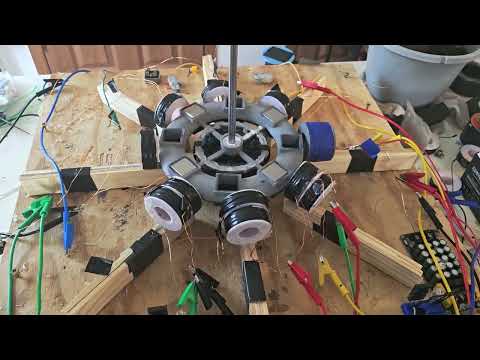 Long-form
2 circuits running a third room still for some growth/expansion.
Papa Bale here with a messy bench update.
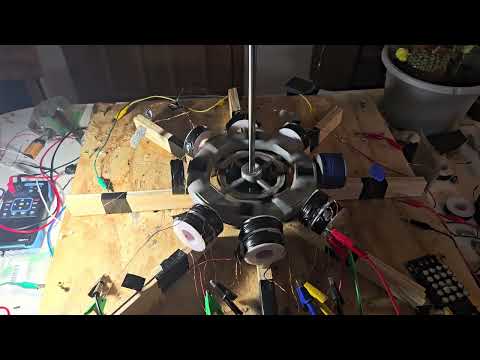 Long-form
M.P.H.'s pulse motor labs EP:2 Skin deep
I fire up two circuits at once, chase meter spikes, and retell the day a three magnet rotor one literally exploded at speed.
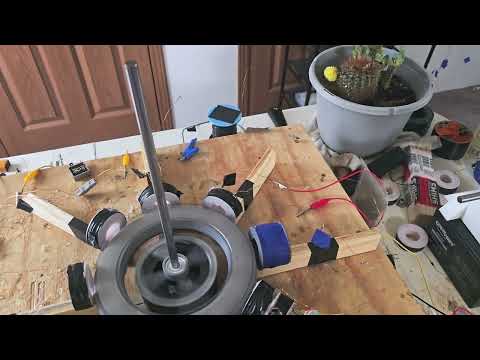 Long-form
Amp Funnel Coil: Pulse Motor Labs EP:1
Eight-magnet eight-coil pulse motor lab — amp funnel coil wiring, pickup coils, and give-and-take battery measurements.
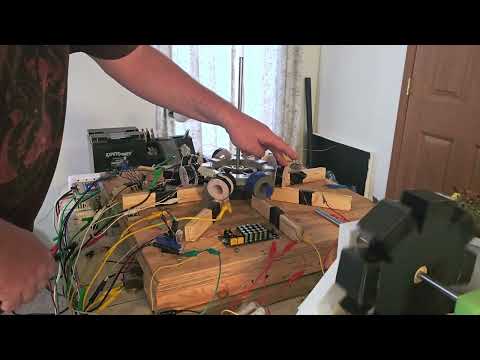 Long-form
MPH pulse motor lab
Real bench time with motor rotor magnets on a pulse motor rotor.
One path · free first
Watch free → subscribe → optional membership
Notes stay free. The full experiment lives on YouTube. Membership is optional when you want Discord and exclusives — not required to learn.
- 2
Subscribe free + turn on alerts
Hit Subscribe, then the 🔔 bell so you catch the next experiment.
Subscribe free + 🔔 - 3
Optional: join for $2.99/mo
Members-only videos, Discord, and live shoutouts — cancel anytime.
Join $2.99/mo
Longer sessions · ad-supported free library
Not done yet? Queue the next long-form run
Queue up the next long-form bench run on YouTube — longer sessions keep the workshop free for everyone.
- 1▶ Watch full on YouTube
Start: Shocking Truth About Pulse Motors
Notes & transcript on site - 2▶ Watch full on YouTube
2 circuits running a third room still for some growth/expansion.
Notes & transcript on site - 3▶ Watch full on YouTube
M.P.H.'s pulse motor labs EP:2 Skin deep
Notes & transcript on site - 4▶ Watch full on YouTube
Bifilar Pancake Coil Build for Pulse Motor Generator
Notes & transcript on site