Theory·Transcript-backed
Shocking Truth About Pulse Motors – What You've Been Missin
Watch me demonstrate a trigger coil in a real pulse motor build. See how magnet passes activate the circuit, plus reed switch tests, high voltage tricks…
Long-form · Full audio · Best on YouTube
Watch the complete video: Shocking Truth About Pulse Motors – What You've Been Missin
Watch the full long-form video on YouTube — that's where the full bench audio, runtime, and experiments live.
Preview embed · full runtime is better on YouTube
Prefer the full player? Better audio, runtime, and next-video queue on YouTube.
▶ Open full on YouTubeJump to the discussion · full video on YouTube
Hear it on the bench
Each link opens “Shocking Truth About Pulse Motors – What You've Been Missin” on YouTube at the first time that topic comes up in the captions. Stay on YouTube for the complete runtime.
See it on the bench · full runtime on YouTube
What to watch for
- ▸A pulse motor is a binary on-off motor that also acts as a generator, giving both mechanical spin and electrical output.
- ▸Trigger coil wound in parallel with the drive coil gives near-perfect timing when the magnet passes the center.
- ▸Reed switches and contact switches work but can fuse at high voltage unless you add a resistor or route power through coils first.
- ▸The K energy.store SSG circuit uses a transistor to switch; the spinning wheel is the motor side and the lit bulb is the generator side.
- ▸You get out what you put in minus losses, but the setup can charge caps, batteries, or even run another pulse motor.
- ▸Multiple magnetic triggering methods exist; trigger coil is reliable and easy for beginners.
Watch the full long-form video on YouTube — that's where the full bench audio, runtime, and experiments live.
Experiment notes (read while you watch)
Notes support the video — for the full-length run with complete bench audio, stay on YouTube.
Papa Bale breaks down what a pulse motor really is — a simple on-off binary motor-generator combo. Using a trigger coil and showing how magnet passes fire the circuit, plus a homemade reed switch test that hits 345 DC volts before it fuses.
Key takeaways
- A pulse motor is a binary on-off motor that also acts as a generator, giving both mechanical spin and electrical output.
- Trigger coil wound in parallel with the drive coil gives near-perfect timing when the magnet passes the center.
- Reed switches and contact switches work but can fuse at high voltage unless you add a resistor or route power through coils first.
- The K energy.store SSG circuit uses a transistor to switch; the spinning wheel is the motor side and the lit bulb is the generator side.
- You get out what you put in minus losses, but the setup can charge caps, batteries, or even run another pulse motor.
- Multiple magnetic triggering methods exist; trigger coil is reliable and easy for beginners.
In this bench session I fired up a simple pulse motor using a trigger coil and played with different switches. Got some decent spin, measured what happened when magnet passes the coil, and even pushed a homemade reed switch up to 345 volts DC before it fused. Real hands-on, measurement-first look at what actually works.
From the spoken experiment
The following notes stay close to what was said in the video about pulse motor:
> Hello. What's up everybody? It's Papa Bale and welcome to the channel. Today we're going to explore what is a pulse motor. And I've heard everything under the sun as to what a pulse motor is. All right. What a pulse motor is is a motor and a generator that works on a binary system which is an onoff system. So basically I'll explain how it works in just a moment. So in here we have uh a trigger coil. And when the magnet passes the the center of the coil here, it it has enough magnetic strength because of the core to activate the trigger. And you can kind of see how it works. When it passes here, the circuit will close, forcing energy through the rest of the coil. And that will force it along. It's It's merry way. So, here I'll turn it on and I'll spin it. Actually, let me turn it down a little bit before I spin it. So it'll it'll pass the center here and then that'll send electricity thro…
Builder checklist
- Confirm trigger/sensor timing before chasing higher voltage
- Watch heat on coils and transistors during longer runs
- Record voltage and behavior at each change (one variable at a time)
Related on this site
Related search intent (from Search Console)
People also reach this page for long-tail variants around trigger coil. The notes stay on what the video actually shows — geometry, timing, and safe tuning — not keyword stuffing.
Related on this site
- What Is a Pulse Motor? How It Works (Beginner Explainer) — Directly matches the opening explanation of pulse motors as binary on-off motor-generators
- Bedini Motor & SSG Circuit Guide (Beginner Bedini Explained) — The exact circuit used in the video is described as a K energy.store SSG generator circuit
- How to Wind Coils for a Pulse Motor (Step by Step) — Video shows trigger coil wound in parallel with drive coil and gives 20 gauge 1500 turns spec
- I Finally Got My Pulse Motor Running (Reed Switch) — Companion video showing the reed switch version of the same pulse motor experiment
- Pulse Motor Rotor Design: Magnets, Materials and Balance — Video uses a simple two-magnet rotor and discusses placement for proper magnet passes
---
*Generated from video transcript (hash `0325a813b4d0…`).*
Full transcript (4,204 chars · en)
Hello. What's up everybody? It's Papa Bale and welcome to the channel. Today we're going to explore what is a pulse motor. And I've heard everything under the sun as to what a pulse motor is. All right. What a pulse motor is is a motor and a generator that works on a binary system which is an onoff system. So basically I'll explain how it works in just a moment. So in here we have uh a trigger coil. And when the magnet passes the the center of the coil here, it it has enough magnetic strength because of the core to activate the trigger. And you can kind of see how it works. When it passes here, the circuit will close, forcing energy through the rest of the coil. And that will force it along. It's It's merry way. So, here I'll turn it on and I'll spin it. Actually, let me turn it down a little bit before I spin it. So it'll it'll pass the center here and then that'll send electricity through the coil. And uh I'll show you exactly how that mechanism works in just a moment. Thank you. Okay. All right. This is the motor circuit. It's a K energy.store store circuit and it's a SSG uh generator circuit and this transistor is what switches the motor on and off. Uh we got our input and then the light over here is the output for the motor. So the generator part is the light and the motor part is the wheel that spins. Cool. Input output. Thank you very much. All right. So, um there are several ways to trigger or induce a switching in the pulse motor from on to off. One of them is a trigger coil which I have here. It's very good. It's the timing is really good because you wind the trigger coil in with your drive coil at the same time. You wind them parallel. Well, you don't have to, but this this one is wound parallel, so the timing is like right on. Um, there are several other ways to uh trigger the pulse motor, though. They're all pretty much magnetically induced though. Um, you got a read switch. That's okay. So, here's your homemade read switch. And, uh, when a magnet passes it, do you see how it moves? You can't really see it like that, can you? You got to get over the top of it. Yeah. There you go. So, every time a magnet would pass it, it would make contact with the rest of the switch and close the circuit. So, this is another way to do it. I don't have any more of the conventional read switches or I'd show you those, too. And I'm going to swap this rotor or this one. The cool thing with the contact switches and the read switches, um, if you have enough wire, uh, enough coil in your system, you can get tremendously high voltage through them. You just got to put it through all the coils first. And see, I use one of these. It's a transformer basically DC toDC transformer. See the little symbol right there? Transformer. All right. Um, it gets up to 345 DC volts. All right. So, have fun. All right. So, here we go. I want to get the switch pieces in the right position for when the magnet comes across here. Let's get us some speed. Let's see what happens when we do this. Here it goes. Look at that uh distance the coil is away from the rotor. Awesome. So that's that's what it looks like when it works. That's a two magnet rotor. It's a 20 gauge coil, 1500 turns, and my uh homemade switch. Oh, see it does that though. it fuses, but I put a resistor in the circuit and then it totally just doesn't function at all. So, all right, ladies and gentlemen, uh in conclusion, I'd just like to say that pulse motors are very versatile. Uh there's lots of ways to run them and use them. Uh I have great fun watching them spin. I mean you get two types of energy. You get electrical energy and you get mechanical energy from a pulse motor. Uh but you know it's all uh equivocable to what you put into it. So and it minus a little bit so far in my experience. you minus you put in you minus what it takes to run it and you send the rest on to the next whatever you're using whether it be a cap bank a battery uh another pulse motor you know pulse motors can do that they can run other motors so so thank you very much ladies and gentlemen please subscribe like hit the notification bell and uh think about joining up uh Paul Smolders rock. Thank you very much. Bye now.
Keep watching · longer sessions
More long-form bench runs
Queue up the next long-form bench run on YouTube — longer sessions keep the workshop free for everyone.
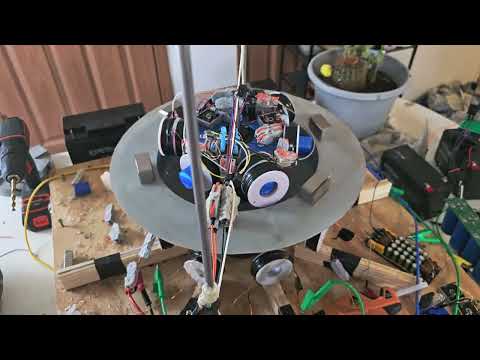 Long-form
Turbo Drive Concept for Counter Rotator
Putting a drive coil on a counter-rotator: 2.5V start, capacitor-fed LEDs, mutual inductance on the bench.
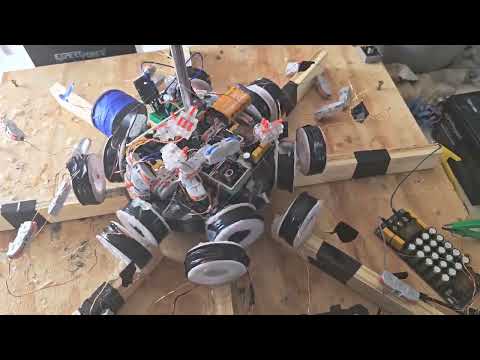 Long-form
Coil Passes in My Pulse Motor Sandbox (Magnet Induction Test)
6-magnet rotor vs 8 bifilar stator coils: coil passes from 400 Hz down to 100 Hz at 12–30 V, north/south fields, under 130 mA.
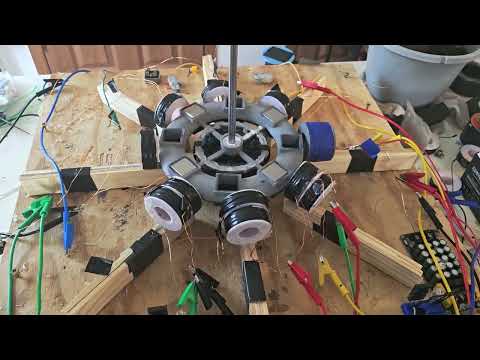 Long-form
2 circuits running a third room still for some growth/expansion.
Papa Bale here with a messy bench update.
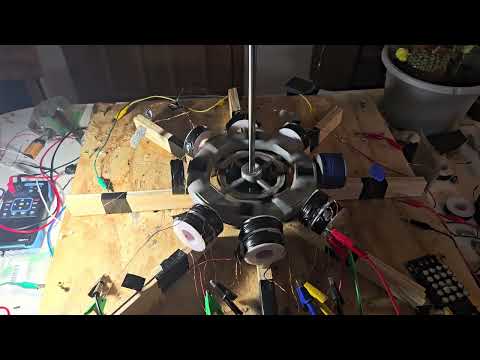 Long-form
M.P.H.'s pulse motor labs EP:2 Skin deep
I fire up two circuits at once, chase meter spikes, and retell the day a three magnet rotor one literally exploded at speed.
One path · free first
Watch free → subscribe → optional membership
Notes stay free. The full experiment lives on YouTube. Membership is optional when you want Discord and exclusives — not required to learn.
- 2
Subscribe free + turn on alerts
Hit Subscribe, then the 🔔 bell so you catch the next experiment.
Subscribe free + 🔔 - 3
Optional: join for $2.99/mo
Members-only videos, Discord, and live shoutouts — cancel anytime.
Join $2.99/mo
Longer sessions · ad-supported free library
Not done yet? Queue the next long-form run
Queue up the next long-form bench run on YouTube — longer sessions keep the workshop free for everyone.
- 1▶ Watch full on YouTube
Start: Shocking Truth About Pulse Motors
Notes & transcript on site - 2▶ Watch full on YouTube
M.P.H's pulse motor labs Ep:3 Sandbox
Notes & transcript on site - 3▶ Watch full on YouTube
4 parallel drive coils pulse motor generator 25x with 2.08v .7 amps in 55v 1 amp out
Notes & transcript on site - 4▶ Watch full on YouTube
Bifilar Pancake Coil Build for Pulse Motor Generator
Notes & transcript on site