Levitation·Transcript-backed
experimentos con imanes: Magnetic Levitation on a Pole – Exp
experimentos con imanes — Watch me tinker with magnetic levitation on a pole in the workshop. I got some pushing, pulling, and balancing going on with s…
Long-form · Full audio · Best on YouTube
Watch the complete video: experimentos con imanes: Magnetic Levitation on a Pole – Exp
Watch the full long-form video on YouTube — that's where the full bench audio, runtime, and experiments live.
Preview embed · full runtime is better on YouTube
Prefer the full player? Better audio, runtime, and next-video queue on YouTube.
▶ Open full on YouTubeSee it on the bench · full runtime on YouTube
What to watch for
- ▸Mixing magnet discs lets you test different push and pull combinations within the same setup
- ▸Tilting causes imbalance while some wobble can self-balance during magnetic levitation
- ▸Keeping the stack flat at the bottom gives the best stability for permanent magnet levitation
- ▸This is early headway on a simple pole-based levitation rig using only permanent magnets
Watch the full long-form video on YouTube — that's where the full bench audio, runtime, and experiments live.
Experiment notes (read while you watch)
Notes support the video — for the full-length run with complete bench audio, stay on YouTube.
In the workshop I spent a couple hours messing with magnets on a pole trying to get stable magnetic levitation. Got some push and pull action going, stacked up some discs, and learned that flat orientation beats wobble every time.
Key takeaways
- Mixing magnet discs lets you test different push and pull combinations within the same setup
- Tilting causes imbalance while some wobble can self-balance during magnetic levitation
- Keeping the stack flat at the bottom gives the best stability for permanent magnet levitation
- This is early headway on a simple pole-based levitation rig using only permanent magnets
I finally got some real headway on magnetic levitation using a simple pole and stacked discs. After a couple hours of tinkering I started seeing consistent push and pull forces that let the magnets float and balance.
Bench notes: Used a mix of magnet discs that I made up so I could swap polarities easily. The setup runs inside a basic paradigm so results stay easy to categorize. When the stack gets down low it likes to stay flat — any tilt throws it off fast.
Wobble happens but it often settles itself out. That's the difference between a little shake and a bad lean. I still need to give the full rundown on exactly which discs I used and the pole dimensions, but the raw footage shows the behavior pretty clearly.
If you're into hands-on experiments this one is pure workshop curiosity. No fancy electronics, just magnets fighting and finding balance on a pole. Come watch the push, the pull, and the moments it almost levitates clean.
Join as member — $2.99/mo — exclusive videos, Discord, live shoutouts
Related on this site
Related search intent (from Search Console)
People also reach this page for long-tail variants around experimentos con imanes. The notes stay on what the video actually shows — geometry, timing, and safe tuning — not keyword stuffing.
Related on this site
- Magnetic Levitation with Six Donut Magnets — Similar permanent magnet levitation experiment using donut magnets for comparison
- Donut Magnets — Outside Poles & Motion — Shows basic behavior of the same style donut magnets used in the pole stack
- Pulse Motor Rotor Design: Magnets, Materials and Balance — Discusses magnet balance and stacking which directly relates to keeping the levitation stack flat
---
*Generated from video transcript (hash `c407bc18cb70…`).*
Full transcript (835 chars · en)
so I've been messing around with this for a couple hours and I've gotten some Headway a little bit it's like some pushing and some pulling and going on so I had to mix it up a little bit and I got the discs all made up so that I can mix it up if I want to a little bit but within a paradigm so it's more easily uh categorized wow looks like I might be running out of space so I'm gonna have to use um you know YouTube or whatever how to move these to like a Google storage or something just look at that man it's I think it's doing what it's supposed to be doing seeing when you get down to this point it's best if it's like flat you're not wobbling or tilting a lot and wobbling's okay because it'll balance out but tilting is not good means there's an imbalance so that's a good test uh I'll give a rundown of this later on thank you
Keep watching · longer sessions
More long-form bench runs
Queue up the next long-form bench run on YouTube — longer sessions keep the workshop free for everyone.
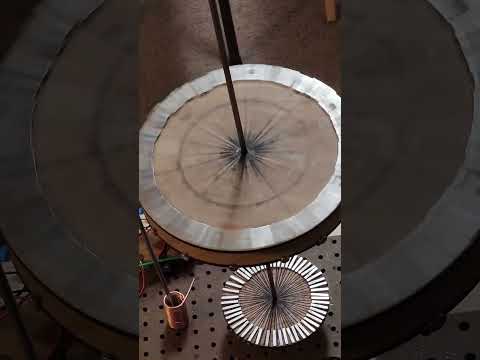 Long-form
7+ Minutes of Motion: Magnetic Disc Spinning With Just a Wrist Flick
A 3-disc levitation stack spins for 7 minutes 32 seconds from one wrist flick — and 30 minutes with a fan.
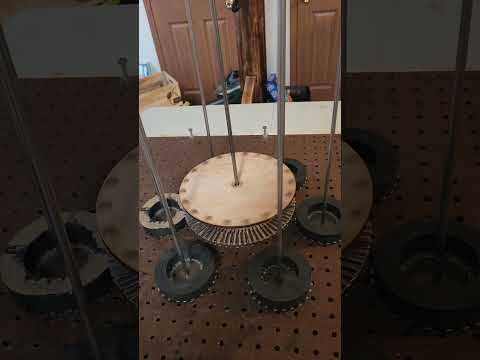 Long-form
Magnetic Levitation with Six Donut Magnets
Six donut magnets create unique levitation with 40+ second spins using push-pull magnetic forces.
 Long-form
2 circuits running a third room still for some growth/expansion.
Papa Bale here with a messy bench update.
 Long-form
M.P.H.'s pulse motor labs EP:2 Skin deep
I fire up two circuits at once, chase meter spikes, and retell the day a three magnet rotor one literally exploded at speed.
One path · free first
Watch free → subscribe → optional membership
Notes stay free. The full experiment lives on YouTube. Membership is optional when you want Discord and exclusives — not required to learn.
- 2
Subscribe free + turn on alerts
Hit Subscribe, then the 🔔 bell so you catch the next experiment.
Subscribe free + 🔔 - 3
Optional: join for $2.99/mo
Members-only videos, Discord, and live shoutouts — cancel anytime.
Join $2.99/mo
Longer sessions · ad-supported free library
Not done yet? Queue the next long-form run
Queue up the next long-form bench run on YouTube — longer sessions keep the workshop free for everyone.
- 1▶ Watch full on YouTube
Start: Shocking Truth About Pulse Motors
Notes & transcript on site - 2▶ Watch full on YouTube
M.P.H's pulse motor labs Ep:3 Sandbox
Notes & transcript on site - 3▶ Watch full on YouTube
4 parallel drive coils pulse motor generator 25x with 2.08v .7 amps in 55v 1 amp out
Notes & transcript on site - 4▶ Watch full on YouTube
Bifilar Pancake Coil Build for Pulse Motor Generator
Notes & transcript on site