Build·Transcript-backed
magnete bauen: experimentos con imanes fuerza magnética
magnete bauen — experimentos con imanes fuerza magnética — Watch me tinker with a hexagon magnetic sculpture using ring magnets and discs. It wobbles, s…
Long-form · Full audio · Best on YouTube
Watch the complete video: magnete bauen: experimentos con imanes fuerza magnética
Watch the full long-form video on YouTube — that's where the full bench audio, runtime, and experiments live.
Preview embed · full runtime is better on YouTube
Prefer the full player? Better audio, runtime, and next-video queue on YouTube.
▶ Open full on YouTubeJump to the discussion · full video on YouTube
Hear it on the bench
Each link opens “magnete bauen: experimentos con imanes fuerza magnética” on YouTube at the first time that topic comes up in the captions. Stay on YouTube for the complete runtime.
See it on the bench · full runtime on YouTube
What to watch for
- ▸Ring magnets can both lift and pull depending on orientation, creating dynamic movement in a sculpture
- ▸The setup wobbles and gets off-center easily because the two sandwiched discs have misaligned holes
- ▸Even with significant weight, magnetic energy keeps trying to find balance and motion
- ▸Simple pillow base allows the whole thing to move freely and demonstrate the forces
- ▸It looks cool even if it's not perfectly stable – pure DIY experimentation
Watch the full long-form video on YouTube — that's where the full bench audio, runtime, and experiments live.
Experiment notes (read while you watch)
Notes support the video — for the full-length run with complete bench audio, stay on YouTube.
Papa Bale shares a quick, curious build of a hexagon-shaped magnetic sculpture that moves and tries to stabilize itself using ring magnets pulling and lifting on a central disc. Resting on a pillow, it wobbles, makes noise, and spins when encouraged – a fun, messy demonstration of magnetic forces at play.
Key takeaways
- Ring magnets can both lift and pull depending on orientation, creating dynamic movement in a sculpture
- The setup wobbles and gets off-center easily because the two sandwiched discs have misaligned holes
- Even with significant weight, magnetic energy keeps trying to find balance and motion
- Simple pillow base allows the whole thing to move freely and demonstrate the forces
- It looks cool even if it's not perfectly stable – pure DIY experimentation
Short bench notes from the hexagon magnetic sculpture experiment: I used ring magnets arranged in a hexagon with a central disc setup where some rings lift while others pull. The whole thing sits on a pillow so it can wobble and spin. Magnetic energy in the central pole tries to stabilize the weight but it gets noisy and off-center because the two sandwiched discs don't line up perfectly. I gave the six-sided part a spin and it wanted to move while the other side was less cooperative. Not the best performer but definitely looks cool and shows real magnetic forces trying to balance.
Watch the full build and spin test on YouTube and join the workshop for more messy experiments.
From the spoken experiment
The following notes stay close to what was said in the video about experimentos con imanes fuerza magnética:
> okay um here's a little something that I tried out uh looks kind of more like a sculpture than uh anything else but it's it's pretty cool too it moves so let's give it a whirl now what you have here is these ring ones are lifting the way the disc is set up in these ones are pulling now there's a lot of weight here but I'm it's trying trying to stabilize see how it's wobbling making a bunch of noise and try to put some weight on it get more Force out of the force you know what I mean I don't know if I know what I mean so I mean look at that it's just resting on a pillow with magnetic energy in that pole in the middle let's spin the six because it looks like it wants to move the other one doesn't sound like it wants to move oh yeah sometimes they get off center because it's two DISH sandwiched together and the holes don't line up all the time so well I went back quite a few times all right…
Builder checklist
- Confirm trigger/sensor timing before chasing higher voltage
- Watch heat on coils and transistors during longer runs
- Record voltage and behavior at each change (one variable at a time)
Related on this site
Related on this site
- Magnetic Levitation with Six Donut Magnets — Similar donut/ring magnet balancing experiment
- 7+ Minutes of Motion: Magnetic Disc Spinning With Just a Wrist Flick — Shows extended magnetic disc motion similar to the sculpture spin
- Donut Magnets — Outside Poles & Motion — Directly related ring/donut magnet orientation and movement testing
---
*Generated from video transcript (hash `fb08bda9e430…`).*
Full transcript (968 chars · en)
okay um here's a little something that I tried out uh looks kind of more like a sculpture than uh anything else but it's it's pretty cool too it moves so let's give it a whirl now what you have here is these ring ones are lifting the way the disc is set up in these ones are pulling now there's a lot of weight here but I'm it's trying trying to stabilize see how it's wobbling making a bunch of noise and try to put some weight on it get more Force out of the force you know what I mean I don't know if I know what I mean so I mean look at that it's just resting on a pillow with magnetic energy in that pole in the middle let's spin the six because it looks like it wants to move the other one doesn't sound like it wants to move oh yeah sometimes they get off center because it's two DISH sandwiched together and the holes don't line up all the time so well I went back quite a few times all right well I mean it's not the best but it looks cool all right thank you
Keep watching · longer sessions
More long-form bench runs
Queue up the next long-form bench run on YouTube — longer sessions keep the workshop free for everyone.
 Long-form
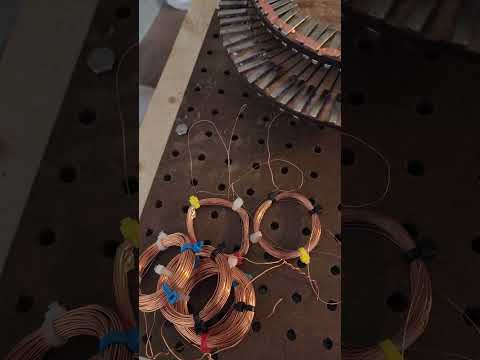
Building a Double Helix Magnetic Sculpture
Double helix design with 72 magnets in N-S stagger pattern — preparing the foundation for an ambitious magnetic sculpture build.
 Long-form
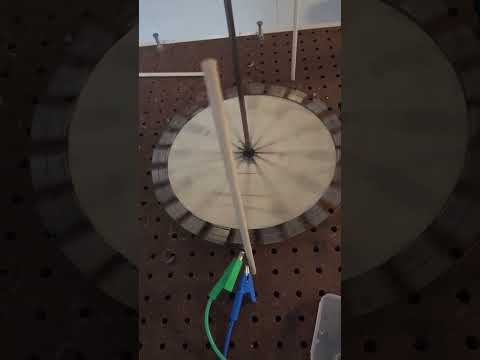
24-Node Magnet Array Pulse Motor — Single Solenoid Design
Reduced solenoid magnets down to ONE and bumped the rotor array to 24 magnets.
 Long-form
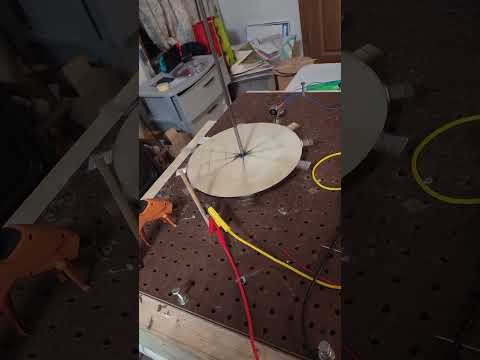
I Finally Got My Pulse Motor Running (Reed Switch)
Reed switch on a wood stick, 1-3-1 magnets, 15–24 V and tiny current.
 Long-form
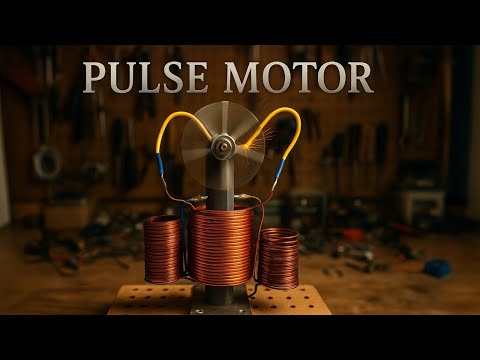
DIY Low Cost Pulse Motor Build with 16AWG Coil
Papa Bale proves you don't need expensive parts to get impressive results.
One path · free first
Watch free → subscribe → optional membership
Notes stay free. The full experiment lives on YouTube. Membership is optional when you want Discord and exclusives — not required to learn.
- 2
Subscribe free + turn on alerts
Hit Subscribe, then the 🔔 bell so you catch the next experiment.
Subscribe free + 🔔 - 3
Optional: join for $2.99/mo
Members-only videos, Discord, and live shoutouts — cancel anytime.
Join $2.99/mo
Longer sessions · ad-supported free library
Not done yet? Queue the next long-form run
Queue up the next long-form bench run on YouTube — longer sessions keep the workshop free for everyone.
- 1▶ Watch full on YouTube
Start: Shocking Truth About Pulse Motors
Notes & transcript on site - 2▶ Watch full on YouTube
M.P.H's pulse motor labs Ep:3 Sandbox
Notes & transcript on site - 3▶ Watch full on YouTube
4 parallel drive coils pulse motor generator 25x with 2.08v .7 amps in 55v 1 amp out
Notes & transcript on site - 4▶ Watch full on YouTube
Bifilar Pancake Coil Build for Pulse Motor Generator
Notes & transcript on site