Theory·Transcript-backed
new disc: Staggered Magnet Setup — NS-NS Pattern
Watch me test my new disc using a staggered magnet setup NS-NS pattern. See the smooth spin, stabilizer trick, future helix ideas, and what worked on th…
Long-form · Full audio · Best on YouTube
Watch the complete video: new disc: Staggered Magnet Setup — NS-NS Pattern
Watch the full long-form video on YouTube — that's where the full bench audio, runtime, and experiments live.
Preview embed · full runtime is better on YouTube
Prefer the full player? Better audio, runtime, and next-video queue on YouTube.
▶ Open full on YouTubeJump to the discussion · full video on YouTube
Hear it on the bench
Each link opens “new disc: Staggered Magnet Setup — NS-NS Pattern” on YouTube at the first time that topic comes up in the captions. Stay on YouTube for the complete runtime.
See it on the bench · full runtime on YouTube
What to watch for
- ▸Four equal magnets cause latching so a 6-inch stabilizer glued underneath reduces wobble on the new disc.
- ▸The staggered magnet setup NS-NS pattern delivered very smooth spin even with simple wrist-flick start.
- ▸Future plans include 72-magnet discs for 8-on-9-off or 9-on-8-off spacing to allow more pole interaction.
- ▸Double helix concept uses 3-magnet sections that climb upward in offset spirals on both sides.
- ▸Stabilization may need top pegboard but that loses modularity for stacked experiments.
Watch the full long-form video on YouTube — that's where the full bench audio, runtime, and experiments live.
Experiment notes (read while you watch)
Notes support the video — for the full-length run with complete bench audio, stay on YouTube.
Papa Bale spins up his new disc with a staggered north-south magnet layout on one side. Using a 6-inch stabilizer to fight latching, it runs surprisingly smooth. He shares ideas for future 6-3 patterns, 9-magnet spacing, and a double helix build.
Key takeaways
- Four equal magnets cause latching so a 6-inch stabilizer glued underneath reduces wobble on the new disc.
- The staggered magnet setup NS-NS pattern delivered very smooth spin even with simple wrist-flick start.
- Future plans include 72-magnet discs for 8-on-9-off or 9-on-8-off spacing to allow more pole interaction.
- Double helix concept uses 3-magnet sections that climb upward in offset spirals on both sides.
- Stabilization may need top pegboard but that loses modularity for stacked experiments.
Just started testing the new disc with staggered north and south magnets on one face. It's been spinning nicely for a while now with only minor wobble. I used a 6-inch stabilizer underneath to keep it from latching to the disc below.
The four equal pieces create strong latch points no matter the angle, so the stabilizer is key. Once I gave it a quick whip it smoothed right out — honestly smoother than I expected for this staggered magnet setup.
I'm already thinking about the next versions: six on, three off, or a full nine-magnet pattern using 72 magnets per 8-inch, 10-inch, and 6-inch discs. That spacing gives roughly 5 degrees per magnet but I'm curious what 6 degrees would feel like even if it costs 12 magnets. The extra gap might let south see the opposite pole better and open the door to a magnetic gear effect or helix-style pole-to-pole handoff all the way around.
The double helix idea is next. Sections of three magnets each will spiral upward with one helix starting here and the other offset so they climb together. By the top it should look like matching cross-sections on both sides. Stabilization is still an open question — maybe glue another pegboard on top but that kills the modular stacking I like.
Overall the new disc runs decent but the stabilizer has to stay on top in the final build so the drive can sit in the middle. Time to make more staggered discs and keep chasing the rabbit hole.
Related on this site
Related on this site
- Pulse Motor Rotor Design: Magnets, Materials and Balance — Directly supports discussion of magnet counts, spacing, and balance on the new disc
- 7+ Minutes of Motion: Magnetic Disc Spinning With Just a Wrist Flick — Similar wrist-flick start and smooth spin behavior shown in this staggered test
- Building a Double Helix Magnetic Sculpture — Follow-up to the exact double helix idea described for the next staggered builds
---
*Generated from video transcript (hash `8553bab50885…`).*
Full transcript (3,370 chars · en)
all right so I just started wobbling I don't know how long it's been spinning for but it's my new disc with the staggered north and south on one side we're just seeing how it goes it's been going pretty good so far now the thing with it being four equal pieces is that it's gonna latch no matter what you do so you gotta get a stabilizer in this instance I used a six inch stabilizer underneath and it has had very little wobble up until now yeah I'm getting gonna try doing more staggered uh permanent permanently staggered uh desks but yeah I'm gonna give it a quick whip here just to show you a little whip okay now the six inches and glued to the other discs so it slid around but that's okay I was just there to keep it from latching to the disc below it look at that that is so smooth that is very very smooth for it being a staggered uh magnet setup but I'm thinking about doing a six three on three off and then I'm thinking about doing uh a nine which you know each one of these eight inch discs and ten inch disc and six inch disc I try to put 72 magnets on them so I can stagger one of these discs with eight on nine off I think come up with nine or nine on eight off because nine times eight is what 72 I think yeah and it's it's five degrees but you know I've been experimenting in my mind with what what six degrees would look like and I you know you lose 12 magnets but you would gain the ability to maybe turn it into a magnetic gear because there's enough space now for that South to see the other Pole to see through a little bit more and then you could start you know going from pull to pole with the magnets all the way up around like an helix they got to be at least six inches though I'm gonna make a double helix you know things could get interesting I think that's what I'm going to do with this I'm going to make sections that spin going up but it's like they're gonna be one's going to start here and the other one is going to start here and then this one is going to go to here and this one I'm just gonna go to here and all the way around up and up and up that's going to be fun and this is still going it's not that great I mean it's a lot less than what I thought it was going to be because you can't put that in the middle and that's where I wanted it to go it's got to be on the top literally so I'm gonna stagger some more make it so it can go in the middle Okay so this this double helix is going to be three per section if you get what a section is this is the start of one section two three this is the end of a section and then one two three this is the end of that section and by that point it should be up to about here on both sides and then you can make a cross section and then the next level is going to look exactly the same as that one I mean if you're doing it the way it's supposed to be done should just look just like that now as per like stabilization I don't know you can stabilize these poles very well you probably put another piece of pegboard on the top Like Glue it down but then you know you lose your uh your your modular ability and thank you very much for listening have a great night peace out uh please subscribe for notifications I I'm doing this right now and I don't know it's every other day it goes somewhere a little bit farther down the rabbit hole and uh looking forward to seeing you there peace out
Keep watching · longer sessions
More long-form bench runs
Queue up the next long-form bench run on YouTube — longer sessions keep the workshop free for everyone.
 Long-form
Shocking Truth About Pulse Motors – What You've Been Missing!
Papa Bale cuts through misinformation to reveal core principles most hobbyists overlook: coil timing, back-EMF recovery, and fundamentals.
 Long-form
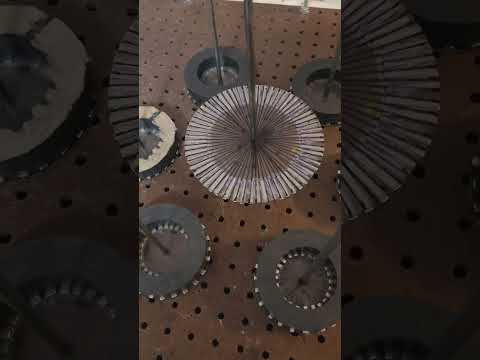
Understanding Magnetic Friction in Pulse Motors
Four friction sources explored with micro-voltage generation — levitation versus bearing performance.
 Long-form
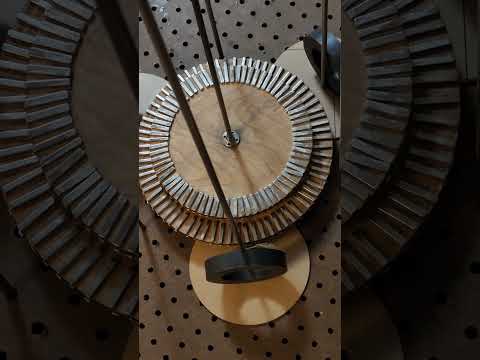
Levitation & Transportation — Trike Vision
A vision for magnetic levitation in transportation applications — exploring how pulse motors might power future vehicles.
 Long-form
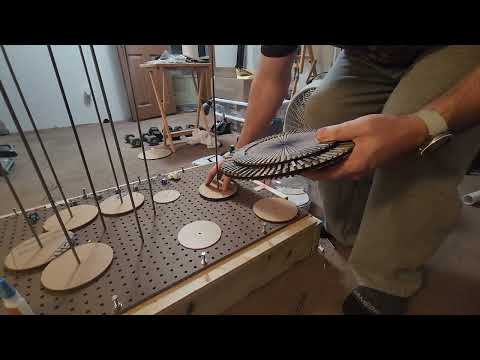
Stacked Magnet Disc — Polarity Explained
Deep dive into polarity with stacked magnet discs — how magnetic orientation affects performance.
One path · free first
Watch free → subscribe → optional membership
Notes stay free. The full experiment lives on YouTube. Membership is optional when you want Discord and exclusives — not required to learn.
- 2
Subscribe free + turn on alerts
Hit Subscribe, then the 🔔 bell so you catch the next experiment.
Subscribe free + 🔔 - 3
Optional: join for $2.99/mo
Members-only videos, Discord, and live shoutouts — cancel anytime.
Join $2.99/mo
Longer sessions · ad-supported free library
Not done yet? Queue the next long-form run
Queue up the next long-form bench run on YouTube — longer sessions keep the workshop free for everyone.
- 1▶ Watch full on YouTube
Start: Shocking Truth About Pulse Motors
Notes & transcript on site - 2▶ Watch full on YouTube
M.P.H's pulse motor labs Ep:3 Sandbox
Notes & transcript on site - 3▶ Watch full on YouTube
4 parallel drive coils pulse motor generator 25x with 2.08v .7 amps in 55v 1 amp out
Notes & transcript on site - 4▶ Watch full on YouTube
Bifilar Pancake Coil Build for Pulse Motor Generator
Notes & transcript on site