Theory·Transcript-backed
magnetic moment of a disc: Stacked Magnet Disc — Polarity E
magnetic moment of a disc — Watch me break down stacked magnet disc polarity with real acrylic discs, poles, and levitation tests. Learn why less is mor…
Long-form · Full audio · Best on YouTube
Watch the complete video: magnetic moment of a disc: Stacked Magnet Disc — Polarity E
Watch the full long-form video on YouTube — that's where the full bench audio, runtime, and experiments live.
Preview embed · full runtime is better on YouTube
Prefer the full player? Better audio, runtime, and next-video queue on YouTube.
▶ Open full on YouTubeJump to the discussion · full video on YouTube
Hear it on the bench
Each link opens “magnetic moment of a disc: Stacked Magnet Disc — Polarity E” on YouTube at the first time that topic comes up in the captions. Stay on YouTube for the complete runtime.
See it on the bench · full runtime on YouTube
What to watch for
- ▸Discs levitate or suck in depending on polarity flip — same poles repel hard enough to push thumbs apart
- ▸Less is more with stacking: staggered heights (stacks of 2 vs 3) create uneven force that eventually stops spin
- ▸The magnet stick feeling is strong even without overlapping magnets; magnet hill effect appears in the Christmas-tree stacking attempt
- ▸Neodymium donut-style magnets on acrylic discs; copper tape on the 8-inch for voltage pickup up to 12.1V
- ▸Eight minutes and 34 seconds of levitating spin achieved with balanced 8-on-8 setup before bumps kill momentum
- ▸Weight on top (like a 20 lb backpack) factors into effective runtime and strength
Watch the full long-form video on YouTube — that's where the full bench audio, runtime, and experiments live.
Experiment notes (read while you watch)
Notes support the video — for the full-length run with complete bench audio, stay on YouTube.
Papa Bale shows how stacked magnet discs on a central pole actually behave. Acrylic discs grip the magnets, polarity creates levitation or stick, and the whole setup runs longer when you keep it simple. Real bench tests with 4-inch to 10-inch discs, staggered stacks, and weight calculations.
Key takeaways
- Discs levitate or suck in depending on polarity flip — same poles repel hard enough to push thumbs apart
- Less is more with stacking: staggered heights (stacks of 2 vs 3) create uneven force that eventually stops spin
- The magnet stick feeling is strong even without overlapping magnets; magnet hill effect appears in the Christmas-tree stacking attempt
- Neodymium donut-style magnets on acrylic discs; copper tape on the 8-inch for voltage pickup up to 12.1V
- Eight minutes and 34 seconds of levitating spin achieved with balanced 8-on-8 setup before bumps kill momentum
- Weight on top (like a 20 lb backpack) factors into effective runtime and strength
Short bench session breaking down stacked magnet disc polarity on the central pole. Real acrylic discs from 4" to 10", neodymium magnets, and honest feel tests. Levitation works, but the law of diminishing force shows up fast. Less really is more.
From the spoken experiment
The following notes stay close to what was said in the video about magnetic moment of a disc:
> okay um I just wanted to give a little run down here on how these discs actually work and where I'll start by um well I want to get two four inch discs I just love how the acrylic kind of grips the pole I don't really love it all right so here's a four incher from side to side here that's four inches as for one side of it and then this all was just a model in the middle here I got to get a lot more magnets to do that maybe even but I was thinking a different configuration but the configuration works very well all right now this is made up of components you got the disc of various sizes and you got the pole in the middle and that's pretty much it but this is how this works you got two discs well it's just start breaking this down just a little bit see we got another eight incher under there which allowed this to work in numerous different ways I mean it's pretty awesome all right now that…
Builder checklist
- Confirm trigger/sensor timing before chasing higher voltage
- Watch heat on coils and transistors during longer runs
- Record voltage and behavior at each change (one variable at a time)
Related on this site
Related on this site
- Pulse Motor Rotor Design: Magnets, Materials and Balance — Connects directly to the magnet stacking and balance lessons shown in the video
- Magnetic Levitation on a Pole – Experiment 1 — Companion experiment using similar donut magnets and central pole levitation
- 7+ Minutes of Motion: Magnetic Disc Spinning — Shows the long runtime possible with balanced polarity and minimal stacking
---
*Generated from video transcript (hash `5b3174418a56…`).*
Full transcript (9,996 chars · en)
okay um I just wanted to give a little run down here on how these discs actually work and where I'll start by um well I want to get two four inch discs I just love how the acrylic kind of grips the pole I don't really love it all right so here's a four incher from side to side here that's four inches as for one side of it and then this all was just a model in the middle here I got to get a lot more magnets to do that maybe even but I was thinking a different configuration but the configuration works very well all right now this is made up of components you got the disc of various sizes and you got the pole in the middle and that's pretty much it but this is how this works you got two discs well it's just start breaking this down just a little bit see we got another eight incher under there which allowed this to work in numerous different ways I mean it's pretty awesome all right now that I got two that basically go together see how this one fits like right in that hole pretty much I mean if it was perfect it would fit right in there without a an issue and you can see that it levitates in the middle so if you flip it over it sucks right into the hole like that so these magnets are not for the most part except for you know right here where I glued it in too close these magnets are not overlapping in anywhere and yet they're either they're either feeling the same amount of force as if they were are even greater force so you know that's totally pushing against my thumbs it's awesome [Music] all right so we're gonna do it like that then we're going to get an eight inch now for the most part the six inch and the four inch fit inside the eight inch except for maybe a few spots like the same thing right here it doesn't go all the way in because I screwed up with the glue all right then the 10 inch disc and that works pretty damn good too boom and you start working the other side flip it over uh that one had some stacked magnets on it so it's sticking up a little bit but you can basically get the picture hmm and Bam same thing boom now I wonder if this can fit on the pole that would be awesome if it's lined up enough to do that foreign it doesn't look like it's going to fit on there in one piece but I bet I could put it on there time just gotta think about it for a second no see that's levitating foreign that was in there pretty good foreign together but they're all gotta get these extra well it's not going to spin geez it's stuck to the ground it's not levitating so it won't I mean it can spin but not for real foreign you can feel it you can see it that law of physics that says that you're going to lose a certain amount of that original Force every cycle whatever that cycle is it's not going to be as strong as when it comes back around you need to re and energy sometime at some point or it's going to stop not I I've been going with this and I find out that less is definitely more when it comes to this stick type of thing I'm just going to put all this on there once now it's equal on both sides foreign now we're gonna [Music] no no huh yes it's just a thing man I just I just know hmm I'm going to put this all together and I'm gonna look at it for a second I don't know about this one though oh that's wrong magnets are a sticky business hmm I wonder let's just go on here like this I should probably Mark these nope that's not right what's on there like this which is convenient and they're not going to get any magnificent numbers out of that but that was that's the original plan on what it was supposed to be it's like a Christmas tree uh here's the two got the two I don't know if I've flown on that it does nice so let's give the six a whirl I mean the 10 in here this this baby right here now it's got staggered magnets on the side that's on the top and it's like there's six and there's six thousand or six and there's six without six all the way around and it fits perfectly 72 that I got on so you know it doesn't go for as long but I'm factoring in the amount of weight on top of it and the amount of weight on it and when you factor those things in it goes like probably a little bit farther not an actual distance but in factoring everything in distance I guess you could call it it's like building muscle mass you walk down a trail and but then the next day you walk down that same trail with a backpack on it weighs about 20 pounds no that 20 pounds is gonna add into the calculation sure what's the calculation uh strength building it's been the eight six three four ten [Music] keep hitting that four with like a part of my finger or the thumb and it stops like immediately you can see that copper tape around the eight inch disc if you're wondering what that was it works too I can conduct voltage means I mean if it gets too high I guess it'll burn up but can handle 12 12.1 with no problems but I think it's designed to handle like greeting cards and stuff like that see but what I've what I've been practicing if you can really call it that is having the 10 inch disc levitate on the discs below it and then have the eight inch of the opposite side uh on resting on one of these uh lifting the 10 inch up but not close enough to actually suck it in into one another just enough to lift it so it's a little bit more weightless than just levitating because levitating the way this is is that this disc's weight is resting on it and the setup that I just talked about would alleviate some of that weight uh I did eight minutes and 34 seconds I don't have a video of that but it was an eight inch disc magnet on magnet so eight on eight I could show that to you but you know probably another video for that and it's pretty you know there's lots of power there are 72 magnets on the 8 inches as well but yeah um any bump you put in the road will eventually be felt by this system um so if you stagger your magnets and you have stacks of two and then you have either stacks of three or no stack it is eventually it's going to feel that it's going to be see what I try and do is I try and make it like a wave that goes all the way around up and down so it goes gradually up to a third one then it plateaus and then it goes down back to the see like right here there's two magnets there and right here there's only one and then one the one magnet like the one is glued on there I never really count that one that's zero that's Ground Zero it's that magnet isn't going anywhere so it doesn't matter and so there's six magnets uh stacked up right here and then there's a gap of six nothing and then there's six more and then a gap of six and a six four and when you do that you're spinning eventually it's going to start rocking or bouncing jumping see what I want to do I want to get that wave effect on any more magnets though because I built I've started building this sculpture in the middle and I used all of them except for what's sitting right there on that acrylic and then have the wave effect on the bottom of this eight inch disc and remember they're not touching each other so it's just going to be Force these two forces are going to collide and really all it is is more Force right here less Force right here it's simulating motion if if you can fathom that but just like in a swimming pool when you push off the wall with your feet eventually you're going to stop even if you swim you know even if you swim or eventually you're going to surface you know eventually it's going to be back to depending on what you're doing either motionlessness or the surface I'm going to say by motionlessness is you pop up out of the water and you're standing you can stand on the pool you're standing right there you're done but you know each to his own that would be really cool and then when the more force and the more Force collide it'll jolt everything up I want to see that entire freaking tree jump for joy can we do it can we make that tree jump for joy what are we going to do to make that happen see how many magnets we have we gotta divide it by six whatever we have foreign so we're going to take one out of each of these stacks and there's stacks for see it all loosen up when I take this stuff off one at a time and watch it look at that that's big okay all right so how much is going to be in between them how much of it is going to be off the rest is on so four and two eight so count eight one two three four five five seven eight I may need a bigger bump than just one magnet it might need a two stack to make this work two and if it doesn't work with the 10 inch I'll make another video and I'll come back I'll do eight on eight and have the six and the four and the two on top of the other eight I'm gonna make all that jump to eight on eight you can't mess up with that that's magnet on magnet and it's it's gonna feel it whether it wants to or not almost done lining these up two four what are you worried about huh all right see it's staggered well you might not be able to see it but four and an eight four eight four eight four eight works out perfect for this disc I just hope it's not oh go see it's starting to bounce a little bit if it's spinning like a devil too wow that gave me an idea please just watching that happens pretty cool it's actually starting to pick up speed what I'm wondering is it the magnets on the bottom of the eight are going to end up touching the wood to all this other extra weight on it all right this is the last thing we're going to look at for right now and it might not it might be just something open a whole another can of worms instead of being what I thought it was going to be okay there's not enough weight on it for you to uh bounce like I wanted to and it doesn't have to spin for a long time it just has to have enough momentum to push itself over a hill but it looks like they latched so maybe it has to be a little less even you know I can do that yeah they latched together and they were moving at the same pace awesome well do eight on eight next thank you bye now
Keep watching · longer sessions
More long-form bench runs
Queue up the next long-form bench run on YouTube — longer sessions keep the workshop free for everyone.
 Long-form
Shocking Truth About Pulse Motors – What You've Been Missing!
Papa Bale cuts through misinformation to reveal core principles most hobbyists overlook: coil timing, back-EMF recovery, and fundamentals.
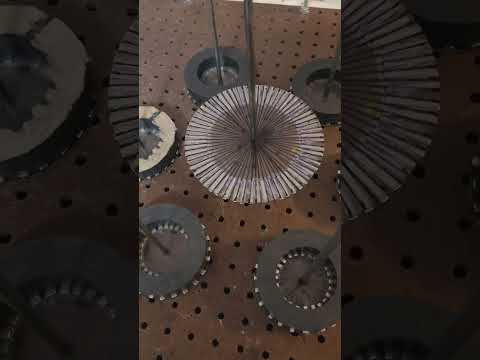 Long-form
Understanding Magnetic Friction in Pulse Motors
Four friction sources explored with micro-voltage generation — levitation versus bearing performance.
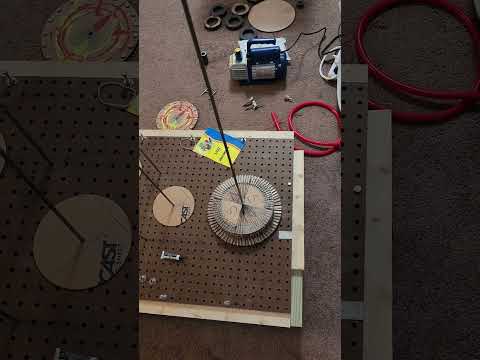 Long-form
Staggered Magnet Setup — NS-NS Pattern
Testing a staggered NS-NS magnet configuration — how alternating pole arrangements affect rotor behavior.
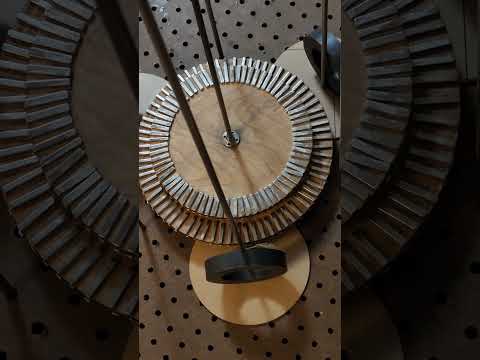 Long-form
Levitation & Transportation — Trike Vision
A vision for magnetic levitation in transportation applications — exploring how pulse motors might power future vehicles.
One path · free first
Watch free → subscribe → optional membership
Notes stay free. The full experiment lives on YouTube. Membership is optional when you want Discord and exclusives — not required to learn.
- 2
Subscribe free + turn on alerts
Hit Subscribe, then the 🔔 bell so you catch the next experiment.
Subscribe free + 🔔 - 3
Optional: join for $2.99/mo
Members-only videos, Discord, and live shoutouts — cancel anytime.
Join $2.99/mo
Longer sessions · ad-supported free library
Not done yet? Queue the next long-form run
Queue up the next long-form bench run on YouTube — longer sessions keep the workshop free for everyone.
- 1▶ Watch full on YouTube
Start: Shocking Truth About Pulse Motors
Notes & transcript on site - 2▶ Watch full on YouTube
M.P.H's pulse motor labs Ep:3 Sandbox
Notes & transcript on site - 3▶ Watch full on YouTube
4 parallel drive coils pulse motor generator 25x with 2.08v .7 amps in 55v 1 amp out
Notes & transcript on site - 4▶ Watch full on YouTube
Bifilar Pancake Coil Build for Pulse Motor Generator
Notes & transcript on site