Theory·Transcript-backed
magnetic pulleys: Magnets Cause Friction – Full Version
Watch magnetic levitation diy in action as I test magnet magnetic motion on a central pole. See coil def results, friction sources, and why less contact…
Long-form · Full audio · Best on YouTube
Watch the complete video: magnetic pulleys: Magnets Cause Friction – Full Version
Watch the full long-form video on YouTube — that's where the full bench audio, runtime, and experiments live.
Preview embed · full runtime is better on YouTube
Prefer the full player? Better audio, runtime, and next-video queue on YouTube.
▶ Open full on YouTubeJump to the discussion · full video on YouTube
Hear it on the bench
Each link opens “magnetic pulleys: Magnets Cause Friction – Full Version” on YouTube at the first time that topic comes up in the captions. Stay on YouTube for the complete runtime.
- ▶ Watch at 1:11music magnet magneticprimary
“…[Music] magnet magnetic…”
- ▶ Watch at 1:13magnet magnetic motionlong-tail
“…magnet magnetic motion…”
- ▶ Watch at 0:12magnet disclong-tail
“…this is the thing you see this this disc underneath the magnet is keeping it…”
- ▶ Watch at 0:58disc spinlong-tail
“…discs on top so let's give it a little spin…”
- ▶ Watch at 1:01spin magnetlong-tail
“…so let's give it a little spin foreign [Music] magnet magnetic…”
- ▶ Watch at 3:13flick magnetlong-tail
“…if you flick it really hard it's gonna flop around um the outer pulse these poles right here they're magnetic as well…”
- ▶ Watch at 1:13magnet levitationlong-tail
“…magnet magnetic motion say levitation is going to definitely…”
- ▶ Watch at 4:35magnet polelong-tail
“…magnets are centered on the pole so…”
See it on the bench · full runtime on YouTube
What to watch for
- ▸The plastic disc keeps the stack centered on the pole so it doesn't flop sideways.
- ▸Levitation creates noticeable space that cuts friction and lets the disc spin longer from one nudge.
- ▸Each passing magnet near the outer coils and donut magnets adds a bit of magnetic drag.
- ▸Coils linked with a 2.7 V capacitor produced a tiny bit of micro voltage even without strong drive.
- ▸Wobble, pole contact, and outer magnetic fields are the main friction makers in this build.
Watch the full long-form video on YouTube — that's where the full bench audio, runtime, and experiments live.
Experiment notes (read while you watch)
Notes support the video — for the full-length run with complete bench audio, stay on YouTube.
Papa Bale spins a levitating magnet disc on a pole to show real magnetic friction in a simple setup. One light nudge gives eight full rotations thanks to the weightlessness effect. He points out every friction source and hooks up coils to a capacitor for micro-voltage readings.
Key takeaways
- The plastic disc keeps the stack centered on the pole so it doesn't flop sideways.
- Levitation creates noticeable space that cuts friction and lets the disc spin longer from one nudge.
- Each passing magnet near the outer coils and donut magnets adds a bit of magnetic drag.
- Coils linked with a 2.7 V capacitor produced a tiny bit of micro voltage even without strong drive.
- Wobble, pole contact, and outer magnetic fields are the main friction makers in this build.
In this full version I mess around with a floating magnet stack and talk through exactly where the drag comes from. Bearings would help, but even without them the levitation effect is obvious. One wrist flick and it keeps going way longer than you'd expect on a normal surface.
From the spoken experiment
The following notes stay close to what was said in the video about magnetic pulleys:
> uh what's up everybody uh I'm just making a short video here to show you the power of these magazine this is the thing you see this this disc underneath the magnet is keeping it centered around the pole otherwise it would be all lopsided and stuff so you need one of those you need something to Keep It Center without you holding it there you know um but I mean look at how much space there and it's bouncy which means there's a lot of space there for weight to be applied but not not too much weight I mean you can put maybe another one of these discs on top so let's give it a little spin foreign [Music] magnet magnetic motion say levitation is going to definitely probably be um one of the easiest ones you can do maybe one of the best ones you can do too I gotta get some bearings in these discs to find that out but um yeah it should be really interesting well thank you I mean that just went a…
Builder checklist
- Confirm trigger/sensor timing before chasing higher voltage
- Watch heat on coils and transistors during longer runs
- Record voltage and behavior at each change (one variable at a time)
Related on this site
Related search intent (from Search Console)
People also reach this page for long-tail variants around magnetic pulleys. The notes stay on what the video actually shows — geometry, timing, and safe tuning — not keyword stuffing.
Related on this site
- 7+ Minutes of Motion: Magnetic Disc Spinning With Just a Wrist Flick — Similar long spin from light nudge using magnetic levitation
- Levitation & Electricity — Coil Demonstration — Shows coil output during levitation similar to the capacitor test here
- Pulse Motor Rotor Design: Magnets, Materials and Balance — Covers balancing and centering magnets on a pole like the disc used
- Magnetic Levitation with Six Donut Magnets — Directly related donut magnet levitation experiment
---
*Generated from video transcript (hash `7dc0f1c6e9a9…`).*
Full transcript (2,525 chars · en)
uh what's up everybody uh I'm just making a short video here to show you the power of these magazine this is the thing you see this this disc underneath the magnet is keeping it centered around the pole otherwise it would be all lopsided and stuff so you need one of those you need something to Keep It Center without you holding it there you know um but I mean look at how much space there and it's bouncy which means there's a lot of space there for weight to be applied but not not too much weight I mean you can put maybe another one of these discs on top so let's give it a little spin foreign [Music] magnet magnetic motion say levitation is going to definitely probably be um one of the easiest ones you can do maybe one of the best ones you can do too I gotta get some bearings in these discs to find that out but um yeah it should be really interesting well thank you I mean that just went around like eight times and I and I mean it's not going very fast because I didn't do it there's wasn't a lot of thrust but that little nudge I mean that was even if you think I'm like got some secret Chi or something that I can use to like just move it like that and have it go you know forever I don't okay and literally just the weightlessness effect of levitation um allows for this to happen because there's a lot less friction let's talk about friction just for a second here what in this setup right here is causing friction you got the pole in the center you got friction on the pole you got space in between the big Donuts down there each time one of these little magnets passes into one of those spaces you get a little bit of friction uh not having a bearing wobbling and that's also going to cause friction and then you know if you flick it really hard it's gonna flop around um the outer pulse these poles right here they're magnetic as well almost knocked something over just these coils right here I got them linked together with a capacitor and hooked up to a multimeter and I was just testing it out and it appears that you get like very small amount of micro voltage just for having the capacitor hooked up that's awesome it's only a two it's a 2.7 volt capacitor trying not to say capacitor because it's a capacitor as in a cap acity yes and that's it thank you very much um I just think it's so awesome that there's that much space between anything holding this thing up and the thing itself that is and that's all the way around because all these magnets are centered on the pole so that's great thank you
Keep watching · longer sessions
More long-form bench runs
Queue up the next long-form bench run on YouTube — longer sessions keep the workshop free for everyone.
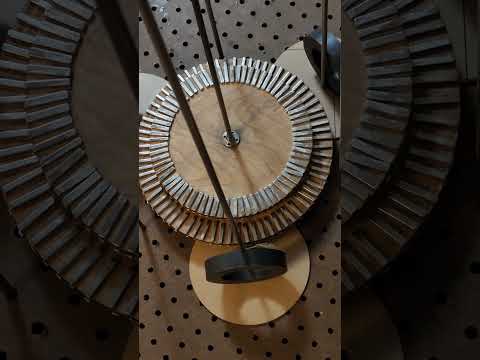 Long-form
Levitation & Transportation — Trike Vision
A vision for magnetic levitation in transportation applications — exploring how pulse motors might power future vehicles.
 Long-form
Shocking Truth About Pulse Motors – What You've Been Missing!
Papa Bale cuts through misinformation to reveal core principles most hobbyists overlook: coil timing, back-EMF recovery, and fundamentals.
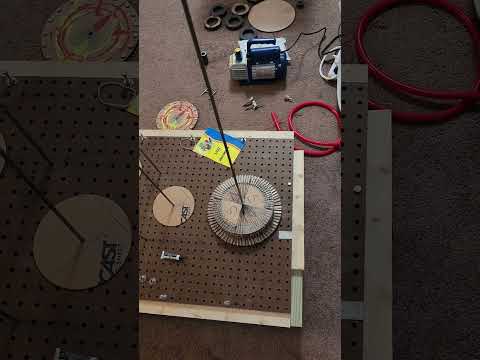 Long-form
Staggered Magnet Setup — NS-NS Pattern
Testing a staggered NS-NS magnet configuration — how alternating pole arrangements affect rotor behavior.
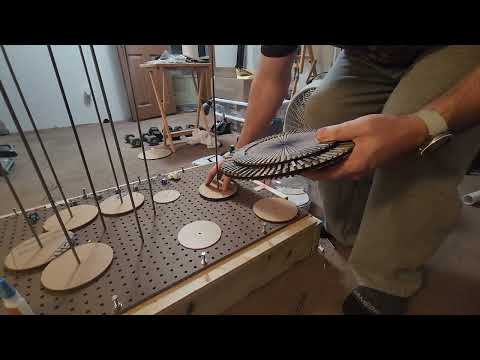 Long-form
Stacked Magnet Disc — Polarity Explained
Deep dive into polarity with stacked magnet discs — how magnetic orientation affects performance.
One path · free first
Watch free → subscribe → optional membership
Notes stay free. The full experiment lives on YouTube. Membership is optional when you want Discord and exclusives — not required to learn.
- 2
Subscribe free + turn on alerts
Hit Subscribe, then the 🔔 bell so you catch the next experiment.
Subscribe free + 🔔 - 3
Optional: join for $2.99/mo
Members-only videos, Discord, and live shoutouts — cancel anytime.
Join $2.99/mo
Longer sessions · ad-supported free library
Not done yet? Queue the next long-form run
Queue up the next long-form bench run on YouTube — longer sessions keep the workshop free for everyone.
- 1▶ Watch full on YouTube
Start: Shocking Truth About Pulse Motors
Notes & transcript on site - 2▶ Watch full on YouTube
M.P.H's pulse motor labs Ep:3 Sandbox
Notes & transcript on site - 3▶ Watch full on YouTube
4 parallel drive coils pulse motor generator 25x with 2.08v .7 amps in 55v 1 amp out
Notes & transcript on site - 4▶ Watch full on YouTube
Bifilar Pancake Coil Build for Pulse Motor Generator
Notes & transcript on site