Optimization·Transcript-backed
magnetic field equation for solenoid: Less Is More — Clockw
Testing clockwise vs counterclockwise on a simple magnetic wheel. We explore the magnetic field equation for solenoid using real bench spins, less-is-mo…
Long-form · Full audio · Best on YouTube
Watch the complete video: magnetic field equation for solenoid: Less Is More — Clockw
Watch the full long-form video on YouTube — that's where the full bench audio, runtime, and experiments live.
Preview embed · full runtime is better on YouTube
Prefer the full player? Better audio, runtime, and next-video queue on YouTube.
▶ Open full on YouTubeJump to the discussion · full video on YouTube
Hear it on the bench
Each link opens “magnetic field equation for solenoid: Less Is More — Clockw” on YouTube at the first time that topic comes up in the captions. Stay on YouTube for the complete runtime.
- ▶ Watch at 1:04magnet passes throughprimary
“…when a magnet passes through…”
- ▶ Watch at 1:40flicking quarter magnetlong-tail
“…you're flicking a quarter a magnet and have a land down there and…”
- ▶ Watch at 3:51outer magnet setlong-tail
“…because of the way I have the outer magnet set up…”
- ▶ Watch at 16:56know coil gunlong-tail
“…can shoot it out of a gun for you know coil gun whatever whatever…”
See it on the bench · full runtime on YouTube
What to watch for
- ▸Clockwise and counterclockwise runs performed about the same when spun gently
- ▸Outer poles pull constantly; past center the force switches from suck to push or push to suck depending on direction
- ▸Adding more magnets increases both weight and magnetic drag — naked disc spun nearly 10 minutes on one wrist flick
- ▸Even number of magnets helps zero-out effects at slow speeds; odd numbers can latch suddenly to the poles
- ▸All motion here is from wrist flick only — no batteries, no coils, pure mechanical magnetic interaction
Watch the full long-form video on YouTube — that's where the full bench audio, runtime, and experiments live.
Experiment notes (read while you watch)
Notes support the video — for the full-length run with complete bench audio, stay on YouTube.
Papa Bale spins a magnet wheel by hand to compare clockwise and counterclockwise motion. With randomly placed round magnets and fixed outer poles acting like permanent electromagnets, the bench test shows both directions behave about the same once past the initial hump. Less really is more — extra magnets add weight and drag that slow everything down fast.
Key takeaways
- Clockwise and counterclockwise runs performed about the same when spun gently
- Outer poles pull constantly; past center the force switches from suck to push or push to suck depending on direction
- Adding more magnets increases both weight and magnetic drag — naked disc spun nearly 10 minutes on one wrist flick
- Even number of magnets helps zero-out effects at slow speeds; odd numbers can latch suddenly to the poles
- All motion here is from wrist flick only — no batteries, no coils, pure mechanical magnetic interaction
Short bench session testing direction on a balanced magnet wheel. I wanted to see if clockwise or counterclockwise worked better with the outer poles I had set up. Turns out they were pretty close, and the big takeaway was that every extra magnet you add just gives you more stuff to fight against.
Bench notes: Used a naked disc on a pole for the baseline — it spun almost 10 minutes from one flick. Added random round magnets on the wheel plus two big stabilizing ones and two silver pushers. Outer poles act like permanent electromagnets because they always pull toward the nearest face. Even numbers of wheel magnets help cancel effects at slow speeds; a seventh magnet made it latch suddenly when it got slow.
From the spoken experiment
The following notes stay close to what was said in the video about magnetic field equation for solenoid:
> okay so we're gonna do kind of just uh do-it-yourself figure it out uh which weighs best clockwise or counterclockwise um it may look like a pattern but those are all randomly placed on the on the Wheel the round magnets on the wheel there I kind of tried to balance it a little bit but I don't even think it needed it because on the outside we got these two big ones uh across from each other are pulling so they're stabilizing everything and then these two silver ones uh are pushing on it so when a magnet passes through the silver one it will push it on when it gets beyond the halfway mark and push it down there's a little space in the Middle where the opposite you know force is present so it'll all these magnets on all the magnets will slow this down um unless you know there's some mystical magical but there's there isn't I mean you you flick you know with your thumb like you're flicking…
Builder checklist
- Confirm trigger/sensor timing before chasing higher voltage
- Watch heat on coils and transistors during longer runs
- Record voltage and behavior at each change (one variable at a time)
Related on this site
Related on this site
- 7+ Minutes of Motion: Magnetic Disc Spinning With Just a Wrist Flick — Directly referenced naked-disc baseline spin time from one wrist flick
- Understanding Magnetic Friction in Pulse Motors — Complements the drag and latching behavior observed when adding magnets
- Pulse Motor Rotor Design: Magnets, Materials and Balance — Discusses even/odd magnet count and balance — exactly what we wrestled with on the bench
- Donut Magnets — Outside Poles & Motion — Similar outer-pole and wheel-magnet interaction shown in related experiment
---
*Generated from video transcript (hash `dfc70da0af67…`).*
Full transcript (9,045 chars · en)
okay so we're gonna do kind of just uh do-it-yourself figure it out uh which weighs best clockwise or counterclockwise um it may look like a pattern but those are all randomly placed on the on the Wheel the round magnets on the wheel there I kind of tried to balance it a little bit but I don't even think it needed it because on the outside we got these two big ones uh across from each other are pulling so they're stabilizing everything and then these two silver ones uh are pushing on it so when a magnet passes through the silver one it will push it on when it gets beyond the halfway mark and push it down there's a little space in the Middle where the opposite you know force is present so it'll all these magnets on all the magnets will slow this down um unless you know there's some mystical magical but there's there isn't I mean you you flick you know with your thumb like you're flicking a quarter a magnet and have a land down there and it'd be perfect and everything works that would be great but you know you can flick as many magnets as you want but the more you put on there the more forced there is to deal with the more weight there is to deal with the slower and more bogged down everything gets so that that's where less is more fits in here you know when it was just the naked disc on top of another disc and a pole going through the middle and you wet the top disc and it goes for like almost 10 minutes not actually for like a spin constant motion with no bearings and gravitation I don't know if that's good but you know I I heard that like some unbalanced stuff uh this is also like it has no like uh charge going through it except my wrist there's no batteries or anything hooked up to this tank so it's that's not part of the equation you know what I'm saying so here let's give it a whirl clockwise we'll just do it enough to get over the hump and then this thing will start working or not working clockwise see but I I think it's gonna because this is I don't know I'll explain it this is going to be the weaker one because of the way I have the outer magnet set up like say we start here at this pole okay so we go from the magnet goes from here to here where it's pushed to here where it's sucked slowed down okay so it's going to slow down faster and see I mean look look at this thing go and I just like could blow on this thing and we could spin five times man I swear but if I constantly grow on it this thing will never stop spinning and I tried that the other day with this fan I have over here and literally it it spun until I turn the fan off all right that looks like it's gonna be it for uh clockwise now we're going to do the counterclockwise and I'm gonna even spin it more gently I wanna I'm on these gaps here this one right here see now when we start the same pole and we go counterclockwise it goes to suck so it sucks it in the momentum you use my engine to get past that and then it goes to a push and it'll push it and that suck and it was kind of a you know Synergy going on there but I don't know if I can get an accurate you know what works better doing this this way because both you know finger flicks were different but you can kind of see how it's working like that when it gets real slow but I'd say they're about the same actually yeah about the same now since these poles are magnetic for they act as like an electromagnet because they are always pulling towards the pole doesn't matter what side I put on it so we're going to use the poles we're going to do the same thing foreign use my left hand see unless there's a proper configuration the bigger magnets just get in the way thinking maybe if I use smaller magnets but have you have you done all this you know I've done this I think I think the polls are pretty good because there's not too much you know it's barely any and it's it's all pulling so and with the momentum as the magnet passes it'll help get to that point and then I'm going to pass this to Center it'll hinder because it will still be sucking you know so like we pick a magnet on the Wheel it moves up to a pole and then when it passes the center of the pole it gets and that's why you have more than one on there because when another coal could be you know negating or zeroing out that effect that's why I like even numbers with this because you know I don't just zero out then it's just spinning and that's that's cool too but you put a seventh one on there then there's there's no zero out because it's not going to zero out and I don't know maybe we should do that that sounds really neat actually when I say it like that it's like wow all right where do we want to put it though we want to put it in the small Gap or the big gap I'm gonna put it in a really small Gap over here is it lopsided now maybe a little bit that's pretty neat but I wanted to be I want a balanced wheel here that's what I want now we're going to do that real fast and then we're going to put that seventh one on there probably right where it is all right let's do this yeah you know I'm using too much force things tend not to bind together and that you know all these things are linked all these thoughts and ideas and stuff like that they're all linked together so I think open source information sharing I got a gotta get props to open source because it's uh it's a beautiful thing major breakthroughs will happen now that that that's the key that is going to unlock the door I'm not talking about any specific door I'm just talking about the next stage of evolution will be opened up by open source because the message is important that was pretty cool see but when it gets real slow it's gonna latch onto the poles automatically it's just going to happen it's going to stop suddenly like that but you know if I take all the magnets off I'm sorry bear with me I'm just trying to get to a point that glasses more I mean maybe we could have one really powerful magnet on here that didn't weigh anything I would do that but it can't weigh a [ __ ] ton you know because then the disc goes foreign like that and I don't want my my desk spinning like that I mean some people don't care I don't think anybody else really does this but oh wow that is really right now the only friction going on here is a little bit in the middle I mean a tiny bit because this hole has opened up a little bit I can see through on all sides of the pole so I mean occasionally it'll touch the middle but it's not a big deal um it used to be a big deal because like I said it opened up uh the magnets even though the magnets aren't over each other there's just friction or they put Force each posing side there's little spaces in between those and even though the fields overlap you know creating a pretty steady level there's there's a presence on the other side in there and then it creates friction even if it's virtual friction it's not it's not virtual friction it's real friction but and it's only friction because the disc is moving you know magnets don't work unless I mean yeah you can you can suck one to you from a distance and the magnet will do that but you have to move that magnet somehow in the field so that that will happen so you know yeah cool nice trick don't break your magnets you can drop it you can flick it and kick it and push it doesn't matter how you do it can shoot it out of a gun for you know coil gun whatever whatever anyway you freaking slice it you are making that happen so if you push the button on the machine to do it if you tell a robot to do it even once you made it happen there's there's no way to get around that part either at this point you know even an AI and the way they learn similar if I'd say it just happens at an exponential Quantum level man just just all at once but it's kind of the same deal but with less prejudice wow sorry about that I think AI is really cool I get off on tangent every once in a while you know I like to think I know about this stuff but I've only read so much and you know I find it very interesting yeah I think uh Ai and you know just uh I was thinking about this thing that would uh pacify everybody you know take away the charge of emotion uh because that's electricity and that that's what that is and we would use that as a way to nullify uh negative emotion which causes people to do crazy things any people that don't feel emotion feel the electricity and I mean I don't know I just I think it's all the same stuff you know what I mean it's all all of it it's all the same stuff man I just made four volts of electricity plugging lemons and copper wires and stuff together you know it's all the same thing man and we're moving into that era definitely we're moving into that area where people are going to begin to realize this very quickly and new stuff is going to happen and it's always happening you know it's always happening but this is where it's going to happen like you're going to see it happen and it's just gonna go boing and jump out at you all right thank you very much um less is more have a great day
Keep watching · longer sessions
More long-form bench runs
Queue up the next long-form bench run on YouTube — longer sessions keep the workshop free for everyone.
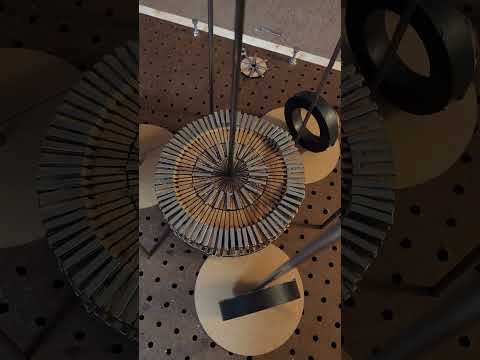 Long-form
More for Less / Less Is More
Achieving more output with less input, and using fewer magnets for better results.
 Long-form
250N Solenoid Upgrade: Dramatic Speed Response & Voltage Tests
Papa Bale installs a 250N solenoid magnet and the results are immediate.
 Long-form
Minor Adjustments, Major Results — Pulse Motor Optimization
Small tweaks make a huge difference — adjusting magnet height, reed switch positioning, and coil proximity transformed this pulse motor…
 Long-form
Turbo Drive Concept for Counter Rotator
Putting a drive coil on a counter-rotator: 2.5V start, capacitor-fed LEDs, mutual inductance on the bench.
One path · free first
Watch free → subscribe → optional membership
Notes stay free. The full experiment lives on YouTube. Membership is optional when you want Discord and exclusives — not required to learn.
- 2
Subscribe free + turn on alerts
Hit Subscribe, then the 🔔 bell so you catch the next experiment.
Subscribe free + 🔔 - 3
Optional: join for $2.99/mo
Members-only videos, Discord, and live shoutouts — cancel anytime.
Join $2.99/mo
Longer sessions · ad-supported free library
Not done yet? Queue the next long-form run
Queue up the next long-form bench run on YouTube — longer sessions keep the workshop free for everyone.
- 1▶ Watch full on YouTube
Start: Shocking Truth About Pulse Motors
Notes & transcript on site - 2▶ Watch full on YouTube
M.P.H's pulse motor labs Ep:3 Sandbox
Notes & transcript on site - 3▶ Watch full on YouTube
4 parallel drive coils pulse motor generator 25x with 2.08v .7 amps in 55v 1 amp out
Notes & transcript on site - 4▶ Watch full on YouTube
Bifilar Pancake Coil Build for Pulse Motor Generator
Notes & transcript on site