Optimization·Transcript-backed
250N Solenoid Upgrade: Dramatic Speed Response & Voltage Tests
Watch my 250N solenoid upgrade deliver dramatic speed response on the pulse motor. Voltage tests from 3.5V to 12V, neodymium magnets tweaks, and real bench results from the workshop.
Long-form · Full audio · Best on YouTube
Watch the complete video: 250N Solenoid Upgrade: Dramatic Speed Response & Voltage Tests
Watch the full long-form video on YouTube — that's where the full bench audio, runtime, and experiments live.
Preview embed · full runtime is better on YouTube
Prefer the full player? Better audio, runtime, and next-video queue on YouTube.
▶ Open full on YouTubeJump to the discussion · full video on YouTube
Hear it on the bench
Each link opens “250N Solenoid Upgrade: Dramatic Speed Response & Voltage Tests” on YouTube at the first time that topic comes up in the captions. Stay on YouTube for the complete runtime.
See it on the bench · full runtime on YouTube
What to watch for
- ▸250N solenoid gives dramatically quicker response than the little ones
- ▸Starts flipping reliably around 4 volts with good spin
- ▸At 8V the click goes away and it runs really fast but can hit multiple magnets
- ▸Neodymium magnets on the wheel need spacing or fewer pieces at higher voltage
- ▸Current stays low in microamps even at 12V with the 250 RPM gearbox
Watch the full long-form video on YouTube — that's where the full bench audio, runtime, and experiments live.
Experiment notes (read while you watch)
Notes support the video — for the full-length run with complete bench audio, stay on YouTube.
I swapped in a 250N solenoid and the pulse motor got way more responsive. Ran voltage tests from 3.5V up to 12V, spun it by hand to start, and found the sweet spot around 4V for quick pickup. Too many magnets on the rotor caused overlap at higher speeds so I talked about pulling some off or adding distance.
Key takeaways
- 250N solenoid gives dramatically quicker response than the little ones
- Starts flipping reliably around 4 volts with good spin
- At 8V the click goes away and it runs really fast but can hit multiple magnets
- Neodymium magnets on the wheel need spacing or fewer pieces at higher voltage
- Current stays low in microamps even at 12V with the 250 RPM gearbox
Quick bench test of the new 250N solenoid on the pulse motor. Super responsive at 4 volts and still running clean at 12 volts. Neodymium magnets on the rotor are strong but caused some overlap so adjustments are coming next.
Related on this site
- Pulse Motor Rotor Design: Magnets, Materials and Balance — Discusses magnet placement and balance which matches the neodymium magnets spacing talk in the video
- Best Neodymium Magnets for Pulse Motor Rotors — Directly relates to the stronger neodymium magnets used on the wheel and the overlap problem
- How to Maximize RPM on Your Pulse Motor — Video explores higher speed issues and magnet count which ties into the 8V+ observations
- I Finally Got My Pulse Motor Running (Reed Switch) — Earlier reed switch test that this 250N upgrade builds upon
---
*Generated from video transcript (hash `0756bd5baf81…`).*
Full transcript (2,575 chars · en)
here we go um I just chiming in to say I got my 250 in magnet and it is extremely more responsive um at this rate the the magnet there's too many magnets on the wheel and then a lot of you knew I was going to run into that problem once it got going fast enough so this one will go about eight volts before it starts pushing amps because you might not be able to hear it there's a little click that sounds when the magnet is functioning and that click goes away and it's just goes really really fast and you know it's like wow it's like floating no and it's like no it's it's not working right this is eight volts right here so I'm going to cut the power off and I'm going to stick my finger in there which is maybe all right all right now and slowly increase the power wait a minute I spin it the wrong way I hope that's the wrong way it's 3.5 definitely gotta spin it the other way okay we're already at 3.5 4 volts and that's just about ready to flip and boom now watch this watch how fast this picks up at four volts foreign that's awesome I mean that's really really quick response quicker than the little ones anyway now I just I wish I could get one of these except long you know but that that that works well I think sometimes it hits two magnets at a time on there because it's about that size all right let's Jack it up to eight eight point two five eight point two five I'm wondering if I take some of the magnets off I mean it's working really good and everything but I'm wondering if it can't work better or I could back it out a little bit put some of the neodymium magnets back on and see if we can't like perpetuate our current speed that's the wrong word what I mean is make it go faster I use the wrong word a lot but you know I'm working on it I am working on it at least acknowledging that oh that might not be what that means you know what simple stuff all right 8.24 let's Jack it up to 12. all right we're in one microamp and it's not at like a thousand or anything but it might be a 200 uh maybe 400 even because I had 250 RPM gearbox oh yeah I think in order to get upwards in voltage on this magnet I'm going to need to take some of the magnets off of the wheel or like I said create more distance so that only the neodymium magnets are being factored in by the read switch because the magnets that got on there aren't that strong that's why everything's got to be so close well I think that was pretty pretty interesting very cool all right so I'm gonna set that up the neodymium magnets thank you for watching Please Subscribe and have a nice night
Keep watching · longer sessions
More long-form bench runs
Queue up the next long-form bench run on YouTube — longer sessions keep the workshop free for everyone.
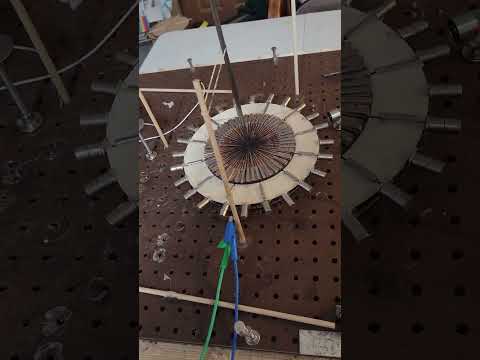 Long-form
Minor Adjustments, Major Results — Pulse Motor Optimization
Small tweaks make a huge difference — adjusting magnet height, reed switch positioning, and coil proximity transformed this pulse motor…
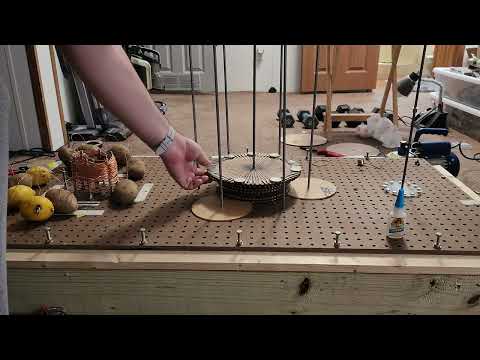 Long-form
Less Is More — Clockwise vs Counterclockwise
Comparing clockwise and counterclockwise rotation efficiency under the less-is-more design principle.
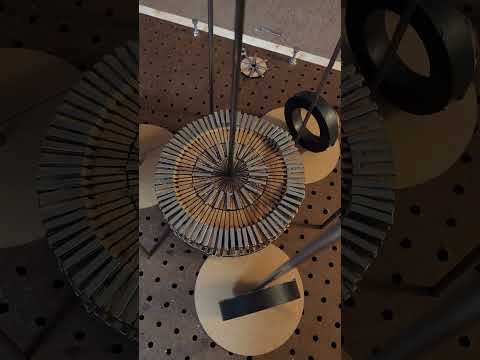 Long-form
More for Less / Less Is More
Achieving more output with less input, and using fewer magnets for better results.
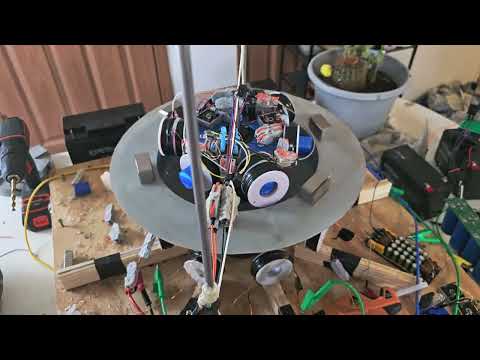 Long-form
Turbo Drive Concept for Counter Rotator
Putting a drive coil on a counter-rotator: 2.5V start, capacitor-fed LEDs, mutual inductance on the bench.
One path · free first
Watch free → subscribe → optional membership
Notes stay free. The full experiment lives on YouTube. Membership is optional when you want Discord and exclusives — not required to learn.
- 2
Subscribe free + turn on alerts
Hit Subscribe, then the 🔔 bell so you catch the next experiment.
Subscribe free + 🔔 - 3
Optional: join for $2.99/mo
Members-only videos, Discord, and live shoutouts — cancel anytime.
Join $2.99/mo
Longer sessions · ad-supported free library
Not done yet? Queue the next long-form run
Queue up the next long-form bench run on YouTube — longer sessions keep the workshop free for everyone.
- 1▶ Watch full on YouTube
Start: Shocking Truth About Pulse Motors
Notes & transcript on site - 2▶ Watch full on YouTube
M.P.H's pulse motor labs Ep:3 Sandbox
Notes & transcript on site - 3▶ Watch full on YouTube
4 parallel drive coils pulse motor generator 25x with 2.08v .7 amps in 55v 1 amp out
Notes & transcript on site - 4▶ Watch full on YouTube
Bifilar Pancake Coil Build for Pulse Motor Generator
Notes & transcript on site